
Plants
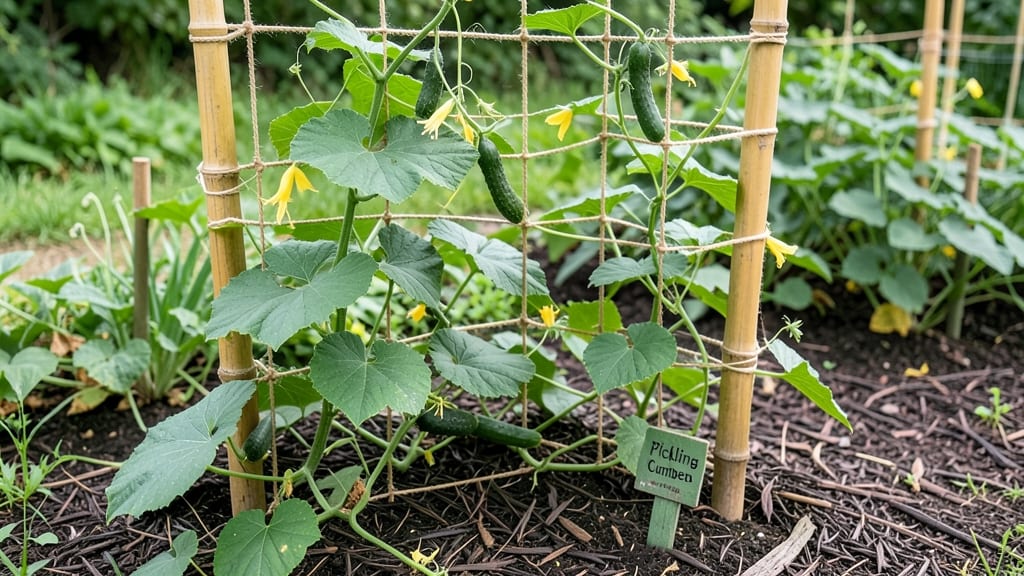
Spacing pickling cucumber plants between 12 and 24 inches is the difference between a handful of cucumbers and a garden overflowing with crisp, vinegar-ready 🥒 harvests.
Picture this: you’ve planted your pickling cucumbers with big dreams, only to watch them sprawl into a tangled mess by midsummer. Too close together, and you’re fighting for every inch of sunlight and air—leading to moldy leaves and bitter fruit.
But get that spacing right, and you’ll see vines stretching toward the sky, producing bushels of perfect pickles.
Why does it matter so much? Proper spacing isn’t just about giving roots room to breathe—it’s about airflow that keeps diseases at bay, sunlight that fuels growth, and the space to train vines on trellises for cleaner, easier harvests.
Whether you’re working with a raised bed, in-ground plot, or even containers, the right grid makes all the difference.
In this guide, I’ll break down the exact spacing you need, how to adjust for trellising or bush varieties, and the simple tricks to avoid common mistakes that waste your harvest. Ready to turn your garden into a pickling powerhouse?
Optimal pickling cucumber spacing: 12- to 24-Inch grid explained
Proper pickling cucumber spacing isn't just about fitting more plants in your garden—it's about creating the perfect environment for healthy growth and maximum yield.
When cucumbers are too close, they compete for sunlight, nutrients, and air circulation, leading to weaker vines, fewer fruits, and increased disease risk. A 12- to 24-inch grid gives your plants room to thrive while keeping your garden organized and productive.
Think of spacing like a well-planned city layout: too crowded, and traffic (or airflow) gets congested; too spread out, and you waste valuable garden real estate.
For pickling cucumbers, this balance ensures each plant gets 6+ hours of sunlight and prevents fungal diseases like powdery mildew by allowing air to circulate freely. Plus, proper spacing makes harvesting easier—no more tangled vines or hidden cucumbers!
The exact spacing depends on your cucumber variety type (bush vs. trellised) and garden layout. Bush varieties stay compact, while vining types need vertical support.
Below, I’ve broken down the science and practical tips to help you choose the right spacing for your setup, whether you're planting in raised beds, in-ground plots, or even containers.
| Plant Type | Spacing (Inches) | Rows Spacing (Feet) | Best For | Notes |
|---|---|---|---|---|
| Bush Varieties | 12-16 inches apart | 2-3 feet between rows | Raised beds, containers | Compact growth, no trellis needed |
| Trellised Vining | 18-24 inches apart | 3-4 feet between rows | In-ground, vertical gardens | Use trellis to save space |
| High-Density Planting | 12 inches apart (early harvest) | 1.5 feet between rows | Small gardens, containers | Thin seedlings later for airflow |
| Raised Beds (Deep) | 16 inches apart | 2 feet between rows | Bush or trellised | Maximize vertical space |
| Containers (5+ gallons) | 1 plant per container | N/A | Balconies, patios | Use dwarf varieties |
For bush varieties, like 'Boston Pickling' or 'National Pickling', a 12- to 16-inch grid works perfectly because these plants stay low and bushy. They don’t need trellising, so you can focus on keeping the space between plants consistent.
In a 4-foot-wide raised bed, you can fit about 3 rows of bush cucumbers with 16 inches between plants and 2 feet between rows.
If you’re growing vining varieties like 'Northern Pickling' or 'County Fair', space them 18-24 inches apart and use a trellis or cage to guide their growth upward. This not only saves space but also improves airflow and reduces disease risk.
In an in-ground garden, vining cucumbers can sprawl up to 6-10 feet, so giving them room to climb is a game-changer for yield.
One of my favorite space-saving tricks is high-density planting for early harvests. By spacing cucumbers 12 inches apart initially, you can get a faster start, but be prepared to thin seedlings to 16-18 inches as they grow.
This method is ideal for small gardens or containers, where every inch counts. Just remember to monitor for signs of overcrowding, like yellowing leaves or powdery mildew.
Soil type also plays a role in spacing. In sandy soil, which drains quickly, you can space plants slightly closer because they won’t compete as fiercely for moisture. However, in clay soil, which holds water longer, give plants extra room to avoid root competition.
Always amend your soil with compost before planting to ensure your cucumbers have the nutrients they need to thrive in their designated space.
For container gardening, choose dwarf or bush varieties and use containers that are at least 5 gallons per plant. Place containers 12-18 inches apart to allow for airflow and easy access to harvest.
If you’re using a vertical trellis system, you can even grow two plants per container if the variety is compact enough, like 'Spacemaster' or 'Sweet Success'.
Proper spacing isn’t just about the numbers—it’s about creating an ecosystem where your cucumbers can photosynthesize efficiently, pollinate effectively, and resist diseases naturally. When you nail the spacing, you’ll notice fewer pests, healthier vines, and cucumbers that are crisp and ready for pickling in no time.
Start with the grid that matches your garden setup, and don’t be afraid to experiment!
How to space pickling cucumbers for maximum yield: step-by-step guide
Perfect pickling cucumber spacing isn't just about fitting more plants—it's about creating an environment where each vine thrives. When plants are too close, they compete for sunlight and nutrients, leading to stunted growth and disease.
A well-spaced layout ensures air circulation, reducing powdery mildew risk while maximizing your harvest potential. For most varieties, a 12- to 24-inch grid delivers the best balance between yield and plant health.
Before you grab your trowel, gather your tools: a measuring tape, wooden stakes (or bamboo), a garden marker, and a notebook to track your layout.
If you're working with trellised varieties, add a trellis system to your list—this can let you squeeze in plants 6 inches closer since vines grow vertically. For bush varieties, stick to the wider end of the spacing spectrum to prevent overcrowding.
Step-by-Step Planting Guide
- Step 1: Measure your garden bed and mark a 12-inch baseline using stakes or string. For high-density planting, reduce to 10 inches between rows.
- Step 2: Use a measuring tape to mark 18-inch intervals along each row for standard spacing. For compact varieties, use 12-inch intervals.
- Step 3: Adjust spacing for soil types: Loamy soil? Stick to 18 inches. Sandy soil? Increase to 24 inches for better moisture retention.
- Step 4: Dig holes twice as wide as the root ball and 1 inch deeper. Gently place seedlings in and backfill with soil, firming lightly.
- Step 5: Water deeply to settle soil and encourage root growth. Add mulch around each plant to retain moisture and suppress weeds.
- Pro Tip: For trellised cucumbers, plant seeds 6 inches apart along the base of the trellis and train vines upward as they grow.
If your garden space is limited, consider interplanting with shallow-rooted companions like bush beans or radishes. These plants won’t compete for nutrients but will help break up soil compaction. Avoid planting near potatoes or squash, which can spread diseases like cucumber mosaic virus.
Once your cucumbers are established, monitor their growth and adjust spacing if vines start to overlap.
Remember, consistency is key. Uneven spacing leads to uneven yields—some plants will thrive while others struggle. Use a grid system for large beds or containers to maintain uniformity. For container gardening, limit to 1-2 plants per 5-gallon pot and use a cage trellis to save space.
With the right spacing, you’ll enjoy crisp, disease-free pickling cucumbers all season long.
After your first harvest, take notes on what worked and what didn’t. Did your 18-inch spacing yield better than 24 inches? Did trellising make a difference? Adjust next year’s layout based on your observations. Happy planting!