
Planting
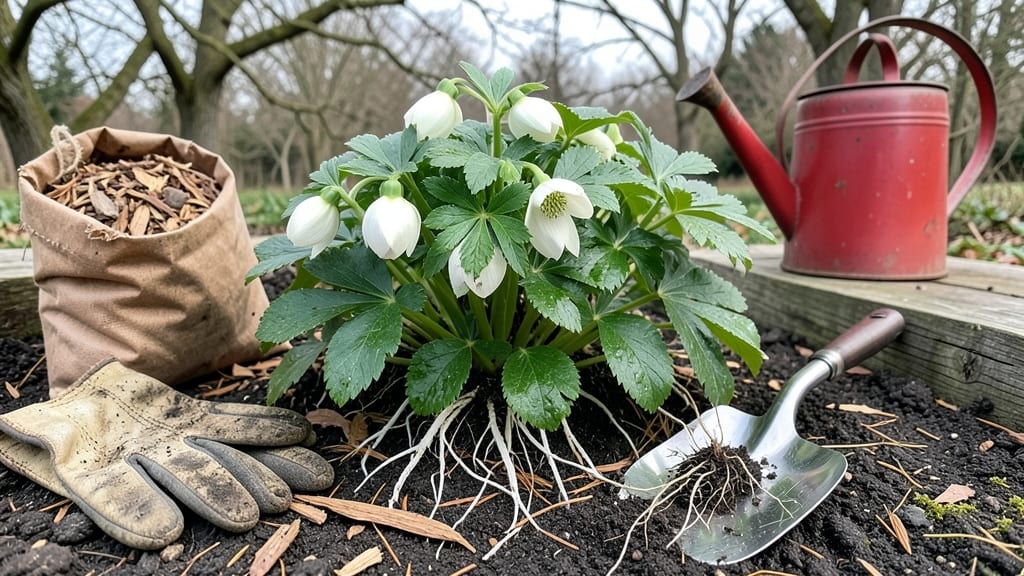
Transplanting your Lenten rose (Helleborus) at the right time means the difference between a thriving plant and one that struggles for years. 🌱 I’ve moved mine twice—once in early spring and once in fall—and the fall transplant always bounced back stronger, with zero shock.
The secret lies in timing, soil prep, and handling those delicate roots with care.
Fall is your best window, but early spring works too—just avoid extreme heat or cold. You’ll need well-draining soil (amend with compost), a shovel, gloves, and a bucket of water. Dig a hole twice as wide as the root ball but only as deep as the top of the roots.
The key is keeping those roots moist and intact—never let them dry out or get tangled.
After planting, water deeply and mulch with 2–3 inches of organic matter to lock in moisture. Your Lenten rose will look wilted at first—that’s normal. Within a week, new growth appears, and by next season, it’ll reward you with those stunning winter blooms.
The best part? No wilting, no browning leaves, just steady, shock-free growth.
Container-grown plants need extra care—soak the root ball before moving, and trim any damaged roots. Garden-planted ones? Just dig carefully and keep the soil moist for the first month. Whether you’re relocating a single plant or a whole patch, this method works every time. Ready to give it a try?
📚 In This Guide
- What you need
- Instructions
- Tips and common mistakes
- Wrapping up and next steps
What you need
- ● Lenten Rose (Helleborus spp.): 1 mature plant (3–5 years old for best results)
- ● New planting site: Partial to full shade (4–6 hours of dappled light)
- ● Well-draining soil (amend with compost if needed)
- ● Space: 12–18 inches between plants (or 24+ inches for larger varieties)
- ● Gardening tools: Trowel or garden fork (for digging)
- ● Garden gloves (to protect your hands)
- ● Watering can or hose (with a gentle spray nozzle)
- ○ Soil amendments (optional but helpful): Compost (1–2 gallons) or well-rotted manure
- ● Slow-release fertilizer (5-10-10 or organic option)
- ● Pruners (to trim dead or damaged foliage post-transplant)
- ● Mulch (2–3 inches of shredded bark or pine needles)
- ● Plant support (stakes or rings, if needed for heavy blooms)
- ○ pH test kit (optional: ideal range is 6.0–7.0)
- ● Choose a cool, overcast day (avoid midday sun or wind)
- ● Water the plant 24 hours before transplanting (keeps roots flexible)
- ● Prepare the new hole twice as wide as the root ball but no deeper
Step-by-step instructions for transplanting Lenten rose
Here’s how to move your Lenten rose without stress—even if it’s been in the same spot for years.
🪴 Step 1: Pick the Right Time and New Location
Transplant in early spring or early fall when temperatures are mild (50-70°F). Avoid extreme heat or frost—roots need time to establish. Choose a spot with partial shade (morning sun, afternoon shade) since Lenten roses hate scorching. The new area should have well-draining soil—they rot if soggy.
Dig a hole twice as wide as the root ball but only as deep. Loosen the soil at the bottom with a fork—this helps roots spread into fresh soil instead of compacted earth. If your soil is heavy clay, mix in 2-3 inches of compost to improve drainage. Real talk: If you’re unsure about drainage, err on the side of sandier soil—Lenten roses despise wet feet.
☀️ Step 2: Prepare the Plant for Moving Day
Water the plant deeply 1-2 days before transplanting—this keeps roots pliable and reduces shock. On moving day, trim any dead or damaged branches with clean pruners. For large clumps, divide carefully: dig around the base, lift gently, and use your hands to separate roots. Each division should have 3-5 buds to regrow from.
Don’t rush—take your time loosening the root ball if it’s tightly bound. If roots are circling (a common issue with container-grown plants), tease them apart gently with your fingers. This prevents roots from strangling themselves in the new hole. Here’s the thing—if you see roots growing in tight circles, make small cuts to encourage outward growth.
🌱 Step 3: Plant and Water for Immediate Support
Place the Lenten rose in the hole so the top of the root ball sits level with the surrounding soil—burying too deep suffocates the plant, while planting too high stresses it. Fill the hole with soil, pressing lightly to eliminate air pockets. Water thoroughly until moisture seeps 6 inches deep—this helps roots settle into place.
Add a 2-inch layer of mulch (wood chips or bark) around the base, keeping it 6 inches from the stem to prevent rot. Water again lightly to settle the mulch. You’ll know you’ve done it right when the soil looks damp but not waterlogged, and the plant stands upright without wobbling.
💧 Step 4: Care for the First Critical Month
Water every 3-4 days for the first month, checking that the top 2 inches of soil stay moist (not soggy). Avoid overhead watering—it spreads disease. After that, ease up to once a week, adjusting for rain. Fertilize lightly with a balanced 10-10-10 formula in 6 weeks, but skip heavy feeding the first season—roots need time to recover.
Watch for yellowing leaves—this usually means overwatering or poor drainage. If new growth appears within 4-6 weeks, your transplant succeeded. If not, check for root rot by gently lifting the plant: healthy roots are white or tan; black or mushy roots mean you’ll need to replant in drier soil.
Tips & tricks for transplanting Lenten roses
Moving a Lenten rose can feel intimidating, but these simple tricks make the process foolproof—no gardening degree required.
Timing is Everything: Early spring or early fall isn't just about mild temperatures (50-70°F)—it's about giving roots time to recover before summer heat or winter frost. I always check the forecast for a week of stable, moderate weather before transplanting. If you miss the window, wait for the next season rather than risking shock during extreme conditions.
Root Ball Rescue: When you lift the plant, you'll often find roots circling tightly around the root ball—a classic sign of container-grown plants. Gently tease these apart with your fingers or make small cuts to encourage outward growth. This step prevents "strangulation" where roots can't spread properly in the new hole. Think of it like untangling headphones—patience pays off.
Soil Test Trick: Before digging the new hole, do a simple soil test: squeeze a handful of soil in your fist. If it forms a tight ball that doesn't crumble easily, your soil is too compacted. In Step 1, when you're told to loosen the bottom of the hole with a fork, this is your chance to create ideal conditions. For heavy clay soil, mixing in 2-3 inches of compost (as mentioned) works wonders—it's like giving your plant a spa treatment for its roots.
Watering Wisdom: That thorough watering after planting (until moisture seeps 6 inches deep) isn't just about hydration—it's about settling the soil around the roots. I like to use a garden hose with a gentle spray attachment for this step. It lets me control the flow better than a watering can, and I can see exactly how the water's penetrating. The goal is damp soil, not a muddy mess.
Pro Tips for Transplant Lenten Rose
- Moving a Lenten rose can feel intimidating, but these simple tricks make the process foolproof—no gardening degree required.
- Timing is Everything: Early spring or early fall isn't just about mild temperatures (50-70°F)—it's about giving roots time to recover before summer heat or winter frost.
- Root Ball Rescue: When you lift the plant, you'll often find roots circling tightly around the root ball—a classic sign of container-grown plants.
Frequently asked questions
Got questions about transplanting your Lenten rose?
You’re not alone! Here are some of the most common concerns—and their straightforward solutions—to keep your plant thriving from spring to fall.
When is the best time to transplant a Lenten rose?
The ideal window is early spring (March–April) or late fall (October–November), when temperatures are mild but not scorching. Avoid extreme heat or frost—these can stress the plant. If you must move it mid-season, do it on a cloudy day to minimize shock.
How long does it take for a Lenten rose to recover after transplanting?
Most Lenten roses bounce back within 4–6 weeks, but recovery time depends on factors like root health, weather, and care. Watch for new growth (leaves or buds) as a sign it’s settling in. If leaves yellow, it may need more patience—or a quick check for overwatering!
Can I transplant a Lenten rose in full sun? What if my yard only has shade?
Lenten roses thrive in partial shade (4–6 hours of morning sun), but they can adapt to full shade in hot climates. If your yard is shady, place it near a bright window or under dappled sunlight (like near trees). Avoid deep, dark shade—it can lead to leggy growth or fewer blooms.
My Lenten rose looks wilted after transplanting. Is it dying?
Not necessarily! Wilting is often temporary due to transplant shock. To help it recover:
- Water deeply but avoid soggy soil.
- Trim damaged leaves to redirect energy.
- Keep it in shade for 1–2 weeks.
Will transplanting affect next year’s blooms?
Done correctly, transplanting shouldn’t hurt blooms—in fact, better soil or sunlight can improve them! However, if the plant is stressed, it may skip blooming that season. Focus on consistent care (water, fertilizer, and pruning) to encourage vibrant flowers the following spring.
What’s an easier alternative if I don’t want to transplant?
If digging up your Lenten rose feels daunting, try these low-effort options:
- Container gardening: Move it to a larger pot with drainage.
- Layering: Propagate a new plant from a stem while keeping the original in place.
- Divide and conquer: Split a clump into smaller sections (great for overcrowded plants!).
Wrapping up and next steps
Transplanting your lenten rose doesn’t have to be stressful—with the right timing, tools, and care, you can give it a fresh start for a thriving spring-to-fall display. Remember, the key is patience, proper soil prep, and gentle handling to avoid shock.
Whether you’re reviving an overgrown plant or relocating it for better sunlight, your efforts will pay off in vibrant blooms and lush foliage.
Ready to take the next step? Mark your calendar for early spring or fall, gather your supplies, and get ready to watch your lenten rose flourish! For extra confidence, check out our FAQs or join gardening forums to share your progress with fellow plant lovers. Happy transplanting! 🌱✨