
Planting
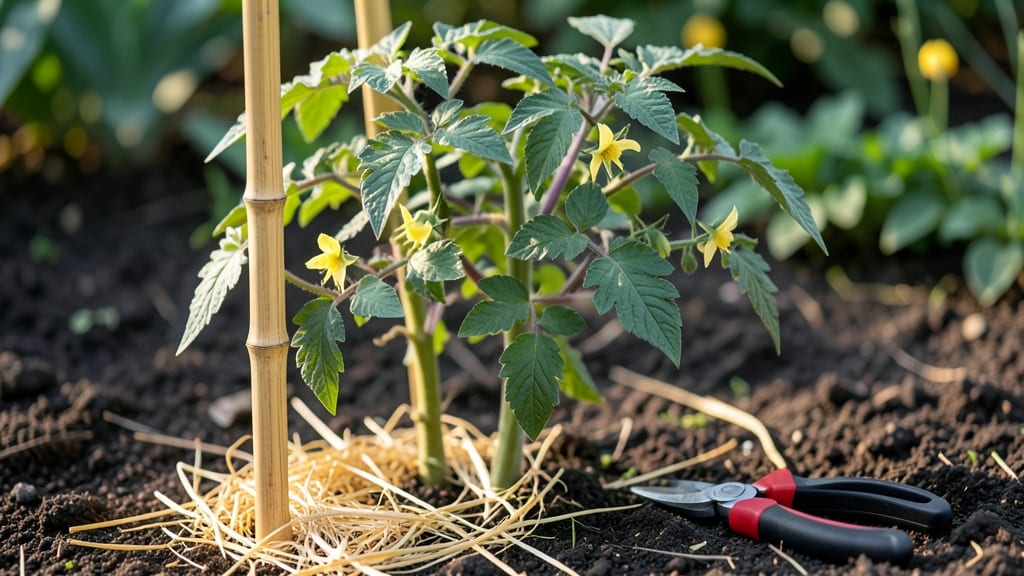
Your 4-month-old tomato plant 🍅 is entering its most critical growth phase, where the right care can transform it from a lush vine into a fruit-bearing powerhouse.
Picture this: you’ve nurtured your plant through the early stages, but now the stakes are higher—pruning too much can stunt growth, while neglecting it leads to weak stems and poor yields.
The balance between promoting airflow, encouraging fruit production, and avoiding stress is what separates a thriving tomato plant from one that struggles.
In this guide, I’ll walk you through the essential pruning techniques (like suckering and staking) tailored for your plant’s age, along with watering, fertilizing, and pest prevention strategies that keep it strong.
Whether you’re growing outdoors in Zone 6a or indoors by a sunny window, these tips will help you maximize your harvest.
You’ll also learn when to expect the first flowers, how to support your plant as it grows taller, and how to spot early signs of trouble before they become big problems. Let’s get your tomato plant ready for its most productive season yet!
When and how to prune a 4-Month-old tomato plant for maximum yield
At 4 months old, your tomato plant has likely developed a strong stem and early flower clusters, making it the perfect time to start pruning for maximum fruit production.
Pruning at this stage directs energy toward fruit development rather than excessive foliage, which can lead to disease risks and reduced yields. Whether you're growing indeterminate varieties (like 'Sungold') or determinate types (like 'Roma'), the principles remain similar, though the approach differs slightly.
Pruning isn’t just about cutting back—it’s about strategic growth management. By removing suckers (those small shoots between the main stem and branches), you encourage stronger stems and larger fruit. But timing and technique matter just as much as the cuts themselves.
For example, pruning in the morning allows wounds to heal before evening humidity sets in, reducing fungal infections. Let’s break down the exact steps to prune your tomato plant like a pro.
- Step 1: Identify Suckers
Suckers are the small shoots that grow in the leaf axils (the angle between the stem and branch). For indeterminate tomatoes, remove all suckers below the first flower cluster to focus energy upward.
- Step 2: Choose the Right Tools
Use clean, sharp pruners or shears to make 45-degree cuts just above a leaf node. Avoid tearing the stem, which can introduce disease pathogens.
- Step 3: Prune Determinate vs. Indeterminate
Indeterminate varieties (like 'Better Boy') need aggressive pruning—remove all suckers to encourage vertical growth. Determinate types (like 'Celebrity') require minimal pruning; only remove damaged or diseased leaves.
- Step 4: Time Your Pruning
Prune on a dry, sunny morning to allow wounds to heal quickly. Avoid pruning after rain or in high-humidity conditions to prevent fungal growth.
- Step 5: Support Your Plant
After pruning, install a stake or trellis if you haven’t already. This helps direct the plant’s energy toward fruit production and prevents stem breakage from heavy loads.
- Step 6: Monitor and Repeat
Check your plant weekly for new suckers. Prune again in 6-8 weeks if growth remains vigorous, but reduce pruning as flowers and fruit develop.
One common mistake is over-pruning, which can stress the plant and reduce fruit set.
For indeterminate tomatoes, aim to leave 2-3 main stems and prune aggressively only in the early stages. Determinate varieties, on the other hand, benefit from minimal pruning—focus on removing only yellow or diseased leaves to maintain airflow.
Seasonal timing also plays a role. In warmer climates, prune more aggressively to prevent heat stress, while in cooler regions, reduce pruning to protect the plant from early frost.
For example, if you’re in USDA Zone 6a, prune heavily in June but taper off by August to allow fruit to mature before the first frost.
Don’t forget to sterilize your pruners between cuts using rubbing alcohol or a 10% bleach solution. This simple step prevents the spread of bacterial spot or early blight, which can devastate your plant’s health.
I’ve seen firsthand how a few minutes of sterilization can save a season’s worth of tomatoes!
After pruning, give your tomato plant a light fertilizer application (like a 5-5-5 NPK ratio) to replenish nutrients. This helps the plant recover faster and directs energy toward fruit development. Avoid heavy fertilizers immediately after pruning, as they can encourage leafy growth over fruit production.
Finally, keep an eye out for new growth patterns after pruning. Healthy plants will show darker green leaves and sturdier stems within 7-10 days. If you notice yellowing leaves or stunted growth, it may indicate over-pruning or nutrient deficiency. Adjust your approach accordingly—sometimes less is more!
With the right pruning techniques, your 4-month-old tomato plant will thrive and produce a bountiful harvest. Happy pruning, and may your vine be ever fruitful! 🌱
Essential care tips for a 4-Month-old tomato plant: watering, fertilizing, and pest control
Your 4-month-old tomato plant is entering its most productive phase, but it needs precise care to thrive. At this stage, watering, fertilizing, and pest control become critical to ensure strong vines and abundant fruit.
Neglecting these can lead to stunted growth or disease, so let's dive into the best practices to keep your plant flourishing.
One of the biggest challenges at this stage is balancing water needs without over-saturating the soil. Tomato plants are drought-sensitive but also prone to root rot if watered improperly.
Organic fertilizers with the right NPK ratios (like 5-5-5 or 3-4-6) can provide the nutrients your plant craves without burning its roots. Meanwhile, pests like aphids and diseases such as early blight often appear when plants are stressed.
Watering Your 4-Month-Old Tomato Plant
| Pros | Cons |
|---|---|
| Deep watering encourages root growth and prevents wilting. | Overwatering can cause root rot or fungal diseases. |
| Morning watering reduces evaporation and pest attraction. | Skipping watering leads to blossom end rot or stunted fruit. |
Fertilizing Your Tomato Plant
| Pros | Cons |
|---|---|
| Organic fertilizers like compost tea or fish emulsion boost soil health. | Over-fertilizing causes leaf burn or excessive foliage growth. |
| Balanced NPK ratios (e.g., 5-5-5) support both fruit development and leaf growth. | Using synthetic fertilizers can disrupt soil microbes over time. |
Pest and Disease Prevention
| Pros | Cons |
|---|---|
| Neem oil spray deters aphids and whiteflies without harming plants. | Ignoring early signs of blight can lead to plant death. |
| Removing infected leaves prevents disease spread to other plants. | Using chemical pesticides can harm beneficial insects like ladybugs. |
For watering, aim for a deep soak (1-2 gallons) every 3-5 days, depending on your climate. Water at the base of the plant in the morning to allow foliage to dry quickly, reducing the risk of fungal infections.
Mulching around the base helps retain moisture and keeps roots cool. I’ve found that using a drip irrigation system can make this task effortless while ensuring consistent hydration.
When it comes to fertilizing, opt for organic options like compost, worm castings, or a balanced NPK fertilizer (5-5-5). Apply it every 4-6 weeks during the growing season, starting in early summer.
Avoid fertilizing late in the season, as this can encourage late growth that won’t harden off before frost. I’ve had great success with a liquid fish emulsion diluted to half-strength for a gentle nutrient boost.
Keep an eye out for early signs of pests like aphids or whiteflies, which often appear on the undersides of leaves. A quick spray of neem oil or soapy water can eliminate them before they cause damage.
For disease prevention, remove any yellow or spotted leaves immediately and avoid overhead watering. If you notice early blight (brown spots on lower leaves), prune affected areas and apply a copper fungicide as a preventative measure.
Remember, the key to a thriving 4-month-old tomato plant is consistency. Stick to a regular watering schedule, feed it organic nutrients, and stay vigilant against pests. With these care tips, your plant will reward you with a bountiful harvest of juicy, flavorful tomatoes. Happy gardening! 🌱🍅