
Planting
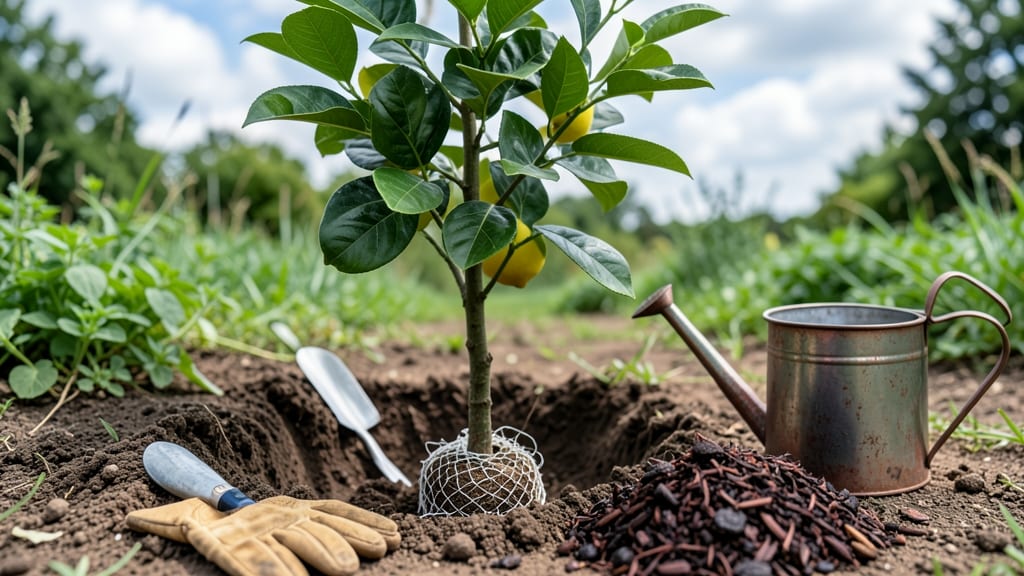
The best way to plant a lemon tree starts with a sunny spot that gets at least 6-8 hours of light daily—my first tree nearly died because I underestimated how much sun citrus really craves. 🌞 The secret isn’t just the location, though; it’s the soil prep, the right planting depth, and knowing whether to start with a seed or a nursery sapling (spoiler: saplings are far more reliable).
You’ll need well-draining soil mixed with compost, a hole twice as wide as the root ball, and a location protected from harsh winds—lemon trees hate being tossed around like a kite in a storm.
If you’re planting in cooler climates, wait until after the last frost, and always keep a frost cloth handy for unexpected chilly nights. The first few weeks are critical for root establishment, so water deeply but avoid soggy soil.
By following these steps, you’ll end up with a tree that produces fragrant blooms and—with patience—juicy lemons within 3-5 years. The key is consistency: regular watering, monthly feeding with citrus fertilizer, and pruning to shape the tree while it’s young.
Trust me, the first time you pick a lemon fresh from your own tree is a moment you’ll remember forever.
Whether you’re in a warm climate or a frost-prone zone, this method adapts—just adjust watering and protection as needed. Now, let’s get that tree in the ground and start dreaming of homemade lemonade!
📚 In This Guide
- What you need
- Instructions
- Tips and common mistakes
- Wrapping up and next steps
What you need
- ● Lemon tree: Seedling (from a nursery or store) OR
- ● Bare-root plant (for experienced gardeners)
- ● Pot or planting area: Container: 12–18-inch diameter (with drainage holes) OR
- ● Outdoor space: Well-draining soil, full sun (6+ hours/day)
- ● Potting mix: Well-draining citrus mix (or blend: 60% potting soil, 30% perlite, 10% sand)
- ● Fertilizer: Citrus-specific or balanced (10-10-10) fertilizer (start with a ½ teaspoon per gallon of soil)
- ● Tools: Trowel or small shovel
- ○ Gloves (optional but recommended!)
- ● Watering can or hose with gentle spray nozzle
- ● Mulch: Organic mulch (e.g., straw or wood chips) to retain moisture
- ● Epsom salt: 1 tablespoon per gallon of water (monthly for magnesium boost)
- ● Citrus food: Slow-release granules for long-term nourishment
- ● Support stake: If planting outdoors in windy areas
- ● pH test kit: To ensure soil pH is 6.0–7.0 (lemon trees love slightly acidic soil!)
Step-by-Step instructions for planting a lemon tree
Here's how to get your citrus off to the strongest start—guaranteed to thrive in your sunny spot.
🌱 Step 1: Choose the Right Lemon Tree and Location
Pick a dwarf variety like Meyer lemon for containers or a standard tree for in-ground planting. These handle smaller spaces better and produce fruit faster. The key to success is full sun—at least 6-8 hours daily—and protection from harsh winter winds. I always plant mine near a south-facing wall or fence for extra warmth.
Test your spot by watching how sunlight moves throughout the day. If afternoon shade lingers past 4 PM, move your location 2-3 feet west. Lemon trees hate soggy roots, so avoid low spots where water pools. The ground should drain quickly—if it stays wet for more than 24 hours after rain, amend with compost or plant in a raised bed.
🪴 Step 2: Prepare the Planting Hole
Dig a hole twice as wide as the root ball but only as deep as the container's bottom. This prevents burying the graft union (the bump near the base of the trunk) too deeply, which causes rot. If your tree comes in a 5-gallon container, the hole should be about 12 inches wide and 12 inches deep.
Loosen the sides of the hole with a shovel to encourage root spread. Mix the native soil with equal parts compost to improve drainage and fertility. I like to add a handful of citrus-specific fertilizer at the bottom—this gives roots a nutrient boost right away without burning tender new growth. Tap the tree gently from the container to check for root circling; if roots spiral around, make 2-3 vertical cuts to encourage outward growth.
☀️ Step 3: Plant and Water Deeply
Remove the tree from its container and place it in the hole so the top of the root ball sits level with the surrounding soil. Fill gaps with your amended soil mix, pressing lightly to eliminate air pockets. The graft union should remain 1-2 inches above soil level—this protects it from moisture and disease. Water immediately with 2 gallons to settle the soil and eliminate air gaps.
After planting, mulch with 2-3 inches of wood chips or straw, keeping it 6 inches away from the trunk to prevent rot. This conserves moisture and regulates soil temperature. Water deeply every 2-3 days for the first 2 weeks, then taper to once a week once new growth appears. Overwatering now is the fastest way to kill a young lemon tree—roots need air as much as moisture.
✂️ Step 4: Prune and Protect New Growth
Once your tree reaches 2-3 feet tall, prune to encourage bushier growth. Remove any dead, crossing, or inward-growing branches with clean, sharp pruners. I also trim the topmost leaves by about one-third to reduce water loss. This might sound counterintuitive, but it forces the tree to grow stronger stems and more branches.
Watch for aphids or scale insects on new growth—these pests love tender citrus leaves. Spray with neem oil if you spot sticky residue (honeydew) on leaves. In winter, protect young trees from frost by wrapping the trunk with burlap or moving container-grown trees indoors if temperatures drop below 25°F. A healthy lemon tree will reward you with white blossoms in spring—the first sign your care is paying off.
Tips & tricks for perfect lemon tree planting
Here's what I learned the hard way after watching three lemon trees fail before getting this right.
Sunlight Strategy: That 6-8 hours of sunlight is non-negotiable, but timing matters just as much. I now track sunlight patterns for a full week before planting—morning sun is gentler, but afternoon sun (especially after 2 PM) is critical for fruit production. If your yard gets shade after 4 PM, consider a container that can be moved to a sunny spot during peak hours.
Root Health Secret: When checking for root circling in Step 2, I've found that gently squeezing the root ball helps identify compacted roots. If you see roots growing in tight circles, make those 2-3 vertical cuts with sterilized pruning shears—this encourages outward growth that anchors your tree better. Don't skip this step, even with small 5-gallon containers.
Watering Wisdom: The 2-gallon initial watering in Step 3 is just the beginning. I've learned to monitor soil moisture by sticking my finger 2 inches deep—if it's dry, water again. Overwatering is the silent killer of lemon trees, so always check before adding more water. A moisture meter is worth the investment if you're unsure.
Pruning Pro Tip: When your tree reaches 2-3 feet in Step 4, look for branches growing toward the center—they'll compete for sunlight and weaken your tree. I also recommend pruning just after flowering (spring) to avoid removing potential fruit. Always sterilize your pruners with rubbing alcohol between cuts to prevent disease spread.
Pro Tips for Best Way To Plant A Lemon Tree
- Here's what I learned the hard way after watching three lemon trees fail before getting this right.
- Sunlight Strategy: That 6-8 hours of sunlight is non-negotiable, but timing matters just as much.
- Root Health Secret: When checking for root circling in Step 2, I've found that gently squeezing the root ball helps identify compacted roots.
Frequently asked questions
Got questions about planting your lemon tree? You’re not alone! Here are answers to the most common concerns—so you can grow a thriving citrus tree with confidence.
What’s the best time of year to plant a lemon tree?
Plant your lemon tree in early spring (after the last frost) or late fall (before winter chills set in). These seasons give roots time to establish before extreme temperatures. Avoid planting in summer’s scorching heat or winter’s frost—both can stress young trees.
Can I plant a lemon tree from a grocery store lemon?
Technically yes, but it’s not recommended for long-term success. Store-bought lemons are often treated to prevent sprouting. Instead, buy a certified nursery tree (like Meyer or Eureka varieties) for better root development and fruit quality. Patience pays off!
Why isn’t my lemon tree growing after planting?
Slow growth could mean poor drainage, overwatering, or lack of sunlight. Check soil moisture (it should be dry 1–2 inches down), ensure 6+ hours of sun daily, and avoid heavy clay soil. If leaves yellow, it might need iron or zinc—test your soil!
How close to my house can I plant a lemon tree?
Keep it at least 10–15 feet from walls or foundations to avoid root damage and allow airflow. Lemon trees can grow tall (10–20 ft) and wide, so plan for space! If short on yard room, consider a large container (with drainage) near a sunny patio.
Do lemon trees need bees to produce fruit?
Yes! While lemon trees are self-pollinating, bees boost fruit set. Planting near bee-friendly flowers (like lavender or marigolds) can attract pollinators. In areas with few bees, gently shake branches during bloom to aid pollination.
Wrapping up and next steps
Planting a lemon tree is a rewarding journey that combines a little patience, the right conditions, and a dash of care. By choosing the perfect sunny spot, preparing the soil with love, and nurturing your tree with consistency, you’re well on your way to harvesting juicy, homegrown lemons! 🌱✨
Now that you’re armed with the best way to plant a lemon tree, why not take the next step? Whether you’re gifting a sapling to a fellow plant enthusiast or treating yourself to a fresh start, your citrus adventure begins today. Happy planting—and may your tree flourish! 🍋🌞