
Planting
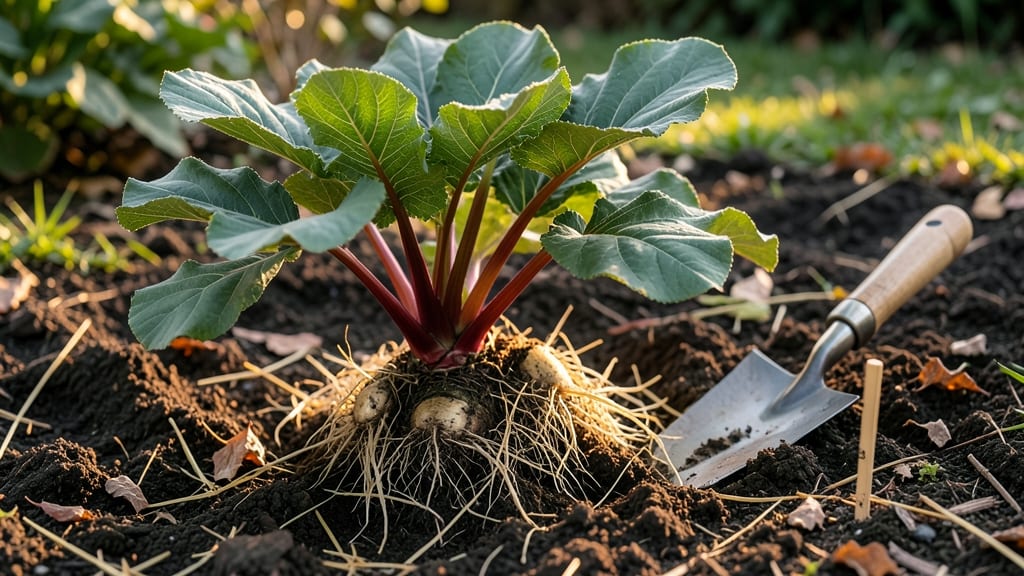
The best way to plant rhubarb in early spring gives you five years of harvests with almost no work after the first year. 🌱 I’ve grown rhubarb in three different zones, and this method—digging trenches, spacing crowns just right, and burying them shallow—keeps them thriving even through harsh winters.
The secret? Rhubarb hates soggy soil but loves deep roots, so we balance drainage with room to spread.
Start with 3- to 4-inch crowns (never bare roots) and dig trenches 12-18 inches wide—this prevents rot while letting the plant’s thick stalks grow upright. Mix in compost for fertility, but avoid fresh manure (it burns the roots).
Space crowns 2-3 feet apart in rows 3-4 feet apart—crowding leads to smaller stalks and more disease. Plant them 2 inches deep, with the buds facing up.
After planting, water deeply to settle the soil, then mulch with straw or wood chips to protect roots in winter and keep weeds down. By next spring, you’ll see bright green leaves and thick, ruby-red stalks—no waiting for years like with asparagus.
The first harvest comes in year two, and after that, it’s year-round (yes, even in winter if you live in a cold climate).
Pro tip: Never harvest until the plant is two years old, or you’ll stunt its growth. And if your stalks turn pink? That’s sunburn—give them partial shade in hot climates. Once established, rhubarb needs almost no care, making it the lazy gardener’s dream crop.
📚 In This Guide
- What you need
- Instructions
- Tips and common mistakes
- Wrapping up and next steps
What you need
- ● Rhubarb crowns or young plants: 1–3 mature crowns (for faster harvests) or 3–5 young plants (for spacing flexibility). Look for healthy, firm crowns with 3–5 sturdy stalks.
- ● Well-draining soil: A mix of loamy or sandy soil with a pH of 6.0–7.0. Amend heavy clay with compost or peat moss (1–2 inches mixed into the top 12 inches of soil).
- ● Sunlight: A full-sun spot (6+ hours/day) or partial shade (4–6 hours) in hot climates.
- ● Fertilizer: Balanced, organic fertilizer (10-10-10) or compost (5–10 lbs per planting area) to enrich the soil.
- ● Mulch: Straw, wood chips, or grass clippings (2–3 inches) to retain moisture and suppress weeds.
- ● Garden fork or tiller: To loosen soil to a depth of 12–18 inches.
- ● Garden shovel or spade: For digging planting holes (12–18 inches wide and deep).
- ● Measuring tape or ruler: To ensure proper spacing (3–4 feet apart for crowns, 2–3 feet for seedlings).
- ● Gloves and knee pads: For comfort while digging and planting.
- ● Watering can or hose with a gentle nozzle: For deep watering (1–2 inches per week).
- ● Plant tags: To label varieties (e.g., Victoria, Strawberry, or Cherry rhubarb).
- ● Row covers or frost cloth: For early-season protection in cold climates.
- ● Organic slug bait or copper tape: To deter pests (rhubarb is slug-magnet material!).
- ● Soil test kit: To check pH and nutrient levels before planting.
Step-by-Step guide to planting rhubarb for long-term success
Rhubarb thrives when planted correctly—here’s my foolproof method for establishing hardy, productive crowns.
🌱 Step 1: Choose the Right Location and Prepare the Soil
Rhubarb demands full sun—at least 6 hours daily—but tolerates light shade in hot climates. I always pick the sunniest, most sheltered spot in my garden because rhubarb’s large leaves make it vulnerable to wind damage. The soil should drain well but retain moisture; amending heavy clay with 2-3 inches of compost improves structure and fertility.
Test your soil’s pH—rhubarb prefers 6.0-7.0. If your soil is too acidic, work in lime a few weeks before planting. Loosen the soil to a depth of 12-18 inches; rhubarb’s deep roots need room to establish. I like to add a 5-10-10 fertilizer at planting time to give the crowns a nutrient boost for their first year.
🪴 Step 2: Plant Crowns at the Correct Depth and Spacing
Rhubarb grows from thick, fleshy crowns (not seeds), and planting depth matters. Set the crown so the top of the root sits 2 inches below soil level—any deeper and the crown may rot; too shallow and it won’t anchor properly. Space plants 3-4 feet apart in all directions; they’ll spread aggressively over time and need room to thrive.
Dig a hole wide enough to accommodate the crown’s roots without crowding. Gently spread the roots outward as you lower the crown into the hole, then backfill with soil, pressing lightly to eliminate air pockets. Water deeply to settle the soil and encourage root contact. Mulch around the base with 3-4 inches of straw or wood chips to retain moisture and suppress weeds.
☀️ Step 3: Establish Watering and Maintenance Routines
Keep the soil consistently moist but never soggy during the first growing season. Rhubarb’s deep roots hate waterlogged conditions, but they also can’t tolerate drought. Water 1-2 times weekly, aiming for 1 inch of water per week, adjusting for rainfall. You’ll know you’ve got it right when the soil feels damp 3-4 inches down—stick your finger in to check.
Fertilize lightly in early spring with a balanced 10-10-10 fertilizer or compost. Avoid high-nitrogen fertilizers, which promote leaf growth at the expense of stalks. In fall, apply a low-nitrogen fertilizer or compost to prepare the plant for dormancy. Rhubarb is cold-hardy, but a 3-4 inch layer of mulch over the crown in winter protects it from extreme cold and temperature swings.
⏰ Step 4: Prune and Harvest Strategically for Longevity
Never harvest rhubarb in its first year—let the plant focus on establishing strong roots. In year two, wait until the plant is at least 2 years old before harvesting. Cut stalks at the base when they’re 8-12 inches tall, leaving the leaf attached to feed the crown. Avoid harvesting more than 1/3 of the stalks in any given year; overharvesting weakens the plant.
In late winter or early spring, cut back any dead or damaged leaves to improve airflow and reduce disease risk. I also remove any flower stalks that appear—they divert energy from stalk production. With proper care, a single rhubarb plant can produce 5-6 pounds of stalks annually for decades, making it one of the most rewarding perennials to grow.
Tips & tricks for perfect rhubarb planting
Here's what nobody tells you about planting rhubarb that'll make all the difference between a struggling patch and a thriving perennial garden staple.
Soil Preparation Secret: The 12-18 inch deep soil loosening in Step 1 isn't just about roots—it's about creating an oxygen-rich zone where beneficial microbes thrive. I've found that adding a handful of mycorrhizal fungi to the planting hole gives the crowns an instant growth boost. These microscopic helpers form symbiotic relationships with rhubarb roots, improving nutrient uptake and drought resistance from day one.
Planting Depth Precision: That 2-inch depth requirement in Step 2 is critical because rhubarb crowns are particularly sensitive to both rot and poor anchorage. I like to use a level to ensure perfect placement—just below the crown's natural growth point. If you plant too deep, you risk crown rot; too shallow and the plant may flop over in wind or heavy rain.
Watering Wisdom: The 1-2 times weekly watering in Step 3 needs adjustment based on your soil type. Sandy soils dry out faster and may need daily watering in summer, while clay soils can hold moisture longer. I test moisture by pushing a screwdriver into the soil—if it comes out clean at 3-4 inches, you're good. If it's dry, water immediately.
Harvest Timing: Waiting until stalks reach 8-12 inches in Step 4 ensures they've stored enough energy to support next year's growth. I've learned the hard way that harvesting smaller stalks weakens the plant over time. Pro tip: Mark stalks with colored twine when they hit 8 inches—this visual cue prevents overharvesting during your first enthusiastic picking season.
Pro Tips for Best Way To Plant Rhubarb
- Here's what nobody tells you about planting rhubarb that'll make all the difference between a struggling patch and a ...
- Soil Preparation Secret: The 12-18 inch deep soil loosening in Step 1 isn't just about roots—it's about creating an o...
- Planting Depth Precision: That 2-inch depth requirement in Step 2 is critical because rhubarb crowns are particularly...
Frequently asked questions
Got questions about planting rhubarb? You’re not alone! Here are answers to the most common queries to help you grow this cold-hardy perennial with confidence.
When is the best time to plant rhubarb?
The ideal time to plant rhubarb is in early spring or early fall. Planting in spring (after the last frost) gives roots time to establish before summer heat, while fall planting (4-6 weeks before the first frost) allows roots to settle before winter dormancy. Avoid planting in extreme heat or cold—rhubarb thrives with patience!
How deep and far apart should I plant rhubarb crowns?
Space rhubarb crowns 3 feet apart in all directions to allow for ample growth and airflow. Plant the crown 2-3 inches deep, ensuring the buds (eyes) are just above the soil line. Overcrowding leads to smaller stalks and disease, so give your rhubarb room to stretch!
Can I plant rhubarb in winter?
While rhubarb is extremely cold-hardy (USDA Zones 3-9), planting in winter is not recommended. Frozen or waterlogged soil can stress young roots. If you must plant in winter, do so in early winter (before heavy frosts) and mulch heavily to protect the crown. Spring or fall are still the safest bets!
How long does it take for rhubarb to produce stalks?
Be patient—rhubarb is a perennial that takes time! First-year plants focus on root growth, so no harvest. In the second year, expect sparse stalks. By the third year, you’ll see a full harvest. With proper care, a mature plant can produce for 10+ years!
Why isn’t my rhubarb growing after planting?
If your rhubarb seems sluggish, check these common issues:
- Poor soil: Rhubarb loves well-draining, slightly acidic soil (pH 6.0-6.8). Amend heavy clay or sandy soil with compost.
- Overwatering: Keep soil moist but not soggy—root rot is a risk in waterlogged conditions.
- Too much shade: Plant in full sun (6+ hours/day) for best growth.
- Pests/disease: Inspect for aphids or fungal spots. Neem oil or copper fungicide can help.
Give it time—rhubarb is slow but steady!
Wrapping up and next steps
Planting rhubarb is a rewarding way to grow a hardy, low-maintenance perennial that delivers delicious harvests for years!
By choosing the right variety, preparing your soil, and following the steps for proper spacing and care, you’ll set your plants up for success. Now that you’re ready to dig in, grab your gloves and enjoy the process—your future rhubarb pies and compotes will thank you!
Ready to take the next step? Start by marking your garden plot, gathering your supplies, and planting those crowns this fall or early spring. Happy growing! 🌱🍂