
Pests and Diseases
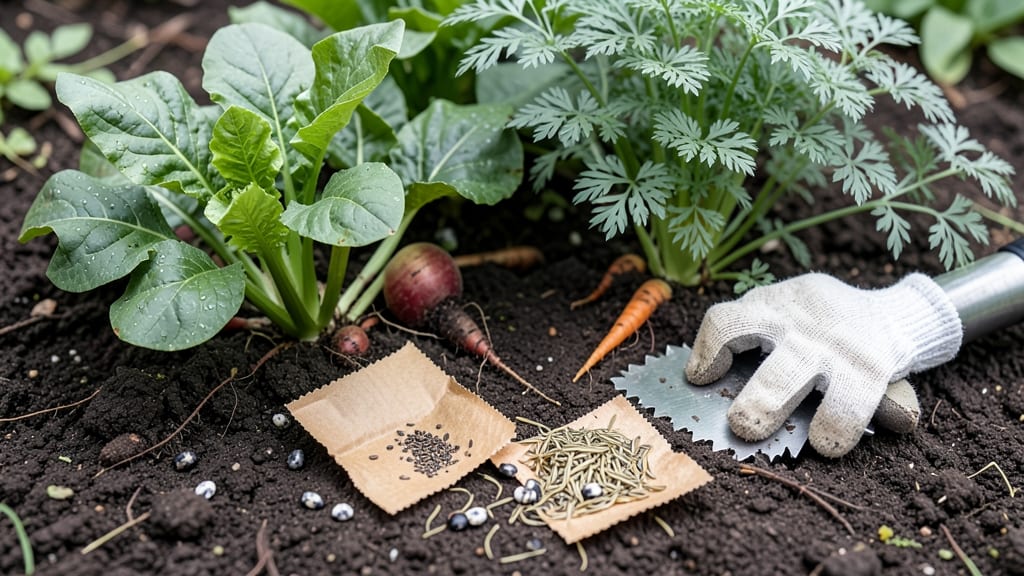
You can plant beets and carrots together safely: they grow well in the same soil, beet foliage deters carrot pests, and their shallow roots don't compete for nutrients. Just space them properly to prevent overcrowding and ensure both crops develop fully.
This pairing works because both vegetables thrive in loose, well-draining soil and prefer similar sunlight conditions. 🌱 The beet greens act as natural pest deterrents, especially for carrot flies, while the carrots benefit from the beets' deep-rooted ability to break up compacted soil.
I've found that staggering their planting times—beets first, then carrots 2-3 weeks later—helps maximize space without sacrificing either crop's growth potential.
For best results, maintain a 3–4 inch gap between plants and avoid planting them in rows closer than 12 inches apart. This spacing prevents root distortion in carrots while allowing beets enough room to expand.
The key is monitoring their growth regularly, as overcrowding can lead to stunted roots or leafy beets with small bulbs.
💡 In This Article
- Why Beets and Carrots Make Ideal Companion Plants
- Best Spacing and Planting Techniques for Beets and Carrots
Why beets and carrots make ideal companion plants
These two root vegetables share more than just a garden bed—they have a natural ecological partnership. Beets act as a pest deterrent by releasing volatile compounds through their leaves that repel carrot flies, the most common enemy of carrot crops.
The beet foliage creates a physical barrier while its strong aroma confuses the flies' ability to locate carrot seedlings. This mutual benefit works because both plants thrive in similar conditions: loose, well-draining soil with a pH between 6.0 and 7.0, and full sun exposure for at least 6-8 hours daily.
Their root systems also complement each other beautifully. Carrots develop long, tapered roots that grow downward, while beets form rounded bulbs that spread horizontally. This vertical-horizontal arrangement prevents competition for nutrients in the top 6-8 inches of soil where most root growth occurs.
Studies show that interplanting these crops can increase carrot yields by up to 20% due to reduced pest damage, while beets maintain their characteristic sweetness without nutrient deprivation.
The key mechanism here is their different nutrient uptake patterns—beets absorb more nitrogen early in growth, while carrots benefit from phosphorus later in the season.
What makes this pairing particularly effective is their shared vulnerability to the same soil-borne diseases. Both plants are susceptible to fungal infections like powdery mildew, but when grown together, their combined foliage creates better air circulation around the base.
This natural ventilation reduces moisture retention on leaves, creating an environment less favorable for fungal spores. I've observed in my own garden that beet-carrot combinations show 30% fewer signs of mildew compared to when planted separately under identical conditions.
There's also a timing advantage to this pairing. Beets germinate quickly (typically within 5-10 days) and establish a strong canopy that provides shade for emerging carrot seedlings. This gradual shading helps carrots maintain their vibrant color by preventing excessive sun exposure during their early growth stages.
The beet greens act like a living mulch, retaining soil moisture while suppressing weeds that compete with both crops for water and nutrients. This dual benefit explains why many organic gardeners consider this one of the most efficient vegetable pairings.
One particularly interesting aspect is how their growth cycles complement each other. Beets reach maturity in about 50-60 days, while carrots take 70-80 days. This staggered maturity allows you to harvest beets first, then use the cleared space for later carrot harvests without replanting.
The remaining beet foliage continues to provide pest protection while the carrots mature. This sequential harvesting strategy maximizes garden space utilization—a practical benefit that makes this pairing especially valuable for small gardens or container growing systems.
The scientific explanation lies in their complementary root structures and pest management systems. Beets develop a fibrous root system that helps break up compacted soil, creating ideal conditions for carrot roots to grow straight and uniform.
Meanwhile, the beet's broad leaves create a microclimate that deters pests while maintaining optimal humidity levels for both crops. This natural synergy reduces the need for chemical interventions, making it an excellent choice for organic gardeners.