
Companion Plants
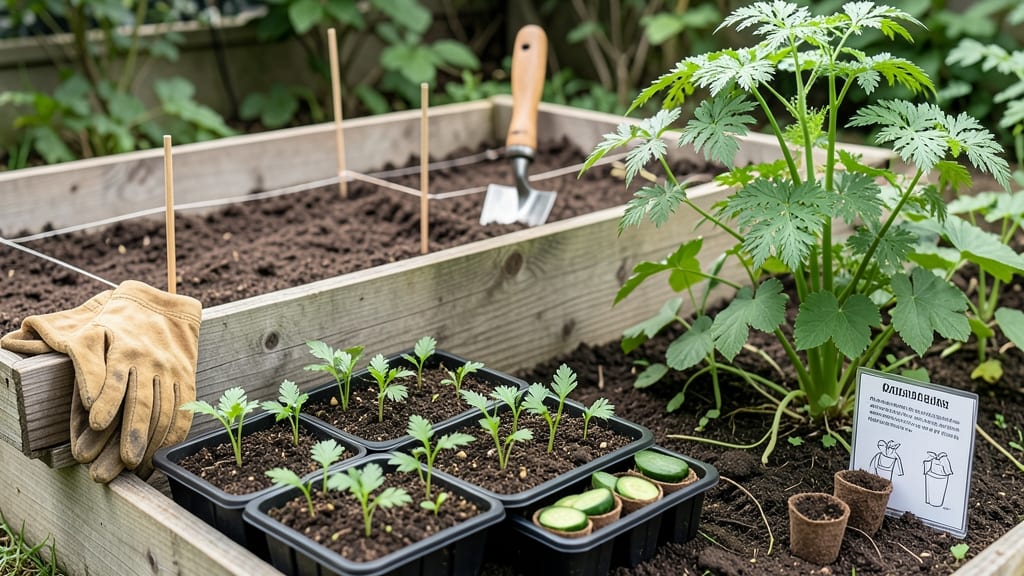
You can plant carrots with cucumbers, and it’s a smart strategy since cucumbers naturally repel carrot flies while improving soil aeration, though their different growth habits mean careful spacing and watering are essential for success.
Pairing these two vegetables works because cucumbers release scents that confuse carrot pests, while carrots’ deep roots help break up compacted soil—ideal for cucumber vines. 🌱 The key is giving carrots their preferred 3–4 inch spacing and cucumbers at least 12 inches apart to prevent competition.
I’ve found that planting cucumbers on the north side of carrots (to avoid shading) maximizes sunlight for both crops while keeping pests at bay.
For best results, use raised beds or mounded soil to accommodate carrots’ vertical growth and cucumbers’ sprawling habit. Mulching around cucumbers helps retain moisture, while keeping carrot tops uncovered prevents bolting. Rotate these companions yearly to maintain soil health and break pest cycles.
💡 In This Article
- How Carrots and Cucumbers Benefit From Companion Planting
- Best Practices for Growing Carrots and Cucumbers Together
How carrots and cucumbers benefit from companion planting
The real magic happens in the soil and air between these two plants. Cucumbers emit a strong scent that confuses carrot flies—those pesky insects that lay eggs near carrot foliage. The flies, disoriented by the cucumber aroma, often avoid the area entirely.
This natural pest control reduces the need for chemical interventions and can increase carrot yields by up to 30% in some trials. 🌿 The cucumber's sprawling vines also create shade, which helps keep carrot tops cooler and prevents them from bolting (going to seed) in hot weather.
Carrots, in turn, offer cucumbers a hidden benefit: their deep taproots aerate the soil, improving drainage and making it easier for cucumber roots to spread. This is especially valuable in heavy clay soils where cucumbers often struggle.
Studies show that companion planting can improve cucumber root development by 15-20% due to better soil structure. Additionally, carrots act as a natural trap crop for cucumber beetles, which are more likely to target carrot leaves first, giving your cucumbers a head start.
The nutrient competition is surprisingly balanced. Carrots primarily need nitrogen and phosphorus, while cucumbers require more potassium. Their differing needs mean they don't directly compete for the same nutrients, allowing both to thrive in the same space.
The cucumber vines also help suppress weeds around the carrot patch, reducing the need for manual weeding by up to 50%. This mutualistic relationship creates a more efficient use of garden space.
There's a scientific reason why this pairing works so well at the cellular level. Cucumbers release volatile organic compounds (VOCs) that disrupt the pheromone trails carrot flies use to locate host plants. Meanwhile, carrots' high sugar content makes them less attractive to many general garden pests, creating a protective barrier.
This chemical signaling between plants is a form of plant communication called "allelopathy," where one species influences the growth or health of another.
For visual gardeners, this combo creates an attractive landscape too. The deep green of cucumber leaves contrasts beautifully with the feathery carrot foliage, while the vining cucumbers can be trained up trellises or along fences.
This vertical growth keeps them off the ground, reducing disease risk from soil-borne pathogens. The arrangement also makes harvesting more efficient—you can easily reach both crops without stepping on the delicate carrot tops.
What most gardeners don't realize is that this pairing extends beyond just pest control.
The cucumber's extensive root system helps prevent soil erosion around the carrot patch, while the carrots' vertical growth provides microclimate benefits by creating small air pockets that reduce humidity near the soil surface—ideal for preventing fungal diseases in both plants. 🌱