
Planting
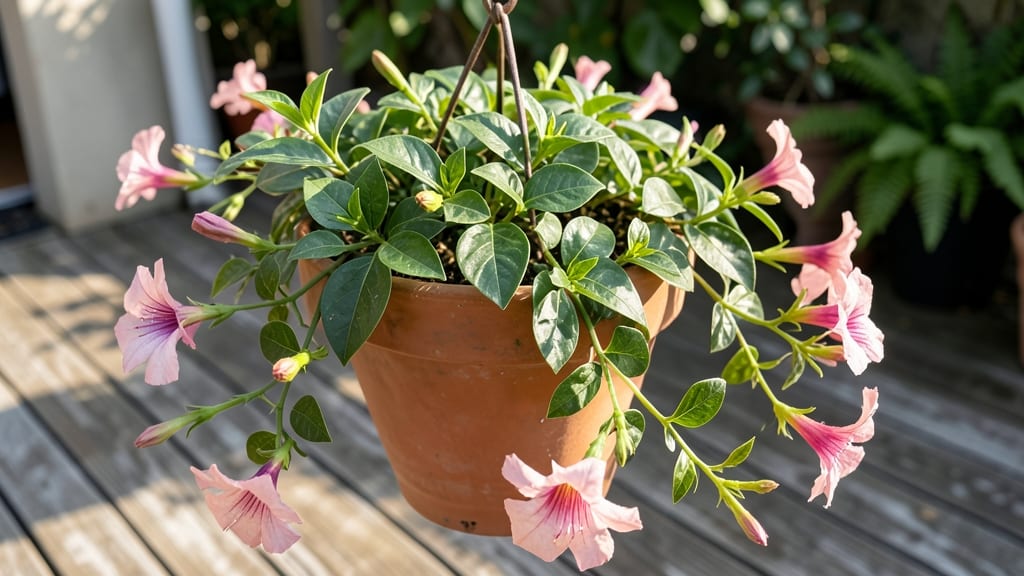
Growing a hanging Mandevilla plant turns any porch or patio into a tropical paradise. 🌺 These vines explode with bright pink, red, or white flowers from spring until frost, and they thrive in containers with minimal fuss.
The secret isn’t complicated—it’s about matching their love of sun, warmth, and well-draining soil to your growing conditions. Start with a 10-15 gallon hanging basket filled with a mix of potting soil and perlite for drainage.
Place it where it gets 6+ hours of morning sun and partial afternoon shade—this keeps the blooms coming without scorching the leaves. Water when the top inch of soil feels dry, but never let it sit soggy, or root rot will shut down the show.
By mid-summer, your Mandevilla will be a cascading waterfall of flowers, drawing hummingbirds and butterflies. Prune leggy stems after blooming to encourage bushier growth, and feed monthly with a balanced fertilizer. Even in cooler climates, you can overwinter it indoors near a bright window. The best part?
These vines adapt to balconies, porches, or even large pots. With the right care, you’ll have year-round color that rivals any tropical getaway. Let’s get those vines growing!
📚 In This Guide
- What you need
- Instructions
- Tips and common mistakes
- Wrapping up and next steps
What you need
- ● Hanging Mandevilla plant: Choose a healthy vine (1-3 plants, depending on pot size). Look for lush green leaves and vibrant buds!
- ● Hanging planter: 12–18" diameter pot with drainage holes (fabric or ceramic). Pro tip: Ensure it’s lightweight for easy hanging! 💡
- ● Well-draining potting mix: 2–3 gallons of a blend like African violet mix or a cactus/succulent mix (amended with perlite or orchid bark for aeration).
- ○ Support structure: A trellis, moss pole, or decorative ring (optional but encouraged for vertical growth!).
- ● Fertilizer: Balanced liquid fertilizer (10-10-10 or 20-20-20) or slow-release granular fertilizer for tropical plants.
- ● Pruning shears: Sharp, clean pair for trimming and shaping.
- ● Watering can or spray bottle: With a narrow spout for precise watering.
- ○ Mulch (optional): Orchid bark or coconut coir to retain moisture and mimic tropical conditions.
- ● Location: Bright, indirect sunlight (4–6 hours daily). Avoid harsh midday sun, which can scorch leaves. 🌞
- ● Temperature: Ideal range: 60–80°F (15–27°C). Protect from frost—Mandevillas are not cold-hardy!
- ● Humidity: Aim for 50–70%. Group plants together or use a humidifier if your air is dry. 💧
- ● Watering routine: Keep soil evenly moist but not soggy. Reduce watering in winter.
Step-by-step guide to growing a thriving hanging Mandevilla
Here’s how I get those dramatic, trumpet-shaped blooms to cascade nonstop—with minimal fuss.
🪴 Step 1: Select the Right Hanging Basket and Soil Mix
Choose a 12-18 inch diameter hanging basket with multiple drainage holes—Mandevillas hate soggy roots. I use terracotta or fiberglass because they breathe better than plastic. Line the bottom with 1-2 inches of moisture-retentive liner (like coconut coir) to prevent soil from washing out during watering.
Fill the basket with a well-draining potting mix—never garden soil. I blend 50% premium potting mix, 30% perlite, and 20% orchid bark for aeration. This combo mimics their native tropical forests while preventing root rot. Tap the basket gently to settle the mix, then water thoroughly until it drains freely from the bottom.
☀️ Step 2: Plant and Position for Maximum Sunlight
Dig a hole in the center of the basket twice as wide as the root ball and place your Mandevilla so the top of the root ball sits 1 inch below the rim. Gently firm the soil around the roots, then water again to eliminate air pockets. I plant one vine per basket—crowding leads to competition and fewer blooms.
Position your basket in full sun (6+ hours daily)—a south or west-facing patio works best. Mandevillas are tropical vines, so they’ll thrive in temperatures above 60°F. If your summers dip below 50°F at night, bring it indoors or cover it with frost cloth. You’ll know it’s happy when new growth appears within 2-3 weeks of planting.
💧 Step 3: Water and Fertilize for Nonstop Blooms
Water when the top 1-2 inches of soil feel dry—usually every 2-3 days in summer, less in winter. Stick your finger in the soil: if it’s damp below ½ inch, wait one more day. Overwatering is the #1 killer of Mandevillas. I water at the base to avoid wetting the leaves, which can cause fungal issues.
Feed with a balanced liquid fertilizer (10-10-10 or 20-20-20) every 2 weeks during spring and summer. Cut back to once a month in fall and stop fertilizing in winter. You’ll see the difference: plants fed correctly produce larger, more frequent blooms and lush, glossy foliage.
✂️ Step 4: Prune and Train for Bushier Growth
Prune after the last frost and again in early spring to shape the vine. Cut back one-third of the previous year’s growth to encourage new, bushier stems. I also trim any leggy or bare stems—these won’t produce flowers. Use clean, sharp pruners and make cuts just above a leaf node (the bump where leaves grow).
Train the vine by tying new growth to the basket’s edge with soft plant ties. This prevents the stems from becoming too heavy and ensures even, cascading growth. After pruning, you’ll notice new shoots emerging within 2-3 weeks—this is your plant’s way of rewarding you for the trim!
🌿 Step 5: Overwinter for Next Year’s Blooms
When temperatures drop below 50°F at night, move your Mandevilla indoors to a bright, sunny spot (like a south-facing window). Reduce watering to once every 7-10 days and stop fertilizing entirely. If the vine looks tired, give it a light trim to remove dead or yellowing leaves.
In late winter (around February), resume fertilizing and gradually reintroduce sunlight by placing it near a window for a few hours daily. This hardening-off period ensures your Mandevilla blooms again as soon as it’s back outside. With proper overwintering, you’ll have year-round blooms for seasons to come.
Tips & tricks for thriving hanging Mandevilla vines
Here’s what I’ve learned after years of growing these stunning tropical vines—small tweaks that make all the difference between a struggling plant and a blooming cascade.
Soil Mix Matters: The 50-30-20 blend of premium potting mix, perlite, and orchid bark isn’t just arbitrary—it’s about creating that perfect air-to-moisture balance. If you notice yellowing leaves after planting, your mix might be too dense. Try adding an extra 5% perlite to improve drainage. For containers without drainage holes, add a 2-inch layer of expanded clay pebbles at the bottom instead of liner to prevent compaction.
Sunlight Strategy: Those 6+ hours of daily sun are non-negotiable, but quality matters more than quantity. If your Mandevilla’s leaves start curling or dropping blooms, it’s getting too much harsh afternoon sun. I’ve found that positioning baskets under sheer white fabric during peak summer hours (11 AM-3 PM) prevents sunburn while still providing the light they crave. In cooler climates, a south-facing window indoors provides enough light for overwintering.
Watering Wisdom: The finger test for soil moisture is foolproof, but timing is everything. Water in the morning so excess moisture evaporates during the day. I’ve ruined vines by watering at night—condensation on leaves leads to fungal issues. For travelers, set up a self-watering system with a moisture meter probe to maintain that 1-2 inch dry top layer while you’re away for up to 2 weeks.
Pruning Payoff: Cutting back one-third of last year’s growth isn’t just about aesthetics—it’s about redirecting energy. I make all my pruning cuts at a 45-degree angle just above a leaf node, which encourages faster regrowth. For dramatic displays, prune right after blooming ends to stimulate new growth before the next flowering cycle. The 2-3 week regrowth window is your plant’s way of telling you it’s happy with the trim!
Pro Tips for Hanging Mandevilla Plant
- Here’s what I’ve learned after years of growing these stunning tropical vines—small tweaks that make all the difference between a struggling plant and a blooming cascade.
- Soil Mix Matters: The 50-30-20 blend of premium potting mix, perlite, and orchid bark isn’t just arbitrary—it’s about creating that perfect air-to-moisture balance.
- Sunlight Strategy: Those 6+ hours of daily sun are non-negotiable, but quality matters more than quantity.
Frequently asked questions
Got questions about growing and caring for your hanging Mandevilla plant?
You’re not alone! Here are some of the most common queries—plus quick, actionable answers to keep your tropical beauty thriving.
How fast does a hanging Mandevilla grow?
A healthy Mandevilla can grow 12–24 inches per year, especially with proper care. In ideal conditions (full sun, warm temps, and regular watering), you may see rapid growth during spring and summer. Prune in late winter to encourage bushier, fuller vines and control sprawl.
Can Mandevilla survive winter outdoors?
Nope! Mandevillas are tender perennials and die in frost. If you live in a cold climate, bring potted plants indoors before temps drop below 40°F (4°C). For outdoor vines, treat them as annuals or grow them in containers you can move.
Why are the leaves turning yellow?
Yellow leaves usually signal overwatering or nutrient deficiency. Check the soil—it should stay slightly moist but never soggy. If roots are mushy, repot in well-draining mix. Yellowing can also mean too much direct sun (move to partial shade) or underwatering (water deeply when the top inch feels dry).
What’s a good alternative if Mandevilla is too high-maintenance?
If you want low-maintenance, trailing vines with flowers, try these:
- Bougainvillea – Drought-tolerant and vibrant.
- English Ivy – Hardy and great for shade.
- Passionflower – Unique blooms and easy care.
- Petunia – Fast-growing annual with lots of color.
How do I prevent pests like spider mites or aphids?
Mandevillas attract pests when stressed (e.g., drought or poor air circulation). Prevent issues by:
- Spraying leaves with neem oil monthly.
- Keeping plants well-watered and in bright, indirect light.
- Inspecting new growth weekly for early signs.
Wrapping up and next steps
Growing a hanging Mandevilla plant is a rewarding way to bring vibrant tropical beauty into your space—whether indoors or out! With the right care, these stunning vines will thrive, gracing you with year-round blooms and lush foliage. 🌺✨
Now that you’re equipped with the essentials—from soil prep to pruning tips—it’s time to roll up your sleeves and get planting! Start small, stay patient, and soon you’ll be basking in the glory of your own thriving Mandevilla paradise. Happy gardening! 🌿💚