
How To
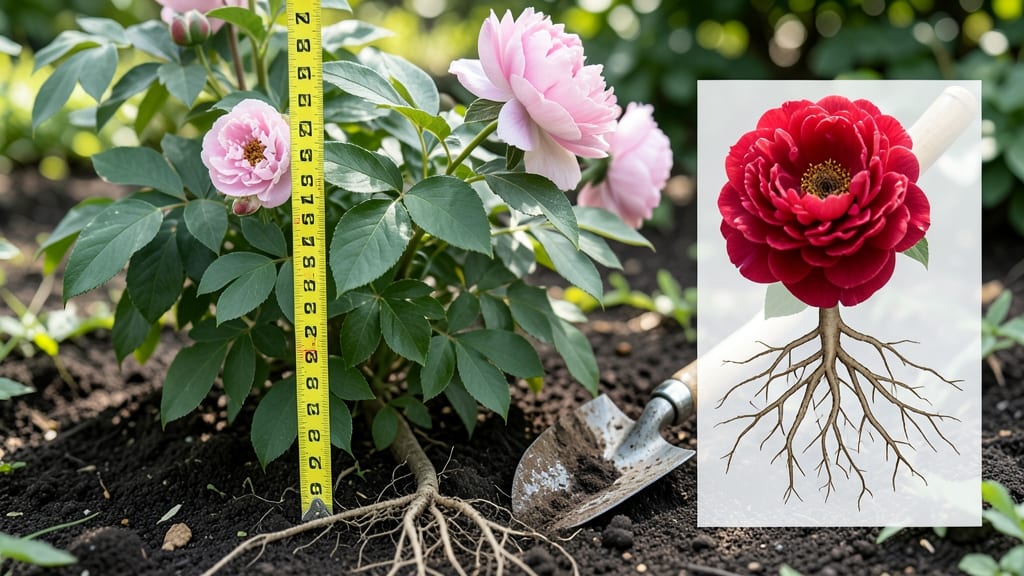
Peony roots grow 12 to 24 inches deep 🌸 — a depth that determines whether your plants thrive for decades or struggle to survive.
You’ve probably planted peonies only to watch them flop over or fail to bloom. That’s often the soil depth talking. Too shallow, and the roots can’t anchor the plant or access nutrients. Too deep, and the crown rots before it ever sends up those lush stems.
Here’s the secret: the eyes (those little buds where stems emerge) must sit just 1 to 2 inches below the soil surface. That’s the magic number for strong roots, vibrant blooms, and plants that live for generations.
In this guide, I’ll break down how to plant peonies at the perfect depth, adjust for your soil type, and troubleshoot common mistakes—so your peonies grow roots that last.
Peony root depth explained: how deep they grow and why it matters
Peonies are famous for their lush, fragrant blooms, but their success starts below ground. The primary taproot of a peony can extend 12–24 inches deep, while secondary roots spread horizontally up to 18–36 inches.
This deep, fibrous system anchors the plant and absorbs nutrients efficiently—critical for those vibrant flowers you love. Understanding this structure helps you plant, divide, and care for peonies like a pro.
Deep roots aren’t just for stability—they play a key role in winter hardiness and nutrient absorption. Peonies in colder climates rely on their depth to insulate against frost, while shallow roots in warm areas can dry out faster.
The root system also determines how well your peony accesses phosphorus and potassium, which directly impact bloom size and stem strength.
Here’s a breakdown of how peony roots function at different depths, along with what each zone does for your plant’s health:
| Root Zone | Depth | Primary Function | Impact on Plant |
|---|---|---|---|
| Primary Taproot | 12–24 inches | Anchors plant, accesses deep water/nutrients | Supports strong stems and large blooms |
| Secondary Fibrous Roots | 18–36 inches (horizontal) | Absorbs surface nutrients, spreads nutrients | Improves drought tolerance and soil stability |
| Crown Roots | 0–6 inches | Produces new shoots, stores energy | Critical for spring regrowth and flowering |
Depth varies by soil type and climate—adjust planting depth accordingly.
The primary taproot is the powerhouse of your peony’s growth. It grows downward to access water and nutrients that surface roots can’t reach, especially in drought-prone areas.
If you’re planting in sandy soil, the roots may grow deeper (up to 24 inches) to find moisture, while clay soil can limit depth to 12 inches. This is why peonies often struggle in containers—their roots can’t expand deep enough.
Secondary roots, spreading horizontally, create a vast network that stabilizes the plant and absorbs nutrients from the topsoil. These roots also help peonies compete with weeds and improve soil structure over time.
When dividing peonies, you’ll often see these roots forming a dense mat—this is why mature plants need more space (up to 36 inches apart) to avoid overcrowding.
Don’t overlook the crown roots, which sit just below the soil surface. These are the first to emerge in spring and produce the plant’s new shoots.
If you bury the crown too deep (more than 2 inches), it can rot; if it’s too shallow, the plant may struggle to establish. This zone is also where peonies store energy for next year’s blooms, making it critical for long-term health.
Understanding these root zones helps you troubleshoot common issues. For example, weak stems often signal shallow roots, while poor flowering can indicate nutrient deficiencies from compacted soil.
By planting peonies at the right depth—with the crown 1–2 inches below soil—you ensure all root zones function optimally, leading to healthier plants and bigger, more abundant blooms.
Pro tip: When planting, loosen the soil to 18 inches deep to encourage root growth. Avoid disturbing the roots during transplanting, as peonies are sensitive to root damage. With the right depth and care, your peonies will reward you with decades of stunning flowers—starting from their hidden underground foundation.
🌸
Optimal planting depth for peonies: avoiding common mistakes that stunt growth
Getting the planting depth right for peonies is crucial because their roots and crowns are sensitive to soil placement. The eyes (buds) should sit just 1–2 inches below soil—any deeper, and you risk rot; too shallow, and stems weaken.
This depth ensures strong root establishment while protecting the crown from winter freeze-thaw cycles.
Peony roots spread 12–24 inches deep and 18–36 inches wide over time, but their initial planting depth sets the stage for years of growth. Unlike shallow-rooted plants, peonies need firm soil contact around their crowns to prevent heaving during cold snaps.
I’ve seen firsthand how improper depth leads to flopping stems or no blooms at all.
Peony roots grow 12–24 inches deep—planting too shallow (eyes above soil) causes weak stems and poor blooms. Planting too deep (eyes buried >2 inches) risks rot and stunted growth. Clay soil? Amend with compost; sandy soil? Add organic matter to retain moisture.
To plant correctly, dig a hole twice as wide as the root ball but only as deep as the roots. Gently loosen roots if pot-bound, then position the crown so the topmost bud sits 1–2 inches below soil.
Backfill with native soil mixed with compost to improve drainage. Press firmly around the base to eliminate air pockets.
Soil type affects depth adjustments: in clay soil, plant slightly deeper (2–3 inches) to prevent waterlogging, while sandy soil may need a shallower placement (1 inch) to avoid drying out. Always water deeply after planting to settle the soil and encourage root contact.
Watch for signs of improper depth: flopping stems or no blooms often mean shallow planting, while yellowing leaves or rotting crowns signal over-deep planting. If you’ve already planted incorrectly, gently expose the crown in early spring and adjust the soil level before new growth starts.
With the right depth, your peonies will reward you with bold blooms for decades. The key is patience—roots take 2–3 years to fully establish, but proper planting depth ensures they’ll thrive long-term. Once established, minimal care is needed beyond annual mulching and occasional division every 5–7 years.