
Planting
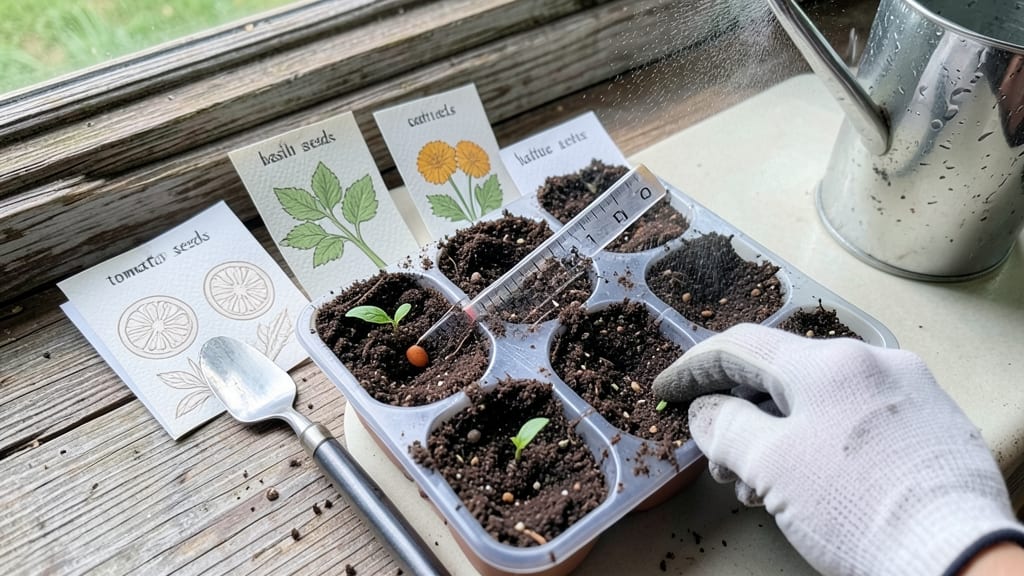
How deep should seeds be planted—typically twice the seed’s diameter—is the secret to fast germination and strong seedlings 🌱.
Planting seeds at the wrong depth can mean the difference between a thriving garden and wasted effort—yet most gardeners guess instead of following science-backed rules.
Too shallow, and seeds dry out before sprouting. Too deep, and they struggle to reach the light, often rotting underground. The good news? A few simple rules—plus adjustments for soil type and seed size—can turn guesswork into success every time.
Below, I break down the exact depth for tiny seeds (like lettuce) vs. large ones (like beans), plus when to bend the rules for delicate species or heavy clay soil.
Seed planting depth rules by seed size (with exact measurements)
Getting seed depth right is one of the most overlooked factors in gardening success. Too shallow, and seeds dry out before sprouting; too deep, and they struggle to reach sunlight. The universal rule is simple: plant seeds at a depth equal to 2-3 times their diameter.
But this general guideline doesn't account for delicate seeds or soil conditions. Let's break down the science-backed measurements for different seed sizes and when to bend the rules.
For example, a lettuce seed (about 1/16-inch wide) should go in just 1/8-inch deep, while a bean seed (1/2-inch wide) needs 1-inch depth. The difference ensures tiny seeds stay moist while large seeds have enough energy to push through soil.
However, some seeds like petunias or carrots need special handling—we'll cover those exceptions next.
Here's a quick reference for common seed categories, including exact measurements and why they matter:
| Seed Type | Seed Size (Diameter) | Recommended Depth | Notes |
|---|---|---|---|
| Tiny Seeds (e.g., Lettuce, Carrot, Spinach) | 1/16" - 1/8" | 1/8" - 1/4" | Light-dependent; needs moisture but not burial |
| Small Seeds (e.g., Basil, Marigold, Radish) | 1/8" - 1/4" | 1/4" - 1/2" | Standard rule applies; balance moisture and light |
| Medium Seeds (e.g., Tomato, Cucumber, Peppers) | 1/4" - 1/2" | 1/2" - 1" | Energy reserves need room to access moisture |
| Large Seeds (e.g., Bean, Pea, Corn) | 1/2" - 1" | 1" - 2" | Thick seed coats protect against drying |
| Delicate Seeds (e.g., Petunia, Snapdragon, Impatiens) | 1/16" - 1/8" | Surface or 1/16" deep | Light-sensitive; cover with vermiculite |
| Deep-Rooted Seeds (e.g., Carrot, Parsnip, Dill) | 1/8" - 1/4" | 1/2" - 1" | Prevents forking; needs consistent moisture |
Let's start with the seed size rule—this is where most gardeners begin, and it's a great baseline. For seeds like radishes (1/8-inch diameter), multiply by 2-3 to get 1/4" to 1/2" depth.
This ensures the seedling has enough energy to push through soil without drying out. However, petunias and impatiens are exceptions—they need surface planting because their seeds require light to germinate.
For large seeds like beans or peas, the deeper planting (1-2 inches) protects their moisture content and gives them room to develop strong roots. These seeds contain enough nutrients to fuel early growth, so burial isn't a risk.
The key is to press the soil gently around the seed rather than compacting it—this maintains aeration while keeping moisture in place.
Delicate seeds, like those of carrots or lettuce, need special care. Their thin seed coats can dry out quickly, so lightly covering them with a fine layer of soil or vermiculite is critical.
I've found that using a seed starter mix with added perlite helps retain moisture without suffocating tiny sprouts. Always label your rows—these seeds often need thinning once they're 2-3 inches tall to give plants proper spacing.
One common mistake I see is over-deepening seeds to "protect" them. While it might seem logical, seeds like tomatoes or cucumbers planted too deep can develop weak stems as they struggle to reach the surface.
The cotyledons (seed leaves) should emerge just below soil level for healthy growth. If you're unsure, check the seed packet—many now include a depth diagram showing the ideal placement.
Soil type also plays a role. Sandy soil drains quickly, so seeds need slightly deeper planting (up to 1/4-inch deeper) to hold moisture. Conversely, clay soil can suffocate seeds if planted too deep—opt for shallower depths and add compost to improve aeration.
Always water gently after planting to settle the soil without displacing seeds.
Pro tip: Use a toothpick or pencil to create small holes for seeds, then cover with a thin layer of soil. This gives you precise control over depth, especially for tiny seeds.
For larger seeds, a small trowel works better. Remember, the goal is to mimic the seed's natural environment—most wild seeds germinate near the surface where moisture and light balance.
Finally, don't forget about temperature and moisture. Seeds planted too deep
How light and soil affect seed germination depth (critical adjustments)
While the seed size rule works for most plants, light and soil conditions often require adjustments. Some seeds, like petunias or snapdragons, need near-surface planting because they rely on light to trigger germination.
Others, like carrots or parsnips, benefit from deeper planting to prevent forking and maintain moisture. Understanding these exceptions can transform your germination rates from hit-or-miss to consistently successful.
Light-dependent seeds, such as those from petunias or impatiens, should never be buried more than 1/16-inch deep. In fact, many can be pressed gently into the soil surface or even covered with a thin layer of vermiculite or fine sand.
These seeds contain photosensitive compounds that only activate when exposed to light. Burying them too deep means they'll rot before ever sprouting. For these delicate varieties, I recommend using a seedling heat mat to maintain consistent soil temperatures (around 70-75°F) while keeping the soil surface moist but not soggy.
On the opposite end, moisture-sensitive seeds like carrots or dill thrive when planted slightly deeper than the standard rule. Their thin seed coats dry out quickly, so burying them 1/2-inch to 1-inch deep helps retain moisture while still allowing light penetration.
The key is to keep the soil consistently damp—not waterlogged—until germination occurs. For these seeds, I use a fine mist spray bottle to water gently after planting, ensuring the soil stays moist without displacing seeds.
Planting Depth Adjustments by Seed Type
Light-Dependent Seeds (Shallow Planting)
- Petunias: Surface or 1/16" deep
- Impatiens: Press into soil
- Snapdragons: 1/8" max depth
Why? Needs light to germinate; burying blocks activation.
Moisture-Sensitive Seeds (Deeper Planting)
- Carrots: 1/2" - 1" deep
- Parsnips: 1/2" - 3/4" deep
- Dill: 1/4" - 1/2" deep
Why? Prevents rapid drying; retains moisture for germination.
Standard Rule Seeds (2-3x Diameter)
- Tomatoes: 1/4" - 1/2" deep
- Beans: 1" - 2" deep
- Radishes: 1/4" - 1/2" deep
Why? Balances moisture and light for reliable germination.
Adjust depth based on your soil type—sandy soil needs deeper planting, while clay soil requires shallower depths.
Soil type also demands adjustments. In sandy soil, which drains quickly, seeds should be planted 1/4-inch deeper than the standard rule to retain moisture. For example, a lettuce seed (1/8-inch diameter) would go 3/8-inch deep in sand instead of the usual 1/8-inch.
Conversely, clay soil can suffocate seeds if planted too deep, so opt for shallower depths and amend the soil with compost or perlite to improve aeration. I’ve had the best success with loamy soil, which holds moisture without becoming waterlogged, making it ideal for most seeds.
Another critical factor is soil temperature. Seeds planted in cold soil (below 50°F) may fail to germinate, even at the correct depth. To speed up germination, I use a black plastic mulch to warm the soil or plant in raised beds, which heat up faster in spring.
For warm-season crops like peppers or tomatoes, wait until the soil reaches at least 60°F before planting—this ensures consistent germination rather than spotty results.
For container gardening, depth adjustments are even more critical because pots dry out faster. Tiny seeds like basil or marigolds should be planted just 1/8-inch deep in well-draining mix, while larger seeds like beans can go up to 1-inch deep.
Always use a seed-starting mix with added perlite or coconut coir to prevent compaction. When transplanting seedlings, bury them slightly deeper than they were in their original pot—this encourages stronger root growth as the buried stem develops new roots.
Finally, don’t overlook the role of mulch. A light layer of straw or shredded leaves after planting helps retain moisture and regulate soil temperature, especially for shallow-planted seeds.
Just avoid piling mulch directly on seeds—this can block light for light-dependent varieties or create a barrier that prevents seedlings from emerging. With these adjustments, you’ll see faster, more reliable germination and healthier seedlings ready for transplanting.