
Planting
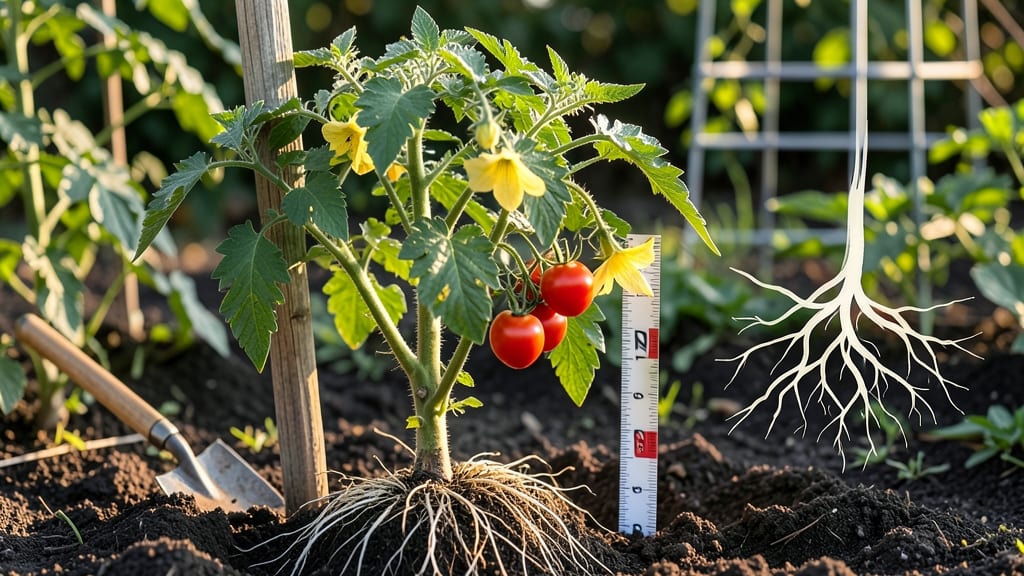
Tomato roots grow 12 to 18 inches deep—but how you plant them determines whether they’ll spread wide enough to support a bountiful harvest or struggle to reach water and nutrients.
Picture this: You’ve spent weeks nurturing your seedlings, only to watch them wilt mid-season because their roots were planted too shallow.
That’s the hidden secret behind many failed tomato gardens—root depth isn’t just about how far down they go, but how you prepare the soil and space them for long-term strength.
In this guide, I’ll break down the science behind tomato root systems, show you how to dig the perfect planting hole, and share spacing tricks that make all the difference between a weak, floppy plant and one that thrives all season.
You’ll learn how soil type affects depth, why determinate and indeterminate varieties need different care, and the three mistakes that stunt root growth before they even start. Let’s get your tomatoes off to the right start!
Tomato root depth explained: how far do they really grow?
When you're planting tomatoes, the depth of their roots might seem like a minor detail—but it's actually one of the most critical factors for a thriving harvest. Tomato roots can grow surprisingly deep, often reaching 2-3 feet in ideal conditions, while lateral roots spread outward to create a vast network.
Understanding this structure helps you plant correctly, space properly, and provide the right care for maximum yield.
The primary root, called the taproot, grows straight down, while secondary roots branch out horizontally.
These lateral roots absorb water and nutrients from the surrounding soil, which is why proper planting depth and soil preparation matter so much. Indeterminate varieties, like 'Sungold' or 'Brandywine', develop deeper roots than determinate varieties, such as 'Roma' or 'Celebrity'.
Soil type plays a huge role in how deep tomato roots grow. In loamy soil, roots can penetrate easily to 3 feet or more, while clay soil can restrict growth to just 1-2 feet due to compaction.
Sandy soil, on the other hand, allows roots to spread wider but may not hold moisture as well. Let’s break down the specifics in this summary table to help you visualize the ideal conditions for your tomato roots.
| Factor | Primary Root Depth | Lateral Spread | Soil Type Impact | Best Practices |
|---|---|---|---|---|
| Indeterminate Varieties | 2-3 feet | 3-4 feet wide | Loamy soil: deep penetration; Clay: restricted | Plant deep, use trellises |
| Determinate Varieties | 1-2 feet | 2-3 feet wide | Sandy soil: wide spread; Compacted: shallow | Space 18-24 inches apart |
| Root Zone Depth | 6-12 inches (topsoil) | 1-2 feet (lateral) | Aerated soil: deeper roots; Compacted: stunted | Loosen soil before planting |
| Water Uptake Zone | 1-2 feet deep | 2-3 feet wide | Moisture retention: clay holds water; sand drains fast | Mulch to retain moisture |
| Nutrient Uptake Zone | Top 12 inches | 1-2 feet wide | Organic matter: deeper roots; Poor soil: shallow | Add compost at planting |
Now that you see how tomato root depth varies by variety and soil type, you can tailor your planting strategy. For example, indeterminate tomatoes benefit from deeper planting—up to one-third of the stem buried—to encourage stronger root development.
This technique, called hill planting, helps stabilize taller plants and improves water absorption during hot summer months.
Lateral roots, which spread horizontally, are equally important. These roots absorb 80% of the plant’s water and nutrients, so spacing your tomatoes correctly is key. If you plant them too close together, the roots will compete for resources, leading to weaker plants and smaller yields.
Aim for 18-24 inches apart for determinate varieties and 24-36 inches apart for indeterminate ones to give roots room to expand.
Another factor to consider is soil aeration. Compacted soil restricts root growth, while loose, well-draining soil allows roots to explore deeper. Before planting, amend your soil with compost or aged manure to improve structure and fertility.
This not only encourages deeper root penetration but also helps retain moisture, which is crucial during the fruiting stage when tomatoes need consistent hydration.
If you're growing tomatoes in containers, root depth becomes even more critical. Choose pots that are at least 12-18 inches deep to accommodate the primary root. Larger containers also allow for better root spread, reducing the risk of overcrowding.
Add a slow-release fertilizer to the bottom layer of soil to provide nutrients as the roots grow downward.
Understanding how deep tomato roots grow also helps you troubleshoot common issues. If your plants look wilting or stunted, it could be a sign of root-bound conditions or insufficient depth. In such cases, transplanting into deeper soil or a larger container can often revive the plant.
Pay attention to the color and texture of leaves—yellowing or curling leaves may indicate poor root health due to compacted or nutrient-deficient soil.
Finally, remember that tomato roots are sensitive to disturbance. Avoid digging around the base of the plant once it’s established, as this can damage the delicate root system. Instead, focus on mulching to protect the soil and retain moisture.
A 2-3 inch layer of organic mulch, like straw or shredded leaves, will also help regulate soil temperature and suppress weeds, creating an ideal environment for your tomato roots to thrive.
Optimal planting depth and spacing for maximum tomato growth
Getting your tomato plants off to the right start means mastering two key factors: planting depth and spacing between plants. Too shallow, and roots struggle to anchor; too crowded, and competition steals nutrients.
I’ve learned that root depth directly impacts your harvest’s size and stability—especially during wind or heavy fruiting. Let’s break down the science-backed guidelines I use in my garden to ensure my tomatoes thrive from day one.
The ideal transplanting depth for tomato seedlings is just below where the stem meets the soil in the nursery pot. This ensures the root zone stays intact while encouraging new roots to grow downward. For most varieties, aim to bury the stem up to 1/3 of the plant’s height.
For example, a 6-inch seedling should have about 2 inches of stem covered. This buried section will sprout new roots, creating a stronger base for your plant.
🌱 Comparison Table: Tomato Planting Depth & Spacing
| Factor | Determinate Tomatoes | Indeterminate Tomatoes | Container Tomatoes |
|---|---|---|---|
| Planting Depth | 1/3 stem buried (2-3 inches) | 1/3 stem buried (2-3 inches) | 1/2 stem buried (3-4 inches) |
| Spacing (In-Ground) | 18-24 inches apart | 24-36 inches apart | N/A (use containers) |
| Container Size | 5-gallon minimum | 10-15-gallon minimum | 10-15-gallon minimum |
| Root Depth Goal | 12-18 inches deep | 18-24 inches deep | 12-18 inches deep (limited by pot) |
| Support System | Cages or small stakes | Tall stakes or trellis | Stakes or cages |
When it comes to spacing between plants, indeterminate tomatoes need the most room—24-36 inches apart—because they grow continuously and require strong airflow to prevent disease. Determinate varieties, which grow to a fixed size, can handle 18-24 inches of space.
Proper spacing isn’t just about avoiding crowding; it’s about giving roots room to explore soil for nutrients and water without competing with neighbors.
For container-grown tomatoes, depth matters just as much as space. Use pots that are at least 12-15 gallons for indeterminate varieties to accommodate their deeper root systems. I’ve found that 5-gallon containers work for determinate types, but even then, roots will circle the pot if not given enough room.
To encourage downward growth, I always add a rooting hormone and mix in compost to loosen the soil for easier root penetration.
Another game-changer I’ve adopted is using soil aeration techniques like tilling or adding organic matter before planting. Compacted soil restricts root expansion, leading to weaker plants. I also avoid over-watering right after transplanting, as soggy soil can suffocate young roots.
Instead, I water deeply every other day once the plants are established, ensuring the root zone stays moist but not waterlogged.
Finally, don’t overlook the role of support structures. Whether you choose tomato cages or stakes, proper support prevents the plant from bending or breaking under the weight of fruit.
I’ve seen firsthand how unstaked plants develop shallow root systems because their energy goes into supporting their own weight instead of growing deeper. By combining the right planting depth, spacing, and support, you’ll give your tomatoes the best chance to grow strong and productive all season.