
Planting
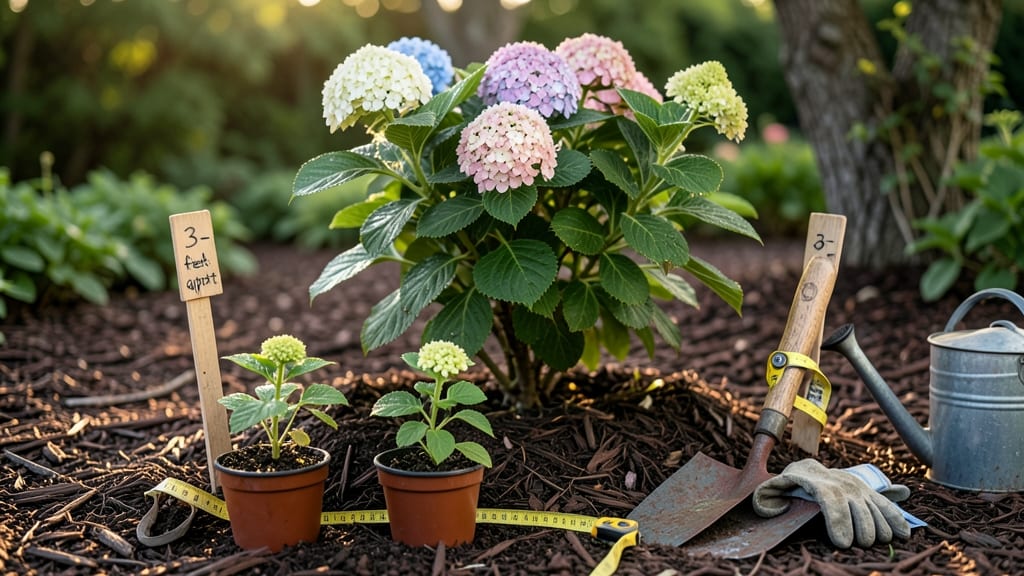
How far apart do hydrangeas need to be planted? Too close means stunted growth and fewer blooms, while spacing them too far wastes precious garden space—the right distance depends on your variety and sunlight.
Struggling to decide how much space to leave between hydrangeas? Planting them too close leads to competition for nutrients, while spacing them too far wastes garden space—and neither scenario guarantees lush, blooming bushes.
Bigleaf hydrangeas 🌸, for example, need 4 to 6 feet of space to thrive, while panicle types can stretch up to 8 feet at maturity. Sunlight exposure also plays a role: shade-loving varieties can handle closer spacing, while sun-tolerant ones need extra room for airflow.
In this guide, I’ll break down the exact spacing rules for each type, how to adjust for full sun vs. shade, and the common mistakes that ruin hydrangea health—so you can plant with confidence.
Hydrangea spacing guidelines by variety: bigleaf, panicle, and oakleaf differences
Not all hydrangeas are created equal when it comes to spacing. The variety you choose determines how much room your plants need to thrive.
Bigleaf hydrangeas (Hydrangea macrophylla) like 'Endless Summer' thrive with 3-5 feet of space, while panicle types (Hydrangea paniculata) such as 'Limelight' can stretch up to 6-8 feet at maturity.
Oakleaf hydrangeas (Hydrangea quercifolia) fall somewhere in between, needing 4-6 feet to show off their stunning foliage.
Proper spacing isn't just about aesthetics—it's about air circulation and root competition. Crowded hydrangeas suffer from fungal diseases like powdery mildew and struggle to develop their signature blooms. Meanwhile, over-spaced plants waste garden real estate and may produce fewer flowers.
Let's break down the exact spacing needs for each type so you can create a thriving hydrangea garden.
Why spacing matters: Hydrangeas with proper spacing receive even sunlight, better airflow, and uninterrupted root growth. For example, 'Nikko Blue' bigleaf hydrangeas need 4 feet between plants, while 'Little Lime' panicle hydrangeas can handle 5 feet. Oakleaf varieties like 'Snow Queen' typically need 5 feet to prevent overcrowding.
| Variety | Mature Size | Recommended Spacing | Sunlight Needs | Notes |
|---|---|---|---|---|
| Bigleaf (H. macrophylla) | 3-5 ft tall, 3-5 ft wide | 3-5 ft apart | Partial shade (4-6 hrs sun) | Dwarf varieties (e.g., 'Mini Penny') need 2-3 ft |
| Panicle (H. paniculata) | 4-8 ft tall, 4-6 ft wide | 5-8 ft apart | Full sun to partial shade | Tall varieties (e.g., 'Grandiflora') need 8 ft |
| Oakleaf (H. quercifolia) | 5-7 ft tall, 4-6 ft wide | 4-6 ft apart | Partial shade to full sun | Best for woodland gardens |
For bigleaf hydrangeas, aim for 3-5 feet between plants. This spacing allows their lush foliage to fill out without competing for nutrients. Varieties like 'Annabelle' and 'Endless Summer' thrive with this distance, producing abundant blooms year after year.
If you're planting in containers, use one plant per 15-gallon pot to give roots enough room to expand.
Panicle hydrangeas are the fastest-growing type, so they need the most space—5-8 feet apart. These varieties, like 'Limelight' and 'Little Lime', develop upright growth habits and can reach heights of 8 feet.
Planting them too closely results in leaning stems and reduced flowering. Use this spacing for both landscaping focal points and privacy screens.
Oakleaf hydrangeas strike a balance with 4-6 feet of spacing. Their distinctive oak-shaped leaves and seasonal color changes make them a standout in any garden. Varieties like 'Snow Queen' and 'Alice' benefit from this moderate spacing, allowing their vibrant fall foliage to shine without overcrowding.
When planning your hydrangea garden, consider mature size and growth rate. For example, 'Little Lime' panicle hydrangeas grow 3 feet per year, while bigleaf varieties like 'Nikko Blue' grow more slowly. Adjust spacing based on your garden's layout—smaller gardens may require dwarf varieties or creative container planting.
Always plant hydrangeas in well-draining soil with a slightly acidic pH (5.2-6.0) for optimal growth. Amend heavy clay soils with compost or peat moss to improve drainage. After planting, water deeply to encourage root establishment and mulch around the base to retain moisture.
Remember, proper spacing leads to healthier plants and more dramatic blooms. Whether you're planting a single specimen or creating a hydrangea border, follow these guidelines to ensure your garden thrives for years to come. 🌸
Full sun vs. shade planting: adjusting hydrangea spacing for optimal growth
Sunlight exposure dramatically changes how much space hydrangeas need to thrive. While 'Nikko Blue' bigleaf hydrangeas prefer shady spots and can handle 3-4 feet between plants, sun-loving varieties like 'Limelight' panicle hydrangeas require 6-8 feet for proper airflow and light penetration.
This difference isn't just about aesthetics—it's about plant health and bloom production.
Shade-loving hydrangeas like 'Nikko Blue' and 'Annabelle' grow more compactly in partial shade (4-6 hours of sun), allowing you to plant them closer together—as little as 3 feet apart.
Their delicate blooms benefit from this protection, but overcrowding still risks fungal diseases like powdery mildew. In full sun, even these shade-tolerant varieties need additional space to prevent leaf scorch.
🌱 Key Takeaway: Hydrangea Spacing by Sunlight
3-4 ft apart
5-8 ft apart
Thin out crowded branches annually
Sun-tolerant hydrangeas like 'Limelight' and 'Grandiflora' thrive in full sun but need more space to prevent overheating and stem damage. Their upright growth habit means you should space them 6-8 feet apart, especially if using them as privacy screens.
Without proper spacing, these varieties develop weak stems that flop over, reducing their landscape impact.
Adjust your pruning strategy based on sunlight exposure. In full sun, prune later in the season (June-July) to encourage new growth that can better handle intense sunlight. For shade-loving varieties, prune in late winter to shape the plant before spring growth begins.
Always remove dead or crossing branches to improve air circulation, regardless of sunlight exposure.
Another key factor is soil moisture retention. Shade-loving hydrangeas benefit from moist, well-draining soil that stays consistently damp, while sun-tolerant varieties need drier conditions to prevent root rot.
Amend your soil with organic matter like compost to balance moisture levels, and always mulch around the base of plants to retain soil moisture and regulate temperature.
When designing your hydrangea garden, group sun-loving and shade-loving varieties separately to avoid spacing conflicts. For example, plant 'Limelight' panicle hydrangeas in full sun with 6 feet between plants, while placing 'Nikko Blue' bigleaf hydrangeas in partial shade with 3-4 feet of space.
This creates a harmonious layout that maximizes both bloom production and plant health.
Remember, proper spacing and sunlight management are the keys to vibrant hydrangeas that bloom abundantly year after year. Whether you're working with shade gardens or sunny landscapes, these adjustments ensure your hydrangeas thrive in their ideal growing conditions. 🌸