
Planting
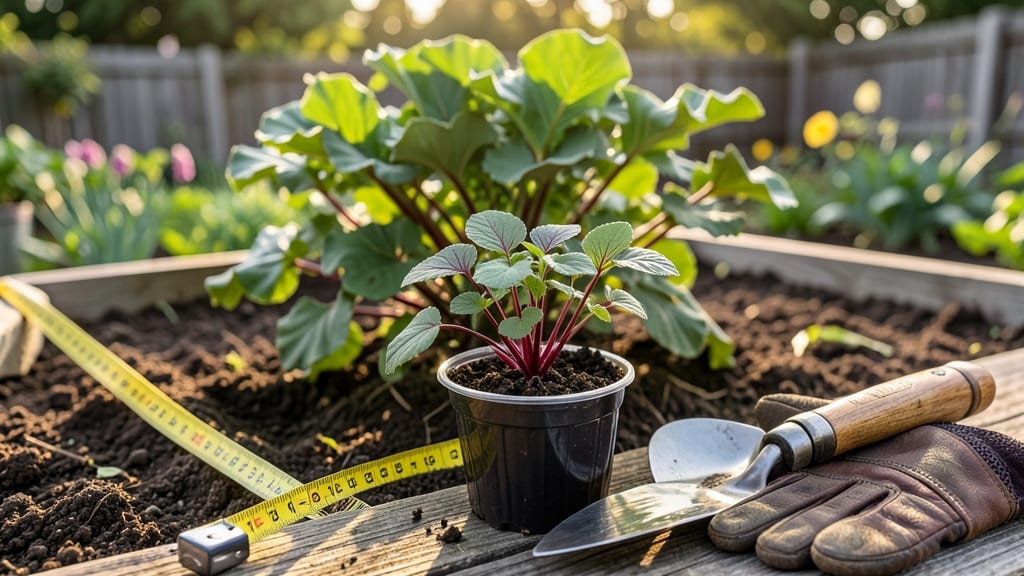
Beets should be planted 3 to 4 inches apart to grow straight, clean roots that are a joy to harvest 🍠 — not tangled, misshapen messes that make you question your gardening skills.
Picture this: you pull a perfect, smooth beet from the soil, only to find it’s lumpy and split because it fought for space with its neighbors. That’s the nightmare proper spacing prevents.
Beyond just avoiding crowded roots, the right distance also keeps weeds at bay, improves airflow to prevent disease, and ensures your soil nutrients go where they’re needed most.
In this guide, I’ll break down the exact spacing for different beet varieties, how to thin seedlings without stressing them, and when to adjust for your soil type or garden layout.
Optimal spacing for beets: why 3-4 inches makes all the difference
When you plant beets too closely together, you’ll end up with crooked, tangled roots that are impossible to clean. The 3-4 inch spacing isn’t just a random number—it’s rooted in science.
Beets need room to develop straight, uniform roots while competing with weeds and accessing nutrients. Too little space leads to stunted growth, while too much wastes precious garden real estate.
Beets are shallow-rooted and spread horizontally, so proper spacing ensures even sunlight exposure and airflow circulation. Without it, you risk disease pressure from fungal issues like leaf spot. The 3-4 inch rule balances these needs, whether you’re growing Detroit Dark Red or Chioggia striped beets.
Soil type plays a huge role in how spacing affects growth. In sandy soil, roots expand faster, so lean toward the 4-inch side to prevent overcrowding. In clay soil, where roots grow slower, 3-inch spacing gives them enough room without competing for moisture. Always loosen soil to 6 inches deep before planting to encourage root penetration.
Beets also benefit from row spacing. Plant rows 12–18 inches apart to accommodate your reach and allow for between-row cultivation. This dual spacing strategy—3–4 inches within rows and 12–18 inches between rows—creates a balanced canopy that maximizes sunlight exposure for all plants.
If you’re growing baby beets for early harvests, you can start with 2-inch spacing and thin to 3 inches as they mature. For heirloom varieties like Golden Beets, which develop larger roots, stretch to 4–5 inches to avoid competition.
Always thin seedlings when they’re 2 inches tall—this reduces transplant shock and gives roots room to expand.
Another key factor is soil moisture retention. In dry climates, wider spacing (up to 4 inches) helps prevent moisture competition among plants. In wet regions, closer spacing (around 3 inches) can work because roots won’t struggle as much for water.
Always mulch with 2–3 inches of straw to retain moisture and suppress weeds.
Proper spacing also makes harvesting easier. When beets are crowded, their roots grow unevenly and develop forks or knots, making them difficult to clean. With 3–4 inches of space, roots grow straight and plump, saving you time in the kitchen.
Plus, you’ll avoid the frustration of broken leaves when pulling tangled beets from the soil.
For container gardening, reduce spacing to 2–3 inches but limit your yield per pot. A 5-gallon container can fit about 4–6 beet plants if spaced closely, but expect smaller roots.
If you’re growing in raised beds, maintain the 3–4 inch rule but add compost to the soil to boost nutrient availability in the confined space.
Remember, thinning is critical. If you sow seeds 1–2 inches apart (as recommended for germination), you’ll need to thin seedlings to 3–4 inches once they’re 2–3 inches tall.
Use sharp scissors to snip at soil level—this prevents disturbing nearby roots. The thinnings can be eaten as microgreens or composted to enrich the soil.
By following these spacing guidelines, you’ll harvest straight, uniform beets every time—no more lumpy, tangled messes. Whether you’re a beginner
Adjusting spacing for different beet varieties and garden conditions
Not all beets need the same space to thrive. Baby beets and container-grown varieties can handle tighter spacing, while heirloom types and dry climates demand more room. Let’s break down how to adjust spacing for your specific situation to maximize yield and root quality.
For standard beet varieties, the general rule is 3-4 inches apart in rows spaced 12-18 inches apart. However, this changes dramatically when growing baby beets or in containers. Understanding these adjustments ensures your beets develop properly without competing for nutrients or space.
In dry regions, wider spacing helps roots access moisture deeper in the soil. I’ve found that adding organic mulch around plants reduces water loss by up to 30%, making tighter spacing feasible in some cases.
For wet climates, closer spacing can work if you prioritize airflow and avoid soggy soil.
If you’re growing beets in containers, aim for 3 plants per 5-gallon pot spaced 3 inches apart. This setup works well for baby beets or succession planting. Just remember to harvest the smallest roots first to avoid overcrowding as the season progresses.
For high-density planting, like in raised beds, reduce spacing to 2-3 inches but limit rows to 10-12 inches apart. This method maximizes yield but requires frequent thinning and consistent watering to prevent stress.
Always adjust spacing based on your soil type and climate. Sandy soils drain faster, so wider spacing helps retain moisture, while clay soils benefit from closer spacing to prevent waterlogging.