
How To
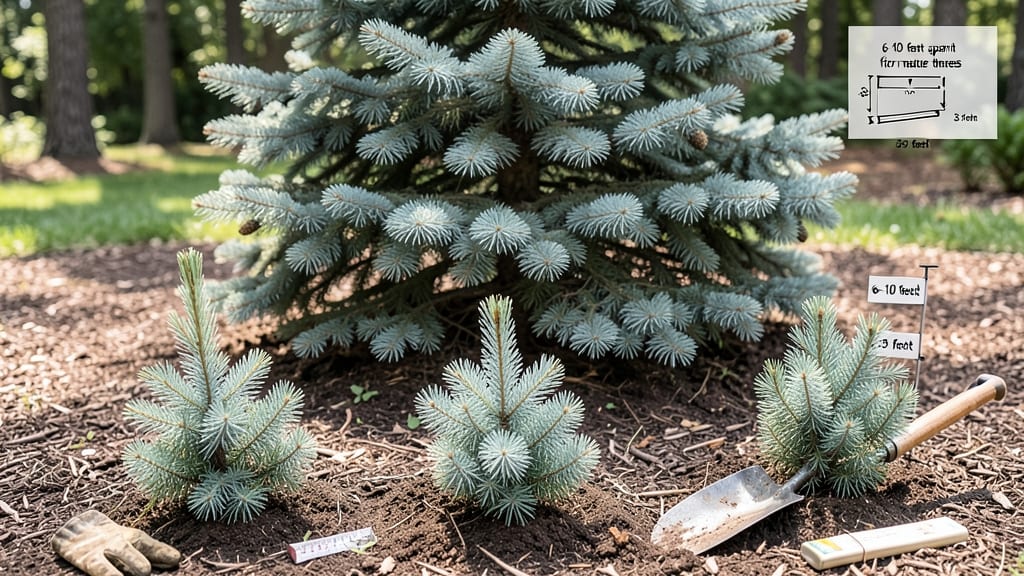
Planting blue spruce too far apart wastes space while crowding them stunts growth and invites pests — the right spacing ensures your 🌲 thrives for decades.
Picture this: a row of stunted blue spruce, their branches scrapping for sunlight, needles thinning out from poor airflow. That’s what happens when spacing is off, and it’s a mistake that’s easy to avoid with the right formula.
The key is matching spacing to your tree’s mature size: standard varieties need 10–15 feet between trunks, while dwarf types can sit just 4–6 feet apart. We’ll break down the exact measurements for your zone and soil type, plus how to adjust for hedgerows or windbreaks.
By the end, you’ll know exactly how to space your blue spruce for stronger growth, better airflow, and a landscape that looks intentional from day one.
Optimal blue spruce spacing by tree mature size and variety
Getting the blue spruce spacing right ensures your trees grow strong and healthy for decades. Since varieties range from dwarf cultivars to towering giants, one-size-fits-all spacing doesn't work.
The key is matching mature height and spread with your landscape goals—whether you're planting as a solitary specimen, hedgerow, or windbreak. Let's break down the exact spacing for popular blue spruce types, including ground vs. container planting.
Most gardeners make two common mistakes: planting too close, which leads to crowded roots and pest problems, or spacing too far apart, wasting valuable yard space.
For standard blue spruce (Picea pungens 'Glauca'), which can reach 30-60 feet tall, proper spacing prevents future pruning headaches and ensures full, lush growth. Smaller varieties like 'Little Gem' or 'Hopkins' need less room but still require thoughtful placement.
| Variety | Mature Height | Mature Spread | Ground Spacing (ft) | Container Size (gal) | Notes |
|---|---|---|---|---|---|
| Picea pungens 'Glauca' (Standard) | 30-60 ft | 10-15 ft | 12-15 ft | N/A (too large) | Plant as solitary specimen or in large groups for windbreaks. |
| Picea pungens 'Conica' (Dwarf) | 8-12 ft | 3-5 ft | 4-6 ft | 5-15 gal | Ideal for rock gardens or container planting. |
| Picea pungens 'Hopkins' | 15-25 ft | 6-8 ft | 8-10 ft | 25-50 gal | Perfect for foundation plantings or small hedgerows. |
| Picea pungens 'Little Gem' | 10-15 ft | 4-6 ft | 6-8 ft | 15-25 gal | Great for urban landscapes or small yards. |
| Picea pungens 'Fat Albert' | 10-12 ft | 6-8 ft | 8-10 ft | 15-25 gal | Unique globular shape—ideal for accent planting. |
For ground planting, always dig a hole twice as wide as the root ball but no deeper. This encourages roots to spread outward instead of circling, which can strangle the tree over time.
Amend the native soil with compost or peat moss to improve drainage, especially in clay-heavy soils where blue spruce roots can suffocate.
When planting in containers, choose a pot that’s 1-2 inches larger in diameter than the root ball. For dwarf varieties like 'Conica', a 15-gallon container is perfect, while 'Hopkins' needs at least 50 gallons to thrive long-term.
Always use a well-draining mix with perlite or sand to prevent root rot.
If you're planting multiple blue spruce in a row or hedgerow, space them 1/3 to 1/2 of their mature width apart. For example, 'Little Gem' (4-6 ft spread) should be planted 2-3 feet apart for a dense, natural-looking hedge.
For windbreaks, increase spacing to 10-15 feet between trees to allow airflow and reduce snow damage.
One pro tip I’ve learned is to stake young trees only if necessary—over-staking can restrict root growth. Instead, focus on mulching with pine straw or wood chips to retain moisture and regulate soil temperature. Avoid piling mulch against the trunk, as this can cause rot or pest infestations.
For urban landscapes or small yards, consider dwarf or semi-dwarf varieties like 'Little Gem' or 'Hopkins'. These compact trees fit neatly into landscape beds or even large containers, making them ideal for patios or balconies. Just ensure they get full sun exposure—blue spruce won’t thrive in shade.
Remember, proper spacing now saves headaches later. A
How blue spruce spacing affects growth, health, and landscape design
Proper blue spruce spacing isn't just about aesthetics—it directly impacts your trees' long-term health and growth potential. When planted too closely, these evergreens compete for nutrients and sunlight, leading to stunted growth and increased susceptibility to diseases like needle blight.
Conversely, spacing them too far apart can create gaps in your landscape design that look unbalanced. The science behind spacing involves air circulation, root competition, and even snow load capacity in winter.
One of the most critical factors is air circulation. Blue spruce trees need adequate airflow to prevent fungal infections that thrive in damp, crowded conditions. Poor airflow creates a microclimate where spider mites and bagworms can become major problems.
Additionally, proper spacing ensures each tree gets its fair share of sunlight, which is essential for photosynthesis and vibrant blue-green foliage. Without enough light, your trees may develop yellowing needles or weak growth patterns.
Root competition is another key consideration. When blue spruce trees are planted too closely, their root systems can overlap, leading to nutrient depletion in the soil. This forces trees to fight for resources, resulting in slower growth and weaker structural integrity.
Over time, crowded roots can also make trees more vulnerable to windthrow, where strong winds uproot trees due to shallow, competing root networks. Proper spacing allows roots to expand freely, creating a stable foundation for decades of growth.
In winter, snow load capacity becomes a critical factor, especially in regions with heavy snowfall. When blue spruce trees are spaced too closely, their branches can interlock and accumulate excessive snow, causing limbs to break under the weight.
This is particularly risky for taller varieties like 'Glauca', which can reach heights of 60 feet. Proper spacing reduces this risk by allowing snow to slide off branches more easily, preventing structural damage.
Planting blue spruce closer than 4 feet apart leads to crowded growth, increasing disease risk and stunting maturity. For standard varieties, aim for 6-10 feet between trees. Dwarf varieties like 'Little Gem' need only 3-5 feet of space. Always measure from the trunk's base, not the branches!
Beyond health benefits, proper spacing enhances your landscape design. Well-spaced blue spruce trees create a structured, layered look that adds depth to gardens, privacy screens, or windbreaks. For hedgerows, maintain a consistent 4-6 foot spacing to ensure uniform growth.
In mixed landscapes, consider larger spacing (8-12 feet) to allow understory plants like hostas or ferns to thrive beneath the canopy.
To maximize your blue spruce's potential, always plan for their mature size when spacing. A standard blue spruce can grow to 60 feet tall, so give it room to reach its full height without encroaching on buildings or power lines.
Use stakes and strings to mark planting locations before digging, and always amend the soil with organic matter to support healthy root development. With the right spacing, your blue spruce will thrive for generations, becoming a stunning focal point in your landscape.