
Planting
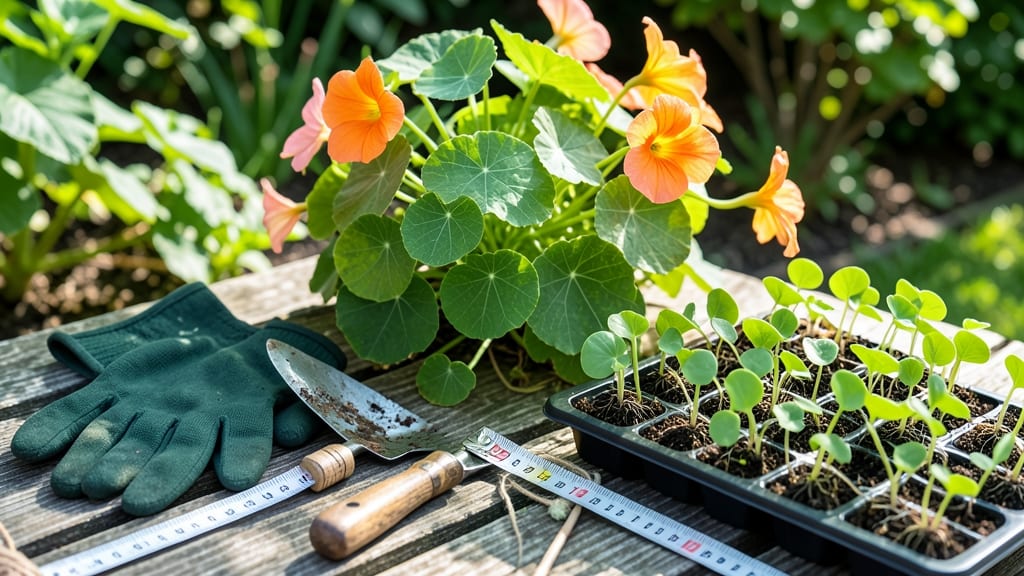
Planting nasturtiums 12 to 18 inches apart is the secret to vibrant blooms and healthy growth 🌸 — but get it wrong, and you’ll end up with leggy stems and sparse flowers.
Nasturtiums aren’t just pretty—they’re edible, pest-repelling powerhouses that thrive when planted with precision. But how far apart should you space them for maximum blooms and minimal competition?
Trailing varieties need more room to sprawl, while bush types can handle closer spacing, but even 6 inches too close can invite disease. The right distance ensures airflow, sunlight, and space for roots to spread.
Below, I’ll break down the ideal spacing for each type, how to fix overcrowding, and creative ways to use nasturtiums in your garden—without sacrificing their stunning bushy growth.
Optimal nasturtium spacing by variety: 12-18 inches for bushy growth
Nasturtiums are versatile plants that thrive when given the right space to spread. The 12-18 inch spacing rule applies to most varieties, but the exact distance depends on whether you're growing trailing types, bush varieties, or dwarf cultivars.
Proper spacing ensures each plant gets enough sunlight and air circulation to prevent disease and maximize blooms.
Trailing nasturtiums like 'Alaska' need the most room—18 inches apart—because their vines can spread 3-5 feet in all directions. Bush varieties such as 'Jewel Mix' thrive with 12-15 inches of space, while dwarf types like 'Tom Thumb' can be planted just 8-10 inches apart.
The right spacing also prevents root competition, which can lead to stunted growth.
Here’s how spacing affects your nasturtiums:
| Variety Type | Spacing (Inches) | Sunlight Needs | Airflow Benefits | Example Varieties |
|---|---|---|---|---|
| Trailing | 18-24 | Full sun (6+ hours) | Prevents vine tangling | 'Alaska', 'Empress of India' |
| Bush | 12-15 | Full sun to partial shade | Reduces powdery mildew | 'Jewel Mix', 'Masquerade' |
| Dwarf | 8-10 | Partial shade (3-4 hours) | Ideal for containers | 'Tom Thumb', 'Dwarf Jewel' |
For trailing nasturtiums, the extra space allows their vines to sprawl without competing for nutrients. Varieties like 'Empress of India' can grow up to 5 feet long, so giving them room to stretch ensures they don’t become leggy or sparse.
If you’re growing them in containers, use a 12-inch diameter pot for one trailing plant to mimic in-ground spacing.
Bush nasturtiums like 'Jewel Mix' benefit from 12-15 inches of space because they develop compact, rounded shapes. This spacing also improves airflow, which is critical for preventing fungal diseases like powdery mildew.
If you notice leaves yellowing or white powdery spots, it’s a sign your plants are too crowded.
Dwarf varieties such as 'Tom Thumb' are perfect for edging gardens or container gardens because they stay under 6 inches tall. Planting them 8-10 inches apart ensures they fill in quickly without overpowering nearby plants.
These compact types also make great companion plants for herbs like basil or thyme, as they won’t outcompete them for space.
When planting, always consider your garden layout. If you’re using nasturtiums as a living mulch or ground cover, you can reduce spacing to 6-8 inches for faster coverage.
However, this approach may limit the size of individual blooms. For cut flowers or culinary use, stick to the 12-18 inch range for the largest, healthiest leaves and flowers.
Pro tip: If you’re unsure about spacing, start with 15 inches apart for most varieties. You can always thin out seedlings later if they become too crowded. Just be gentle—nasturtiums have delicate roots that can break easily. Water thoroughly after transplanting to help them establish quickly.
Finally, remember that soil quality plays a role in spacing. Well-draining, nutrient-rich soil allows plants to spread more naturally, while poor soil may require tighter spacing to compensate. Amend your soil with compost before planting to encourage healthier, more vigorous growth.
Why proper spacing prevents nasturtium problems (and how to fix overcrowding)
When nasturtiums are planted too closely, they compete for nutrients, sunlight, and airflow, leading to a cascade of problems. Powdery mildew, stunted growth, and poor flowering are common red flags that your plants need more space.
The good news? You can often fix overcrowding mid-season with simple adjustments.
Overcrowded nasturtiums show clear signs of distress. Look for yellowing leaves, pale stems, or fewer blooms than expected. These symptoms indicate the plants are struggling to access the resources they need.
Even trailing varieties like 'Empress of India' can suffer if their vines are forced to tangle, blocking sunlight from reaching lower leaves.
Here’s the critical spacing rule: 12-18 inches apart for most varieties. If you’ve already planted too close, don’t panic—you can still salvage your garden with these mid-season fixes.
⚠️ Warning: How Far Apart to Plant Nasturtiums
Trailing varieties (e.g., 'Alaska') need 18-24 inches to sprawl properly. Bush types (e.g., 'Jewel Mix') thrive at 12-15 inches, while dwarf varieties (e.g., 'Tom Thumb') can handle 8-10 inches. Planting closer than these guidelines risks powdery mildew, root rot, and reduced blooms.
If your nasturtiums are already crowded, act now before fungal diseases take hold. Use the troubleshooting checklist below to assess and fix the issue.
To fix overcrowding, start by thinning out seedlings carefully. Use a small trowel or your fingers to gently lift plants, being mindful of their delicate roots. Replant the thinned seedlings in nearby gaps or share them with fellow gardeners.
For trailing nasturtiums, you can also prune back excess vines to encourage bushier growth in the remaining space.
Improving air circulation is another key step. Space plants according to their variety’s needs and avoid planting them too densely near other foliage. If you’re growing nasturtiums in containers, choose pots with at least 12-inch diameters for trailing types to prevent root competition.
For in-ground planting, create small mounds of soil around each plant to elevate them slightly, which helps water drain faster and reduces fungal risks.
Finally, monitor your nasturtiums for powdery mildew—a common issue in crowded gardens. If you spot white, powdery spots on leaves, treat affected plants with a neem oil spray or baking soda solution (1 tsp baking soda + 1 quart water + a few drops of dish soap).
Always apply treatments in the early morning to allow leaves to dry quickly, reducing humidity that fuels fungal growth.
With proper spacing and a little mid-season care, your nasturtiums will rebound with vibrant blooms and healthy foliage. Remember, the key to success is prevention—plan your spacing carefully from the start, and your nasturtiums will reward you with years of beauty and edible goodness. 🌸