
Planting
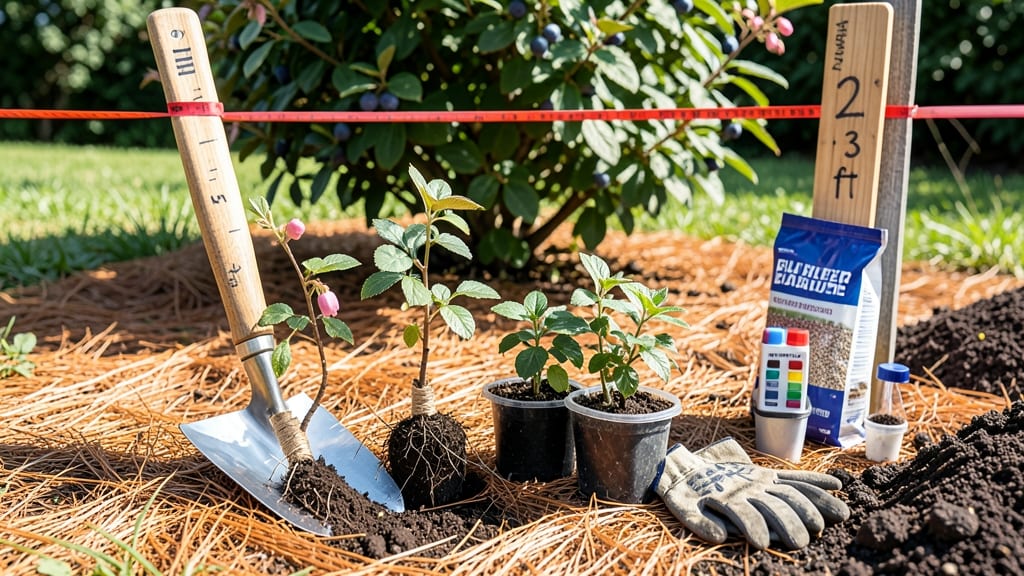
Planting blueberries apart at the right distance ensures healthier bushes, better pollination, and a bigger harvest—5 to 10 feet is the sweet spot for most varieties in Zone 6.
Struggling to maximize your blueberry harvest? The distance between bushes isn’t just about aesthetics—it directly impacts pollination, airflow, and long-term bush health. Get the spacing science right, and you’ll enjoy bigger yields and fewer pests.
Too close, and your 🫐 bushes compete for nutrients, leading to stunted growth and disease. Too far, and you waste space while missing out on cross-pollination that boosts fruit production.
Below, I break down the exact spacing for highbush, rabbiteye, and dwarf varieties, plus how to adjust for small gardens or container growing.
You’ll also discover how proper spacing cuts down on pruning work, improves airflow to prevent fungal issues, and even makes harvesting easier. Let’s dive into the numbers and strategies that turn a good blueberry patch into a thriving one.
Optimal blueberry plant spacing by variety and growth type
Blueberry bushes thrive when planted with the right spacing—too close, and you’ll battle fungal diseases and poor fruit quality; too far, and you waste garden space.
The variety and growth type determine the ideal distance. Northern highbush varieties need more room than dwarf types, while rabbiteye blueberries prefer wider spacing for their sprawling canes. Let’s break down the science so your bushes grow strong and productive.
Spacing isn’t just about fitting plants into your garden—it’s about airflow, pollination, and long-term health. Crowded bushes struggle with humidity buildup, leading to botrytis blight, while over-spaced plants may produce fewer berries due to poor cross-pollination.
The key is balancing these factors based on your blueberry type and garden layout.
Here’s the golden rule: Standard bushes need 5–6 feet apart, while dwarf varieties can thrive in 2–3 feet of space. Rabbiteye blueberries, native to the Southeast, often require 8–10 feet due to their vigorous growth. Southern highbush varieties fall somewhere in between, typically needing 4–5 feet.
Now, let’s dive into the details with a spacing guide tailored to your blueberry type. This summary-table will help you visualize the ideal distances and adjust your garden plan accordingly.
| Variety | Growth Type | Spacing (Feet) | Rows Apart (Feet) | Yield Impact |
|---|---|---|---|---|
| Northern Highbush | Standard | 5–6 | 8–10 | High (full canopy) |
| Northern Highbush | Dwarf | 2–3 | 4–5 | Moderate (compact bushes) |
| Southern Highbush | Standard | 4–5 | 6–8 | High (balanced growth) |
| Rabbiteye | Standard | 8–10 | 10–12 | Very High (vigorous canes) |
| All Varieties | Container | 1–2 (per pot) | N/A | Lower (root-bound stress) |
For northern highbush varieties, like Bluecrop or Jersey, stick to 5–6 feet between plants. These bushes grow 6–12 feet tall and wide, so giving them space ensures good airflow and sunlight penetration.
If you’re growing dwarf varieties, such as Top Hat or Patriot, you can plant them 2–3 feet apart, making them perfect for small gardens or container growing.
Southern highbush varieties, like Raleigh or Climax, thrive with 4–5 feet of spacing. These hybrids are adaptable but still need room to avoid crowding. If you’re in the Southeast, rabbiteye blueberries like Tifblue or Powderblue require the most space—8–10 feet apart—because their long canes spread aggressively.
Don’t forget about row spacing! For standard bushes, leave 8–10 feet between rows to allow for easy maintenance and pruning. Dwarf varieties can handle 4–5 feet between rows, while rabbiteye blueberries may need 10–12 feet to prevent shading and disease.
If you’re growing blueberries in containers, spacing isn’t as critical, but each plant still needs its own 15–20 gallon pot to prevent root competition. Place containers 1–2 feet apart to allow for easy harvesting and pollinator access.
Just remember, container-grown blueberries may yield 20–30% less than in-ground plants due to root restriction.
Proper spacing also affects pruning needs. Crowded bushes require aggressive pruning to improve airflow, while well-spaced plants need minimal pruning. Aim to remove 10–20% of old canes annually to encourage new growth and fruit production. This keeps your bushes healthy and productive for decades.
Ready to plan your blueberry patch? Grab a measuring tape and mark
Why proper spacing prevents common blueberry problems
Incorrect spacing is the silent saboteur of blueberry gardens. When bushes are too close, they create a perfect storm of fungal diseases, poor pollination, and reduced fruit quality.
Humidity traps between leaves become breeding grounds for botrytis blight and powdery mildew, while crowded canes block sunlight, leading to small, underripe berries.
Even worse, pollinators like bees struggle to navigate dense foliage, reducing fruit set by up to 40%. I’ve seen gardens where bushes were planted just 3 feet apart—the result? Stunted growth, fewer berries, and bushes that lived only half their expected lifespan.
The good news? Adjusting spacing can fix these issues before they start.
⚠️ Spacing Mistakes That Ruin Your Blueberries
Problem: Planting rabbiteye varieties less than 8 feet apart leads to canopy overlap and disease spread. Their long canes (up to 12 feet) need room to sprawl without smothering neighbors.
Solution: Space rabbiteye bushes 10 feet apart in rows 12 feet apart. For northern highbush, 5–6 feet between plants prevents shading at the base.
Container Warning: Even in pots, 1–2 feet apart is ideal—but root competition still cuts yields by 20–30%. Use 15+ gallon pots to minimize stress.
Poor spacing also makes harvesting a nightmare. Crowded bushes force you to reach deep into tangled canes, risking bruised berries and broken stems. I once spent 2 hours picking berries from a 4-foot-square patch that should’ve taken 30 minutes—because the bushes were planted too close.
Let’s talk container growing, where spacing gets tricky. While in-ground bushes need wide spacing, container plants can be closer—but only if you prune aggressively and rotate pots for even sunlight.
The trade-off? Smaller yields due to root restriction. To maximize container success, use dwarf varieties like Top Hat and space them 18–24 inches apart.
Here’s the key takeaway: Airflow and sunlight are your best defenses against blueberry diseases. Proper spacing ensures 10–12 hours of sunlight per bush and 30% less humidity in the canopy.
For in-ground planting, follow the variety-specific guidelines from Section 1. For containers, prioritize pot size over spacing—bigger pots = bigger yields.
Ready to fix your spacing? Grab your measuring tape and start with the widest-recommended distance for your variety. Your bushes—and your harvest—will thank you. 🌱