
How To
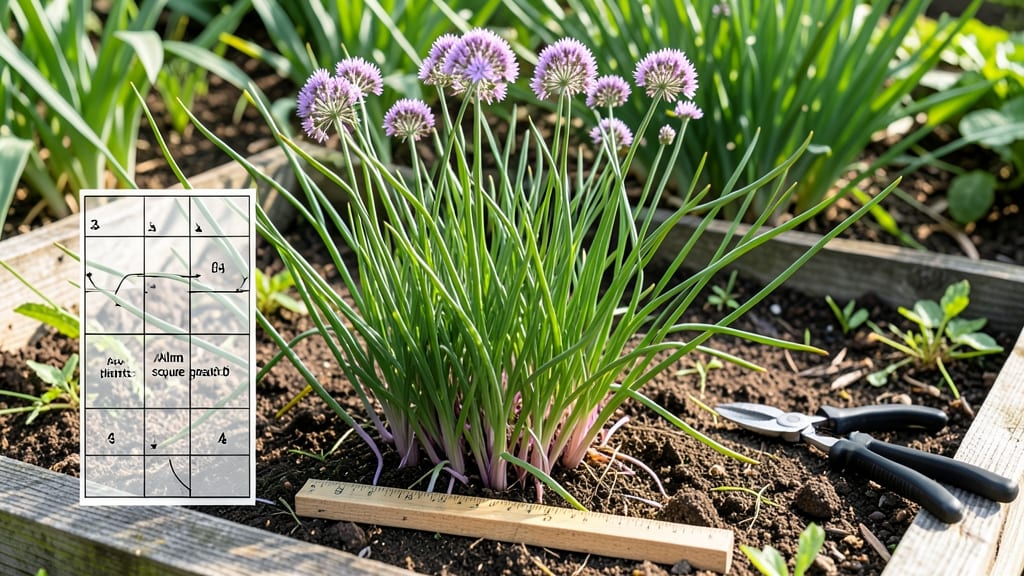
Planting 16 to 25 chives per square foot 🌿 is the secret to a lush, high-yielding herb patch that keeps you in fresh flavor all season long.
Picture this: you’ve just cleared a sunny patch of your garden, ready to dive into planting. But without the right spacing, your chives will either compete for nutrients or leave you with wasted space.
Too close, and you’ll end up with leggy, weak stems; too far apart, and you’ll miss out on the continuous harvest that makes chives so rewarding.
Chives thrive in full sun and well-draining soil, but their compact growth means you can pack them in tighter than many herbs—if you follow the right rules.
Whether you’re working with a small container or a full garden bed, the key is balancing airflow, sunlight exposure, and root space to keep your plants healthy and productive from spring through fall.
In this guide, I’ll break down the exact spacing science, show you how to adjust for containers vs. in-ground planting, and share pro tips for maximizing your yield—even in the tightest spaces. Let’s turn that garden patch into a chive powerhouse!
Optimal chive spacing: how many plants per square foot for maximum yield
Chives are one of the most space-efficient herbs you can grow, but their optimal spacing makes all the difference between a bountiful harvest and wasted garden real estate.
With the right density, you can fit 16 to 25 plants per square foot—enough to fill your kitchen with fresh flavor without overcrowding. The key lies in balancing their compact growth habit with their need for air circulation and sunlight.
Unlike sprawling herbs like basil or mint, chives grow in tight clumps with slender stems that rarely exceed 12-18 inches tall. This makes them perfect for dense planting, but pushing beyond 25 plants per square foot risks stunted growth, disease spread, and reduced harvests.
Let’s break down the science behind these numbers and how to apply them to your garden.
🌱 Pro Tip: Chives thrive in full sun (6+ hours daily), so spacing ensures every plant gets equal access. In partial shade, you can push to 20-25 plants per square foot since growth slows naturally.
| Planting Scenario | Plants per Square Foot | Spacing (Inches) | Best For |
|---|---|---|---|
| In-Ground Beds (Full Sun) | 16-20 | 2-3 inches apart | Maximizing yield in open beds |
| In-Ground Beds (Partial Shade) | 20-25 | 1.5-2 inches apart | Slower growth areas |
| Containers (5-Gallon Pots) | 9-12 | 3-4 inches apart | Balcony or patio gardening |
| Succession Planting (Spring/Fall) | 25 | 1.5 inches apart | Quick turnover for continuous harvests |
| Companion Planting (With Carrots/Onions) | 12-16 | 3 inches apart | Pest control and space efficiency |
For in-ground planting, aim for 16-20 plants per square foot when growing chives in full sun. This translates to 2-3 inches of space between each plant, allowing their narrow clumps to spread without competing for resources.
If your garden gets only 4-6 hours of sunlight daily, you can safely increase density to 20-25 plants per square foot—their growth will naturally slow, reducing the risk of overcrowding.
Container gardening requires more generous spacing because pots dry out faster and have limited root space. A 5-gallon container can comfortably hold 9-12 chive plants spaced 3-4 inches apart.
This ensures roots have room to establish while preventing soil compaction from frequent watering. Use a well-draining potting mix with compost added to support dense planting.
If you’re practicing succession planting—like sowing new chives every 2-3 weeks in spring or fall—you can temporarily push to 25 plants per square foot. Thin seedlings to 16-20 plants once they reach 3 inches tall to give remaining plants room to thrive.
This method extends your harvest season and maximizes small-space yields.
✂️ Harvest Hack: Chives are perennial, so proper spacing now means years of harvests. After cutting back 1/3 of the foliage, new growth fills in quickly—just avoid harvesting more than 30% of the plant at once to prevent stress.
For companion planting, chives pair beautifully with carrots, onions, and tomatoes. Space them 3 inches apart in a mixed bed to deter pests like aphids while keeping yields high. Their mild onion scent confuses insects, making them a natural garden guardian.
Finally, always adjust spacing based on your climate and soil quality. In cooler regions (USDA Zones 3-5), chives grow slower, so 20-25 plants per square foot works well. In hotter zones (7-10), stick to 16-2
Chive planting density by growth stage: from seedlings to mature harvest
Chives are one of those versatile herbs that thrive when given the right space to grow—but their density needs change dramatically from seedling to harvest. Understanding these shifts helps you avoid overcrowding while maximizing your year-round harvests.
The key lies in adjusting spacing at each growth stage to balance air circulation, sunlight exposure, and root development.
When you first sow chive seeds or transplant seedlings, they need tight initial spacing to encourage competition for nutrients. However, as they mature, you’ll need to thin them out to prevent disease spread and ensure each plant receives adequate sunlight.
This dynamic approach keeps your chives healthy and productive throughout the growing season.
- Seedling Stage (0-3 weeks): Plant 25-30 chives per sq ft in rows spaced 6 inches apart. This density helps seedlings establish quickly before thinning.
- Early Growth (3-6 weeks): Thin to 16-20 chives per sq ft by removing weaker plants. Keep rows 8 inches apart to allow airflow.
- Mature Stage (6+ weeks): Adjust to 9-12 chives per sq ft for full-grown plants. Space rows 12 inches apart to prevent shading.
- Container Gardening: Use 1 plant per 4-inch pot or 3-4 plants in a 12-inch container. Ensure pots have drainage holes.
- Seasonal Adjustments: In spring and fall, plant slightly denser (18-22/sq ft) for early harvests. Thin aggressively in summer to prevent heat stress.
Thinning chives isn’t just about spacing—it’s also about selecting the strongest plants. Look for seedlings with the most vibrant deep green leaves and sturdy stems. Snip weaker ones at the soil line to avoid disturbing the roots of your keepers.
This process might feel wasteful, but it ensures the remaining plants grow taller and more flavorful.
For year-round harvests, consider staggered planting. Start your first batch in early spring (March-April) and follow with a second batch in late summer (August). This way, you’ll always have a fresh supply of chives, and your spacing adjustments can be tailored to each planting cycle.
Just remember: chives are perennial, so they’ll return year after year if given the right care.
If you’re growing chives in containers or raised beds, the rules shift slightly. Containers limit root spread, so you’ll need to plant fewer chives per square foot—typically 9-12 plants—but you can still follow the thinning process.
Raised beds, on the other hand, allow for slightly denser planting (up to 20 plants per sq ft) because of improved drainage and warmth.
Proper spacing isn’t just about yield—it’s about plant longevity. Overcrowded chives are prone to fungal diseases like rust or powdery mildew, which can devastate your harvest.
By adjusting density at each stage, you create an environment where chives can thrive for years, giving you a steady supply of this culinary staple without the guesswork. 🌱