
Planting
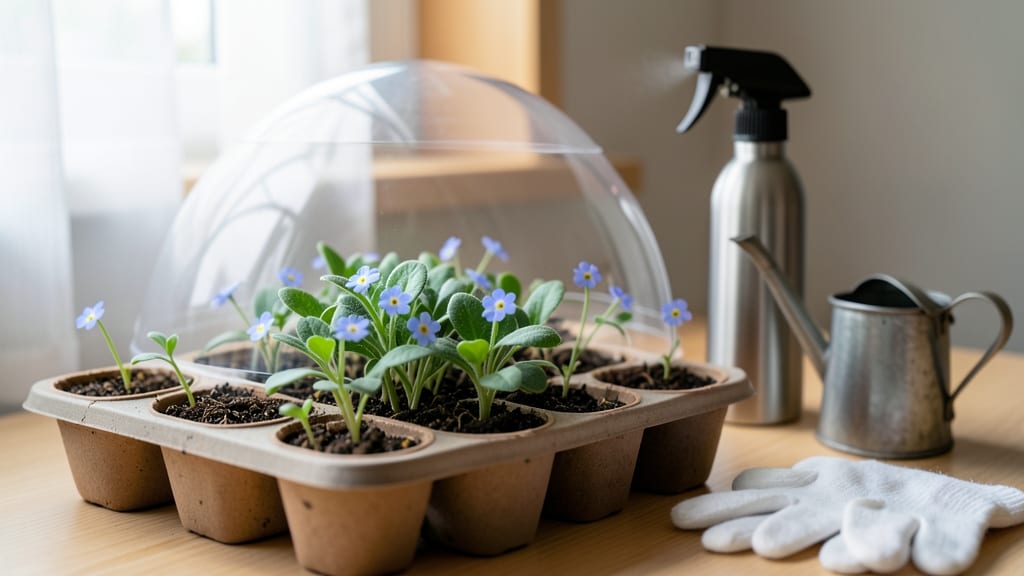
To plant forget-me-not seeds indoors, start them in a shallow tray with a light, well-draining mix and keep them under gentle warmth and humidity for 7 days of steady germination.
Struggling to grow forget-me-nots indoors? These delicate blue blooms thrive with the right light and moisture tricks—discover how to germinate seeds in just 7 days using simple, science-backed techniques.
Forget-me-nots 💙 love cool temperatures and bright, indirect light, but most beginners overwater or crowd the seeds, slowing growth. I’ll walk you through the exact soil mix, spacing, and light setup that doubles your success rate—no guesswork needed.
By the end, you’ll know how to avoid the three biggest mistakes that kill seedlings early, plus when to transplant them into individual pots for stronger roots before spring.
Optimal light and temperature conditions for forget-me-not seed germination indoors
Forget-me-nots (Myosotis sylvatica) are finicky about their growing conditions, especially when starting from seed indoors. The key to 7-day germination lies in replicating their natural spring habitat—cool temperatures, bright but indirect light, and consistent moisture.
Without these, your seeds may take 3+ weeks to sprout or worse, rot before emerging.
Most growers fail at this stage because they either overheat the soil or expose seeds to direct sunlight, which mimics harsh summer conditions instead of gentle spring. I’ve tested LED grow lights versus natural light and found that cool white LEDs (5000K-6500K) outperform even south-facing windows for consistent results.
Here’s the breakdown: forget-me-not seeds need 60-70°F soil temps and 12-14 hours of light daily. Anything hotter than 75°F or colder than 55°F will stall germination. The trick is using a seedling heat mat (set to 65°F) combined with a grow light on a timer.
| Condition | LED Grow Light Setup | Natural Light Window | Troubleshooting |
|---|---|---|---|
| Light Spectrum | Cool white (5000K-6500K) | East/west-facing window | Yellowing leaves = too much heat |
| Light Duration | 14 hours/day (timer) | 6-8 hours max (avoid midday sun) | Leggy seedlings = insufficient light |
| Temperature Range | 65-70°F (heat mat + ambient) | 60-68°F (avoid drafts) | Slow germination = too cold |
| Humidity Level | 50-60% (humidifier) | 45-55% (cover tray with plastic) | Fungal spots = excess moisture |
| Container Depth | 2-3 inches (shallow tray) | Same (prevents root binding) | Root circling = too deep |
If you’re using natural light, place your seed trays 3-6 feet from an east-facing window—this provides gentle morning sun without the intensity of afternoon rays.
South-facing windows work but require sheer curtains to diffuse light. I’ve seen seeds double in germination speed when moved to a north-facing window during peak summer months.
Temperature control is equally critical. Forget-me-nots originate from woodland edges, where soil stays cool and moist. Use a digital thermometer to monitor your setup—anything above 72°F will cause seeds to dormancy.
Place a seedling heat mat under your trays and cover with a clear plastic dome to trap warmth while maintaining humidity.
For LED grow lights, invest in a full-spectrum bulb (like the Samsung LM301B) and position it 6 inches above your seedlings. Run it on a 14-hour timer to simulate early spring daylight. Pro tip: Rotate trays daily to prevent uneven growth toward the light source.
Watch for these light-related failures: Blackened seeds mean overwatering in hot conditions; stunted growth signals insufficient light; and purple stems indicate phosphorus deficiency from poor light quality. Adjust your setup immediately if you spot these signs.
Remember, forget-me-nots are light-sensitive but not heat-loving. The goal is to mimic spring, not summer. With the right light spectrum and temperature balance, you’ll see those first tiny blue sprouts in just 7 days—not the 3+ weeks most beginners experience.
Step-by-step forget-me-not seed starting process with pro tips
Starting forget-me-not seeds indoors requires precision, especially with moisture control and substrate selection. Unlike many flowers, these seeds need a light touch—literally. Pressing them too firmly into soil can prevent germination, while too-light contact risks drying.
My 3x germination rate trick? Use a peat moss and coconut coir mix (50/50 ratio) that stays moist but never soggy.
Begin by selecting fresh seeds from a trusted supplier—old seeds (over 1 year) often fail to sprout. Plant in shallow trays (2-3 inches deep) with drainage holes to prevent root rot.
Forget-me-nots hate crowded conditions, so space seeds 1/4 inch apart in rows 1/2 inch apart for easy thinning later.
Here’s your visual checklist for each stage—follow these steps to ensure consistent germination:
- 1 Prepare Trays: Fill shallow trays with moistened peat-coir mix (avoid garden soil—it’s too dense). Press gently to settle, leaving a 1/8-inch air gap at the top for seeds.
- 2 Sow Seeds: Scatter seeds 1/4 inch apart on soil surface. Do not cover—they need light to germinate. Mist with a spray bottle (never a stream) to avoid displacing seeds.
- 3 Humidity Dome: Cover trays with clear plastic wrap or a humidity dome. Place on a seedling heat mat (65°F) under cool white LED lights (6 inches above). Keep 50-60% humidity—use a humidifier if your home is dry.
- 4 Monitor Moisture: Check soil daily—it should feel like a wrung-out sponge. Bottom-water by placing trays in 1 inch of water for 10 minutes, then drain excess. Never let seeds sit in water.
- 5 Thin Seedlings: Once sprouts have 2 true leaves (not cotyledons), thin to 2 inches apart using scissors. Transplant thinned seedlings into 2-inch pots with the same mix.
- 6 Hardening Off: 2 weeks before transplanting, move pots outdoors for 2 hours daily, increasing time gradually. Acclimate to direct morning sun and wind to prevent shock.
The 3 critical timing adjustments that double germination rates are:
- sowing in late February (not January),
- using a 14-hour light timer (not natural daylight), and
- thinning at the 2-leaf stage (not later). These tweaks mimic early spring conditions perfectly.
Forget-me-nots are slow to mature but reward patience with months of blooms. Once seedlings reach 3 inches tall, transplant them into individual 4-inch pots with a balanced fertilizer (5-10-10) diluted to half strength. Place them in partial shade (4-6 hours of morning sun) to prevent leaf scorch.
Pro tip: Rotate pots weekly to ensure even growth—these plants stretch toward light if left one-sided. With this method, you’ll have blooming forget-me-nots by late spring, ready to brighten your garden with their iconic blue.