
Planting
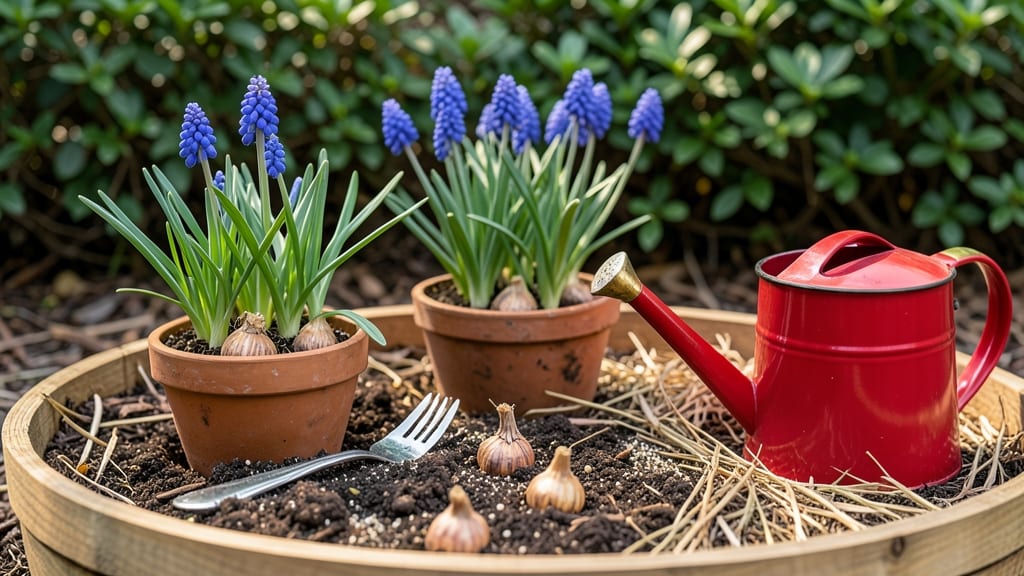
Planting muscari bulbs the right way ensures those vibrant, grape-like clusters will burst through your garden next spring without fail.
Picture this: September rolls around, and you’ve got a handful of tiny bulbs that could either vanish into the soil or transform your yard into a sea of 🌸 beauty. The difference? Precision in planting depth, spacing, and timing.
Muscari thrives in cool fall soil, but too-deep or crowded bulbs will rot or flop over. Meanwhile, shallow plantings might leave them vulnerable to frost heave. I’ll walk you through the exact steps—from soil prep to post-planting care—to guarantee perfect clusters year after year.
Whether you’re a first-timer or a seasoned gardener, these tips will help you avoid the most common mistakes and set your muscari up for effortless blooms in spring.
Best time and location for planting muscari bulbs
Planting muscari bulbs (grape hyacinths) at the right time ensures vibrant spring blooms and healthy growth. These bulbs thrive when planted during fall, allowing roots to establish before winter. My garden always pops with color when I plant them between September and November, just before the ground freezes.
This timing gives the bulbs enough time to root deeply before dormancy sets in.
For gardeners in USDA Zones 3-9, aim to plant muscari bulbs 6-8 weeks before your first frost date. In colder climates, like Zone 3, plant them in late September to avoid winter damage.
Warmer zones, such as Zone 9, can extend planting into early December. Always check your local frost dates to align with this window for best results.
When selecting a location for muscari bulbs, prioritize areas with well-draining soil and 6+ hours of sunlight daily. These bulbs tolerate partial shade, making them perfect for under trees or alongside taller perennials.
My favorite spots include rock gardens, woodland edges, and even container gardens on patios. Just ensure the soil isn’t soggy, as muscari bulbs rot easily in waterlogged conditions.
For soil preparation, mix compost or aged manure into the planting area to improve fertility. Muscari bulbs prefer slightly acidic to neutral soil (pH 6.0-7.0). If your soil is heavy clay, amend it with sand or perlite to enhance drainage.
I always test my soil before planting—it’s a small effort that pays off with healthier plants and brighter blooms.
Spacing muscari bulbs correctly ensures they have room to grow without competing for nutrients. Plant them 4-6 inches apart and 4-6 inches deep, with the pointed end facing upward.
This spacing creates those dense, eye-catching clusters that grape hyacinths are famous for. In containers, use 3-4 bulbs per 6-inch pot for a full, lush look.
If you’re planting muscari bulbs in containers or small gardens, choose shallow pots with drainage holes. These bulbs thrive in well-aerated spaces and appreciate a light mulch layer (like straw or shredded leaves) to protect them over winter.
I’ve seen muscari bulbs naturalize beautifully in lawns or meadows, spreading over time to create stunning carpets of purple-blue blooms.
For spring blooms, plant muscari bulbs in late summer or early fall. This gives them time to root before winter, ensuring they’ll push through the soil in April or May with vibrant color.
In my garden, I mark the planting spots with small flags so I remember where they are—this helps avoid accidentally digging them up later when the foliage dies back.
One of my favorite tricks is planting muscari bulbs alongside daffodils or tulips. The different bloom times create a stunning succession of color from early spring through late spring. Just be sure to plant them at the same depth and space them evenly for a cohesive look.
With the right timing and location, your muscari bulbs will reward you with years of effortless beauty.
Remember, muscari bulbs are perennial, meaning they’ll return year after year if planted correctly. The key is patience and preparation—give them the right conditions now, and they’ll thrive for seasons to come.
Whether you’re a beginner or a seasoned gardener, these low-maintenance bulbs are a must-have for any garden.
Step-by-step planting process for muscari bulbs
Planting muscari bulbs correctly is the key to those vibrant purple clusters you dream about. These grape hyacinths thrive when planted with precision—too deep or shallow, and you risk weak growth or no flowers.
I’ve planted hundreds of bulbs, and I’ll share my foolproof method to ensure your muscari blooms spectacularly next spring.
Before you start, gather your tools and supplies: muscari bulbs, a trowel, garden gloves, and a measuring tape. Choose a spot with well-draining soil and 6+ hours of sunlight.
If your soil is heavy clay, amend it with compost or sand to improve drainage—muscari bulbs hate soggy roots.
How to Plant Muscari Bulbs
-
Step 1: Prepare the Soil
Loosen the soil to a depth of 12 inches with a garden fork. Remove any rocks or debris. Mix in 2-3 inches of compost to enrich the soil and improve drainage.
-
Step 2: Determine Planting Depth
Plant muscari bulbs 4-6 inches deep, with the pointy end facing up. This ensures they have enough soil coverage to protect from frost and stabilize growth.
-
Step 3: Space the Bulbs Correctly
Space bulbs 4-6 inches apart in all directions. This gives them room to multiply naturally over time, creating dense clusters of flowers.
-
Step 4: Plant the Bulbs
Gently place each bulb into the hole with the pointy side up. Fill the hole with soil, pressing lightly to remove air pockets. Avoid compacting too tightly, as this can restrict root growth.
-
Step 5: Water Thoroughly
Water the planted area deeply but gently to settle the soil. Aim for 1 inch of water to encourage root establishment. Avoid overwatering, as muscari bulbs prefer slightly dry conditions after planting.
-
Step 6: Apply Mulch
Spread a 2-inch layer of mulch (like straw or shredded leaves) around the bulbs. This helps retain moisture, suppress weeds, and protect from freezing temps during winter.
-
Step 7: Monitor and Care
Leave the bulbs undisturbed until spring shoots appear. Once green growth emerges, water moderately (about 1 inch per week) and avoid fertilizing until after flowering.
After planting, resist the urge to overwater or fertilize too soon. Muscari bulbs store energy underground, and excess nitrogen can lead to leafy growth at the expense of flowers. Instead, focus on well-draining soil and minimal interference until spring.
In early spring, when the first green shoots break through the soil, you’ll know your bulbs are happy. This is when you can lightly feed them with a balanced fertilizer (like 5-10-10) to encourage vibrant blooms.
By following these steps, your muscari will reward you with months of cheerful purple clusters year after year.
Pro tip: Plant muscari in groups of 10 or more for a dramatic visual impact. Pair them with daffodils or tulips for a stunning early-spring display that will make your neighbors green with envy! 🌸