
Planting
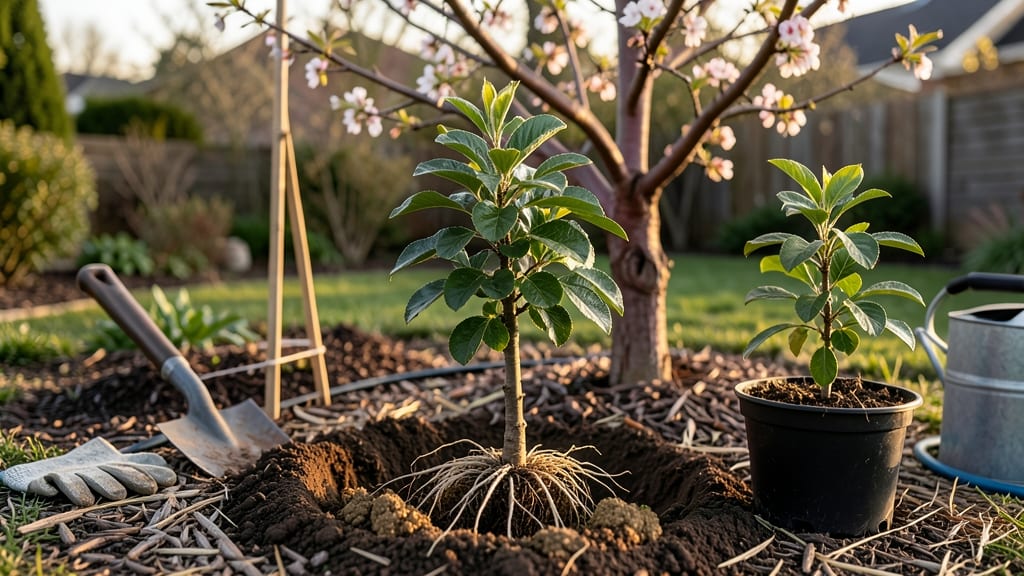
Planting nectarines transforms your yard into a sun-drenched orchard where every summer bite tastes like childhood. 🌞 I’ve planted mine in early spring and late fall, and the key to success lies in timing, soil prep, and a few simple tricks that prevent common pitfalls like poor root establishment or frost damage.
The first step is choosing a spot with 6-8 hours of sunlight and well-draining soil—nectarines hate soggy roots. Amend heavy clay with compost, and avoid low areas where cold air pools.
Nursery trees should have firm bark, no signs of disease, and roots that aren’t circling the pot. Dig a hole twice as wide as the root ball but no deeper.
Once planted, water deeply to eliminate air pockets, then mulch with 2-3 inches of organic material to retain moisture and regulate soil temperature. The first year is about patience: consistent watering (about 1 inch per week) and minimal pruning let the tree focus on root growth, not fruit production.
By summer’s end, you’ll see new shoots signaling strong establishment. Nectarines bear fruit in 2-3 years, but proper planting now means decades of shade and harvests—plus, the scent of blossoms in spring is worth every effort. Here’s how to keep them thriving year after year.
📚 In This Guide
- What you need
- Instructions
- Tips and common mistakes
- Wrapping up and next steps
What you need
- ● Nectarine tree: Choose a dwarf, semi-dwarf, or standard variety (depending on space) from a reputable nursery. 1-2 trees recommended for cross-pollination (if needed for your variety).
- ● Planting hole: Dig a hole twice as wide and deep as the root ball.
- ● High-quality potting soil or native soil mix: Amend with compost or well-rotted manure (5-10 gallons) for nutrients.
- ● Mulch: 2-3 inches of organic mulch (straw, wood chips, or pine bark) to retain moisture and suppress weeds.
- ● Balanced fertilizer: 10-10-10 or 8-3-9 (1-2 pounds per tree) to kickstart growth.
- ● Shovel or spade: For digging the planting hole.
- ● Garden trowel: For loosening roots if needed.
- ● Watering can or hose: With a gentle spray nozzle for post-planting hydration.
- ● Garden gloves: To protect your hands while handling soil and roots.
- ○ Pruning shears (optional): For trimming damaged roots or branches.
- ○ Staking kit (optional): If planting in windy areas, use 2-3 stakes and soft ties.
- ● Sunlight: A full-sun location (6-8+ hours daily) with well-draining soil.
- ● Climate zone: Plant in USDA Zones 5-9 (check your local frost dates!).
- ● Timing: Best planted in early spring (before buds swell) or late fall (6 weeks before frost).
- ● Space: 15-25 feet apart (varies by variety; check tags!).
Step-by-step instructions for planting nectarine trees
Here’s how I’ve planted nectarines successfully—even in less-than-perfect climates.
🌱 Step 1: Choose the Right Location and Timing
Nectarines thrive in full sun with at least 6-8 hours of direct light daily. Pick a spot with well-draining soil—these trees hate soggy roots. I always plant in early spring (just as buds swell) or fall (6-8 weeks before first frost) to give roots time to establish before extreme weather hits.
Dig a hole twice as wide as the root ball but no deeper. The top of the root flare (where roots meet trunk) should sit 1-2 inches above ground level. If your soil is heavy clay, mix in 2-3 inches of compost from your materials list to improve drainage. Test the hole depth by placing the tree in it—it should stand upright without bending.
🪴 Step 2: Prepare the Root System
Before planting, soak the bare-root tree’s roots in lukewarm water for 1-2 hours to rehydrate them. For container-grown trees, water thoroughly the day before planting. Gently separate any circling roots with your fingers—this prevents girdling as the tree matures. I always trim any broken or mushy roots with clean pruners, as they won’t recover.
Spread the roots outward in the hole, ensuring they fan naturally. Avoid bending them—this can damage delicate feeder roots. If the soil is dry when you plant, mix in 1 cup of slow-release fertilizer (like 10-10-10) into the bottom of the hole. This gives the tree a nutrient boost without overwhelming it.
☀️ Step 3: Plant and Stake for Support
Fill the hole halfway with soil, then water deeply to settle it. This removes air pockets that could suffocate roots. After water drains, add more soil until the root flare is 1-2 inches above ground level. Press gently around the base to eliminate gaps, but don’t compact the soil—roots need air.
Install a 4-5 foot stake on the side opposite the prevailing wind. Tie the tree to it with soft tree ties (not wire or twine, which can cut into the trunk). Water again until moisture reaches 12 inches deep—you’ll see soil surface darken and puddle slightly. Mulch with 2-3 inches of organic mulch (like wood chips) in a 3-inch-thick ring around the base, keeping it 6 inches away from the trunk to prevent rot.
💧 Step 4: Water and Monitor Early Growth
Water deeply every 3-4 days for the first month, then taper to once a week once leaves appear. Nectarines need 1-1.5 inches of water weekly, but check soil moisture—stick your finger 2 inches deep. If it’s dry, water again. Overwatering is worse than underwatering; soggy soil invites root rot.
Watch for new leaves—they’ll emerge in 4-6 weeks if planted in spring. If leaves yellow or wilt, your tree might be thirsty or struggling with transplant shock. A light application of fish emulsion fertilizer (mixed at half-strength) can help if growth stalls after 8 weeks. Remove any suckers (shoots at the base) immediately—they drain energy from fruit production.
✂️ Step 5: Prune and Protect for Long-Term Health
In late winter (before buds swell), prune to shape the tree and remove dead, crossing, or inward-growing branches. I always cut just outside the branch collar (the swollen area where the branch meets the trunk). Open the canopy to let sunlight and air circulate—this prevents fungal diseases like peach leaf curl.
Thin fruit in early summer when they’re 1 inch in diameter, leaving 6-8 inches between each nectarine. This ensures larger, sweeter fruit. Cover young trees with frost cloth in late fall if your zone drops below 15°F—nectarines are semi-dwarf but still sensitive to cold. Mulch again in winter to insulate roots.
Tips & tricks for planting nectarine trees
Took me years to master these little details—here's how I guarantee your nectarine tree thrives from day one.
Sunlight and Soil Secrets: That 6-8 hours of sun is non-negotiable, but here's what nobody tells you: if your yard gets afternoon shade, plant on the north side of the house or fence. For soil, I always do a quick percolation test—dig a 12-inch hole, fill with water, and time how long it drains. If it takes more than 2 hours, you need more compost or a raised bed. Nectarines despise wet feet!
Root Prep That Makes All the Difference: When soaking bare roots for 1-2 hours, I use a bucket of lukewarm water with a handful of mycorrhizal fungi powder (optional but game-changing). This helps roots establish beneficial relationships with soil microbes. For container-grown trees, I water them the day before planting to ensure the root ball isn't bone-dry—just slightly damp is perfect.
Staking and Mulching Like a Pro: The 4-5 foot stake should be installed at a 45-degree angle for maximum support. I always bury about 1/3 of the stake underground to prevent wind from rocking it. For mulching, I use a 3:1 ratio of wood chips to leaves—this gives good insulation while preventing that 6-inch trunk zone from getting smothered. And here's my secret: I always leave a 2-inch gap between mulch and trunk to prevent rot.
Watering Wisdom: Those 3-4 days of deep watering in the first month are crucial, but I check soil moisture daily. If the top 2 inches are dry, I water immediately. For the 1-1.5 inches weekly guideline, I use a rain gauge or tuna can to measure—eyeballing it leads to overwatering. In summer, I water in the morning to prevent fungal issues, and I always water at the base, not the leaves.
Pro Tips for Plant Nectarine
- Took me years to master these little details—here's how I guarantee your nectarine tree thrives from day one.
- Sunlight and Soil Secrets: That 6-8 hours of sun is non-negotiable, but here's what nobody tells you: if your yard gets afternoon shade, plant on the north side of the house or fence.
- Root Prep That Makes All the Difference: When soaking bare roots for 1-2 hours, I use a bucket of lukewarm water with a handful of mycorrhizal fungi powder (optional but game-changing).
Frequently asked questions
Got questions about growing nectarines? You’re not alone! Here are answers to the most common concerns—from timing to troubleshooting—to help you plant with confidence.
When is the best time to plant a nectarine tree?
Plant your nectarine tree in early spring (after the last frost) or late fall (6-8 weeks before the first frost). Avoid planting in summer heat or winter freezes—roots need time to establish before extreme temperatures hit. If you’re in a mild climate, late winter is ideal!
How cold-hardy are nectarine trees, and will they survive winter?
Most nectarine varieties thrive in USDA Zones 5–9, with some cold-hardy types (like ‘Red Gold’) tolerating temps down to -15°F (-26°C). Protect young trees with mulch (3–4 inches) and a tree wrap in harsh winters. Prune damaged branches in early spring to encourage new growth.
Do nectarine trees need cross-pollination, or can I grow just one?
Nectarines are self-pollinating, so one tree can produce fruit! However, planting a second tree (even a different variety) near yours can boost yields by up to 30%. If space is tight, choose a dwarf or semi-dwarf variety for small yards.
Why aren’t my nectarine tree’s leaves turning green, or are they yellowing?
Yellow leaves often signal nutrient deficiency (like iron or nitrogen) or overwatering. Check soil moisture—roots need well-draining soil and water 1–2 inches per week. If leaves are pale green, apply a balanced fertilizer (10-10-10) in early spring. Brown edges? It’s likely underwatering.
How do I know if my nectarine tree is healthy enough to bear fruit?
A healthy tree shows vigorous new growth, dark green leaves, and no signs of pests/disease. Dwarf trees may fruit in 2–3 years, while standard trees take 4–5 years. Thin fruit when young (leave 6–8 inches between them) to ensure larger, sweeter nectarines!
Wrapping up and next steps
Planting a nectarine tree is a rewarding journey that brings sweet rewards—literally!
With the right location, soil prep, and care, you’ll be enjoying juicy, homegrown fruit in just a few years. 🌱✨ Whether you’re a beginner or a seasoned gardener, every step you take brings you closer to that first harvest.
Ready to take the next step? Monitor your tree’s growth, watch for pests, and enjoy the process—because gardening is as much about the journey as it is about the harvest. Happy planting! 🍑💚