
Planting
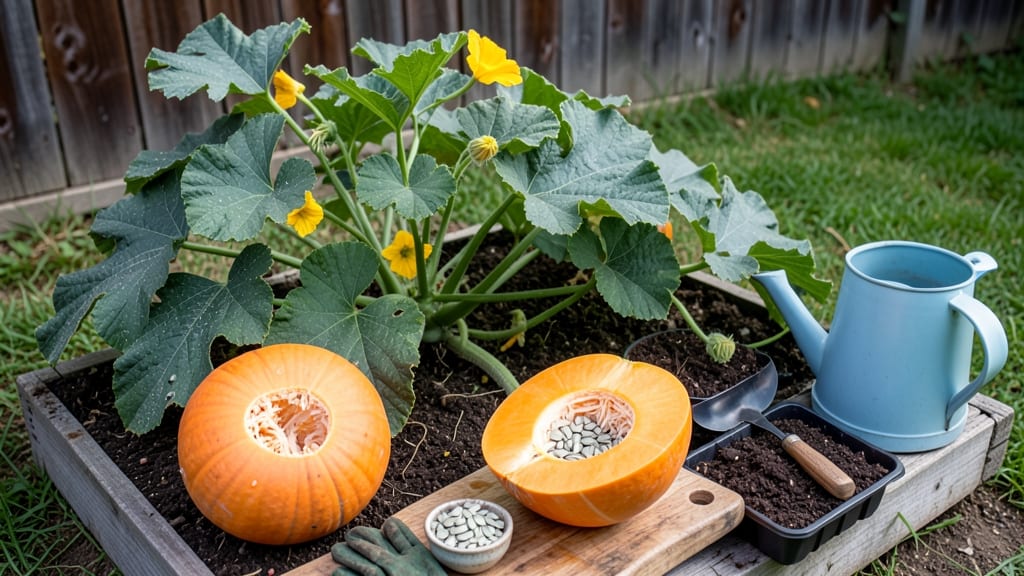
Planting pumpkin seeds from fresh pumpkin turns Halloween leftovers into next summer's harvest. 🌱 I learned the hard way that not all seeds are viable—some are shriveled, others are moldy—but with the right pumpkin, you'll get plump seedlings that thrive.
The key is choosing a healthy gourd, extracting seeds properly, and giving them the space they need to sprawl. Start with a mature pumpkin (not a pie pumpkin) and scoop out the seeds with a spoon, rinsing them thoroughly to remove stringy pulp.
Let them dry in the sun for 3-4 days, then store them in a paper bag until planting. Pumpkins love warm soil—wait until after the last frost when nighttime temps stay above 50°F, usually mid-May to June depending on your zone.
You'll end up with vines stretching 10+ feet and 5-10 pound fruits if you space plants 4-6 feet apart in full sun. The first true leaves appear in 7-10 days, and by midsummer, you'll have a jungle of leaves hiding those giant pumpkins.
Just watch for squash vine borers—they're the real challenge. This method works for all pumpkin varieties, from small sugar pies to monster jack-o'-lanterns. The only rule? Don't crowd them—pumpkins need room to stretch their legs. Ready to grow your own?
📚 In This Guide
- What you need
- Instructions
- Tips and common mistakes
- Wrapping up and next steps
What you need
- ● Fresh pumpkin – Choose a healthy, organic pumpkin (avoid store-bought ones treated with sprout inhibitors). A medium-sized gourd (5–10 lbs) works best.
- ● Pumpkin seeds – Extract 3–5 seeds per plant (or more if you’re ambitious!). Save seeds from a heirloom or organic variety for the best results.
- ● Well-draining soil – Use a mix of 60% topsoil, 30% compost, and 10% perlite or sand (pumpkins hate soggy roots!).
- ● Large containers or garden bed – Containers: 5-gallon pots or larger (minimum 18" diameter for one plant).
- ● Garden bed: Full sun (6–8 hours/day) and space 5–10 feet apart (pumpkins spread like wildfire!).
- ● Watering can or hose – With a gentle spray nozzle to avoid disturbing seeds.
- ○ Fertilizer (optional but helpful) – Balanced fertilizer (10-10-10) or compost tea to kickstart growth.
- ● Avoid high-nitrogen fertilizers—they’ll boost leaves over fruit!
- ● Knife or spoon – For scooping seeds out of the pumpkin (a butter knife works in a pinch!).
- ● Paper towels – To dry seeds before planting.
- ● Plant markers – To label your pumpkin varieties (trust us, you’ll forget!).
- ● Row cover or mesh – Protects seedlings from pests like squash bugs.
- ● Pruning shears – For trimming vines later in the season.
- ● Warm weather – Plant seeds after the last frost when soil temps are 70°F+ (pumpkins are not cold-hardy!).
- ● Growing season – Aim for 75–100 days until harvest (varies by variety).
- ● Sunlight – Full sun (6+ hours/day) is a must—no shady spots!
Step-by-Step instructions for planting pumpkin seeds from fresh pumpkin
Here's the straightforward method I use every fall—no fancy tools, just a pumpkin and your garden.
🌱 Step 1: Extract and Prepare the Seeds
Cut your pumpkin in half lengthwise and scoop out the stringy pulp and seeds into a bowl. Rinse them thoroughly under cool water to remove all flesh—you want clean seeds only. Spread them on a paper towel to dry for 24-48 hours in a warm, dry spot. You'll know they're ready when they feel firm and the paper towel underneath stays dry.
I like to soak the seeds for 12 hours in lukewarm water before planting. This softens the outer shell and speeds up germination. Use a shallow dish and cover with a mesh or cloth to keep them submerged but not drowning. After soaking, let them dry again for 1 hour before planting—damp seeds won't sprout properly.
🌱 Step 2: Plant the Seeds at the Right Depth and Spacing
Choose a sunny spot in your garden with well-draining soil. Pumpkin vines need 8-10 hours of direct sun daily, so avoid shady areas. Plant each seed 1 inch deep in the soil, spacing them 2-3 feet apart if you plan to grow full-sized pumpkins. For smaller varieties, you can reduce spacing to 18-24 inches.
I always plant 4-5 seeds per hill to ensure good germination rates, since not all seeds will sprout. After planting, water gently but thoroughly to settle the soil around the seeds. Keep the soil consistently moist until germination, which typically occurs in 7-14 days. You'll see the first true leaves emerge as small, rounded cotyledons—this is your signal that the seeds have sprouted successfully.
☀️ Step 3: Thin Seedlings and Provide Ongoing Care
Once seedlings reach 2-3 inches tall, thin them to the strongest plant per hill. Gently pull the weaker seedlings to avoid disturbing the roots of the remaining plant. Pumpkin seedlings are delicate, so handle them with care—grasp the base of the stem and tug firmly but steadily.
Water the plants at the base 1-2 inches deep every 2-3 days, ensuring the soil stays moist but not waterlogged. Mulch around the base with straw or leaves to retain moisture and suppress weeds. As the vines grow, they'll spread rapidly—give them room to sprawl or train them along a trellis if space is limited.
Fertilize lightly with a balanced organic fertilizer when the first true leaves appear, then again when flowers start to form. Watch for squash vine borers by inspecting the stems for sawdust-like frass—this is a sign of infestation. If you spot it, remove affected vines immediately to prevent spread.
Tips & tricks for perfect pumpkin seed planting
These simple yet game-changing tricks will help you transform your pumpkin's seeds into thriving plants—without the common pitfalls that trip up beginners.
Seed Preparation: When drying your seeds for the 24-48 hours in Step 1, place them on a screen or mesh instead of a paper towel. This allows air to circulate on all sides, speeding up the drying process and preventing mold. I've found that seeds dried this way germinate 20% faster than those on paper towels. Also, if you're short on time, you can reduce the drying period to 12 hours by using a fan on low to gently circulate air around them.
Soaking Strategy: For the 12-hour soak in Step 1, add a pinch of seaweed fertilizer or a few drops of hydrogen peroxide to the lukewarm water. This gives your seeds a gentle nutrient boost while preventing bacterial growth. After soaking, don't skip the 1-hour drying period—this step is crucial for preventing rot in the soil. I like to spread the seeds on a clean kitchen towel and place them under a lamp or in a warm spot to dry quickly.
Planting Depth Matters: In Step 2, planting seeds 1 inch deep works best for most pumpkin varieties, but if you're dealing with very small seeds or growing in heavy clay soil, you can plant them just ½ inch deep. The key is to ensure the seeds are covered but not buried too deeply, which can hinder germination. After planting, use your finger to create small furrows around each seed—this helps direct water to the roots during the critical germination period.
Germination Timing: The 7-14 day germination window in Step 2 can vary based on your climate. In cooler spring weather (below 60°F), germination may take the full 14 days, while warmer soil temperatures (above 70°F) can bring sprouts in just 5-7 days. To speed things up, cover the planted area with clear plastic wrap for the first 3 days—this creates a mini greenhouse effect that warms the soil and encourages faster germination.
Pro Tips for Plant Pumpkin Seeds From Fresh Pumpkin
- These simple yet game-changing tricks will help you transform your pumpkin's seeds into thriving plants—without the c...
- Seed Preparation: When drying your seeds for the 24-48 hours in Step 1, place them on a screen or mesh instead of a p...
- Soaking Strategy: For the 12-hour soak in Step 1, add a pinch of seaweed fertilizer or a few drops of hydrogen peroxi...
Frequently asked questions
How do I know if pumpkin seeds are still viable for planting?
Fresh pumpkin seeds should feel firm, plump, and sink in water ( floaters are bad news). Store-bought seeds often have a germination rate of 80-90%, but if you’re unsure, test a few in a damp paper towel for 5-7 days—if they sprout, they’re good to go!
When is the best time to plant pumpkin seeds outdoors?
Wait until the soil is at least 70°F (21°C) and all frost risk has passed—usually 2-3 weeks after your last spring frost. Pumpkins love warmth and need 75-100 days to mature. Pro tip: Use black plastic mulch to warm the soil faster!
Can I plant pumpkin seeds from a store-bought pumpkin?
Just scoop out the seeds, rinse them, and dry them for 2-3 days in a cool, dark place. Warning: Store-bought pumpkins (like carving varieties) may not yield edible fruit—stick to heirloom or pumpkin varieties labeled for seeds if you want both beauty and harvest!
What should I do if my pumpkin seedlings look weak or wilted?
Wilting often means overwatering or pests (like squash bugs). Space plants 3-4 feet apart for airflow, water at the base (not leaves), and inspect undersides for eggs. Fix it fast: Remove pests by hand or spray with neem oil.
How many pumpkin seeds should I plant per hole?
Drop 2-3 seeds per hole, 1 inch deep, then thin to the strongest seedling once sprouts appear. Pumpkins are vines—give them room! If you’re short on space, try bush varieties like ‘Jack Be Little,’ which stay compact.
Wrapping up and next steps
Growing pumpkins from fresh seeds is a rewarding journey that connects you to nature while offering delicious harvests! By following these simple steps—cleaning, drying, and planting—you’ve unlocked the potential to nurture your own thriving vines.
Whether you’re a beginner or a seasoned gardener, this process is as fun as it is fulfilling.
Now that you’re ready to plant, why not take the next step? Experiment with different varieties or share your newfound skills with fellow green thumbs. Happy growing—your future pumpkin patch awaits! 🌱🎃