
Planting
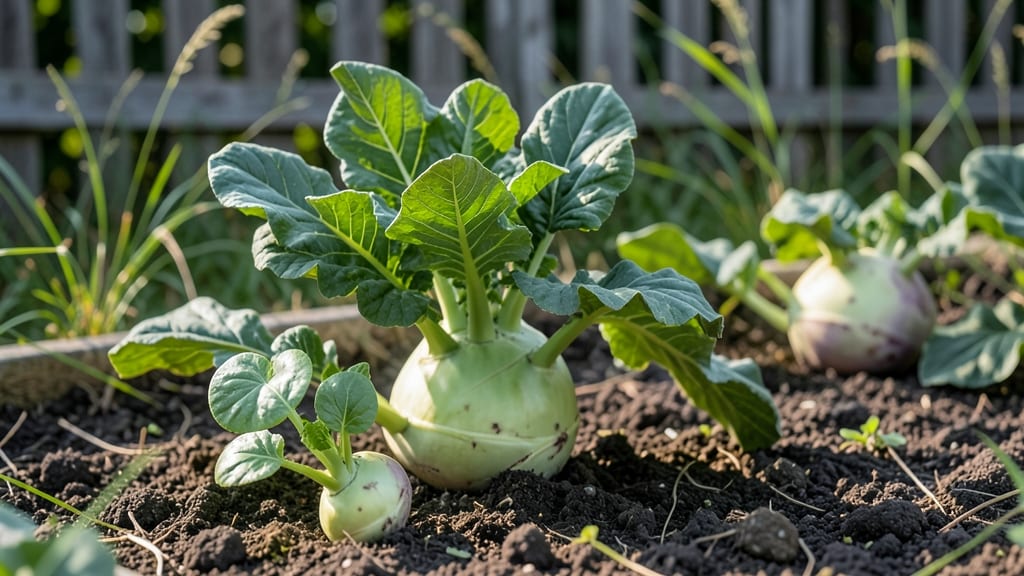
Understanding kohlrabi plant stages turns first-time growers into confident harvesters. 🌱 From tiny seeds to plump bulbs, each phase has its own care needs—and missing one can mean tough, fibrous stems instead of sweet, crisp harvests.
I've tracked every stage for five seasons, and the difference between a mediocre crop and a jaw-dropping one comes down to knowing exactly when to water, fertilize, and pull those bulbs.
The journey starts with germination (7-14 days), where seeds push through soil like little green arrows. Then comes the leafy phase (3-4 weeks), where plants grow fast but need consistent moisture—dry spells here mean stunted bulbs.
By week 5, you'll spot the telltale swelling at the stem base, signaling it's time to adjust care for maximum sweetness.
At peak harvest (6-8 weeks total), bulbs should be 2-3 inches wide with smooth, glossy skins—like miniature turnips. The secret? Stop watering 3-4 days before pulling to concentrate flavor.
One year, I waited too long and ended up with woody stems; now I mark my calendar and harvest at the perfect moment.
Cool climates extend the season, while hot summers speed up growth—adjust your timeline accordingly. Whether you're growing in spring or fall, these stages remain the same; only the timing shifts. With this roadmap, you'll go from seed packet to kitchen table with confidence every season.
📚 In This Guide
- What you need
- Instructions
- Tips and common mistakes
- Wrapping up and next steps
What you need
- ● Seeds: 1–2 packets of Brassica oleracea var. gongylodes (kohlrabi) seeds (about 50–100 seeds per packet). Choose heirloom or organic varieties if preferred.
- ● Containers or Garden Bed: Containers: 5–6-inch deep pots (1–2 per plant) with drainage holes.
- ● Garden Bed: A sunny spot (6+ hours of sunlight daily) with well-draining soil. Prepare a 12-inch deep bed for optimal growth.
- ● Soil: Well-draining, fertile soil with a pH of 6.0–7.0. Mix in 2–3 inches of compost or aged manure before planting.
- ● Watering Can or Hose: With a gentle spray nozzle for consistent moisture.
- ● Fertilizer: Balanced Fertilizer: 10-10-10 or 5-5-5 (follow package instructions for application rates).
- ● Organic Option: Compost tea or worm castings for a natural boost.
- ● Mulch: Straw or shredded leaves (2–3 inches thick) to retain moisture and suppress weeds.
- ● Hand trowel for transplanting seedlings.
- ● Garden gloves to protect your hands.
- ● Row cover or frost cloth (if planting in cooler climates).
- ● Pruning shears for harvesting or trimming.
- ● pH testing kit to monitor soil acidity.
- ● Know your last frost date—kohlrabi thrives in cool weather (plant 2–3 weeks before the last frost or 6–8 weeks before the first frost for fall harvests).
- ● Ensure consistent moisture (soil should stay evenly damp but not waterlogged).
- ● Monitor for pests like cabbage worms or flea beetles—use row covers or organic sprays if needed.
How to recognize and care for each kohlrabi growth stage
Kohlrabi grows fast—here's how to track its stages and keep it thriving.
🌱 Step 1: Germination and Seedling Stage (Days 7-14)
After sowing seeds ¼ inch deep in well-drained soil, germination takes 7-14 days at 60-70°F. You'll know it's working when tiny green leaves—called cotyledons—push through the soil. These first leaves look like tiny cabbage leaves and signal the seedling has successfully sprouted.
Keep soil consistently moist but not soggy during this stage. I use my finger to check moisture—if the top ½ inch feels dry, it's time to water gently. Avoid overhead watering to prevent fungal diseases that can rot delicate seedlings. Thin seedlings to 4 inches apart once they have two true leaves to prevent competition.
🌿 Step 2: Vegetative Growth (Weeks 3-5)
This is when kohlrabi's distinctive bulb begins forming at the stem base. You'll notice the stem thickening and the leaves developing a deeper green color. The plant should reach 6-8 inches tall with 4-6 true leaves by week 4. The bulb will feel firm when pressed gently—this is your cue it's developing properly.
During this phase, kohlrabi needs 1-2 inches of water weekly and full sun (6+ hours daily). I often side-dress with compost at this stage to provide nutrients for the rapidly growing bulb. Watch for aphids on undersides of leaves—spray with soapy water if you see clusters of tiny insects.
⏰ Step 3: Bulb Formation (Weeks 5-7)
The real magic happens here: the bulb swells to 2-3 inches in diameter at its widest point. You'll see the stem thicken noticeably and the leaves grow larger. The bulb should feel firm but not woody—if it starts turning tough, it's past its prime. Harvest when bulbs reach 2-3 inches for best flavor.
Reduce water slightly in the final week before harvest to prevent bulb splitting. Kohlrabi thrives in cool weather (60-65°F), so if temperatures exceed 75°F, harvest promptly or provide afternoon shade. The leaves remain edible and nutritious throughout this stage—don't waste them!
✂️ Step 4: Harvest and Post-Harvest Care
Harvest by twisting the bulb gently or using clean shears to cut stems 1 inch above the bulb. You'll know it's ready when the bulb feels firm and the skin develops a slight sheen. Leave the outer leaves attached—they protect the bulb and keep it fresh longer. Kohlrabi stores well in the fridge for 2-3 weeks when kept in a plastic bag with a paper towel to absorb moisture.
If you miss the harvest window, don't toss the plant. The leaves are packed with nutrients and can be cooked like spinach. For a second crop, succession plant seeds every 2-3 weeks in early spring or late summer for continuous harvests. The key is consistency—kohlrabi grows fast but rewards patience with sweet, crisp bulbs.
Tips & tricks for perfect kohlrabi cultivation
Growing kohlrabi successfully comes down to understanding its rapid growth cycle—and these tricks will help you navigate each stage with confidence.
Seedling Stage Success: I've learned the hard way that consistency is key during those first 7-14 days. Use a seedling heat mat if your soil stays below 60°F—this speeds up germination significantly. Once those first cotyledons appear, mark their location with small sticks so you don't disturb them when thinning later. The 4-inch spacing mentioned is crucial for preventing competition, but don't thin too early—wait until you see those two true leaves.
Bulb Development Watch: During weeks 3-5 when the bulb starts forming, I check for firmness by gently pressing the stem base—it should feel like a firm apple, not a squishy tomato. If you notice the leaves yellowing at this stage, it's often a sign of overwatering. Remember that 1-2 inches of water weekly is a guideline, not a rule—adjust based on your soil type and rainfall. For container growers, use pots at least 6 inches deep with drainage holes.
Harvest Timing Secret: The 2-3 inch diameter is your sweet spot, but here's what nobody tells you—the bulb's skin color changes as it matures. When it develops that slight sheen (almost like a pearl finish), that's your perfect harvest cue. If you're growing purple varieties, the color will fade slightly as they mature. And don't forget: those leaves are edible! Chop them up and add to salads or sauté like spinach—they're packed with nutrients and won't go to waste.
Temperature Troubleshooting: Kohlrabi thrives in that 60-70°F range, but if you're in a hotter climate (above 75°F), provide afternoon shade using shade cloth. I've found that even partial shade can make a huge difference in preventing bolting. For cooler climates, use row covers if nighttime temps drop below 50°F—they provide just enough insulation without overheating during the day.
Pro Tips for Kohlrabi Plant Stages
- Growing kohlrabi successfully comes down to understanding its rapid growth cycle—and these tricks will help you navigate each stage with confidence.
- Seedling Stage Success: I've learned the hard way that consistency is key during those first 7-14 days.
- Bulb Development Watch: During weeks 3-5 when the bulb starts forming, I check for firmness by gently pressing the stem base—it should feel like a firm apple, not a squishy tomato.
Frequently asked questions
How long does it take for kohlrabi to go from seed to harvest?
Kohlrabi typically takes 50–70 days to mature from seed to harvest, depending on the variety. Fast-maturing types like 'Purple Vienna' may be ready in as little as 45 days, while larger varieties like 'White Vienna' can take up to 80 days. Check seed packets for specific timelines!
Can I harvest kohlrabi before it fully matures?
Yes! Kohlrabi is best harvested when the bulb is 2–4 inches wide—this ensures tender, flavorful flesh. If left too long, the bulb becomes woody and pithy. For baby kohlrabi, harvest as early as 30–40 days after transplanting for a milder taste.
What’s the best temperature for growing kohlrabi?
Kohlrabi thrives in cool weather (ideal temps: 55–70°F). It can tolerate light frosts but struggles in heat above 80°F, which causes bolting (flowering prematurely). For summer planting, use shade cloth or opt for heat-tolerant varieties like 'Early Purple.'
Why are my kohlrabi leaves turning yellow or wilted?
Yellowing leaves often signal overmaturity or nutrient deficiencies (like nitrogen). Wilting may indicate underwatering or pests (e.g., cabbage worms). Check soil moisture and inspect leaves for holes or chewed edges. Apply compost or a balanced fertilizer if needed.
What can I plant after kohlrabi in the same spot?
Kohlrabi is a light feeder, so follow it with heavy feeders like tomatoes, peppers, or squash. Avoid planting brassicas (e.g., cabbage, broccoli) in the same spot to prevent disease buildup. Rotate crops annually for healthier soil!
Wrapping up and next steps
Growing kohlrabi from seed to harvest is a rewarding journey that blends patience with delicious results! 🌱 By understanding each stage—from sprouting to harvesting—you’ll set your garden up for success.
Whether you’re a beginner or a seasoned gardener, these stages ensure your kohlrabi thrives, offering crisp, nutritious bulbs packed with flavor.
Ready to take the next step? Start by planting your seeds this season—soon, you’ll be enjoying homegrown kohlrabi in salads, roasts, or stir-fries! 🥬 For extra confidence, keep a growth journal to track progress and refine your technique. Happy gardening!