
Planting
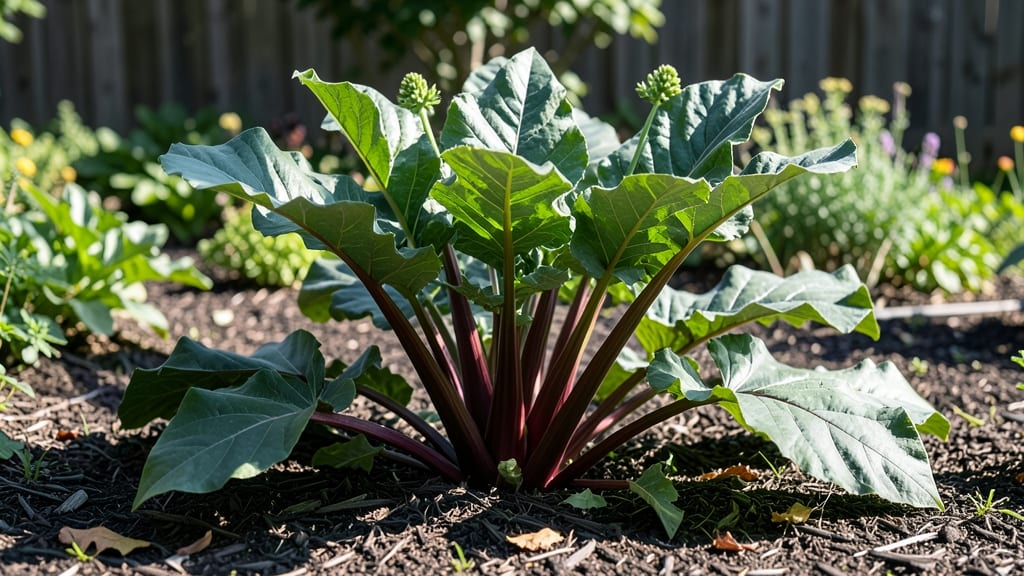
Growing a large rhubarb plant means harvesting bright red stalks for years—if you give it the right conditions. 🌱 I’ve watched mine spread into a lush, cold-resistant clump that outlasts most perennials, and the secret isn’t complicated: patience, proper spacing, and a little winter protection.
This hardy plant thrives in zones 3-9, but getting the soil and sunlight right is where most gardeners stumble.
Start with a sunny spot (at least 6 hours of light daily) and well-draining soil mixed with compost—rhubarb hates soggy roots. Space crowns 3-4 feet apart to prevent overcrowding, and mulch heavily in winter to protect the crown from freeze-thaw cycles.
Water deeply once a week, especially during dry spells, but avoid soggy soil—this plant’s roots need room to breathe.
By year two, you’ll harvest pounds of stalks with minimal effort, and the plant keeps producing for decades. The first-year growth might look modest, but that’s normal—think of it as building a foundation. Prune old stalks right after harvest to encourage new growth, and avoid cutting into the crown itself.
Common mistakes? Overwatering, planting too close together, or harvesting too aggressively in the first year. But once established, this plant is nearly foolproof—just give it space, sun, and a little winter care. Ready to grow a rhubarb patch that lasts for generations?
📚 In This Guide
- What you need
- Instructions
- Tips and common mistakes
- Wrapping up and next steps
What you need
- ● Rhubarb crowns: 1-2 mature, disease-free crowns (ensure they have at least 3-5 sturdy stalks).
- ○ Well-draining soil: Mix of loamy soil + compost (pH 6.0-6.8). Optional: Add 1 cup of bone meal or balanced fertilizer (10-10-10) per planting hole for extra nutrients.
- ● Organic mulch: Straw, wood chips, or shredded leaves (2-3 inches thick) to retain moisture and suppress weeds.
- ● Garden fork or tiller: To loosen soil to a depth of 12-18 inches.
- ● Garden gloves: Heavy-duty to protect hands from thorns.
- ● Shovel or spade: For digging planting holes (12-18 inches deep and wide).
- ● Watering can or hose with nozzle: For gentle, deep watering (avoid overhead spraying).
- ● Pruners or shears: Sharp, clean tools to trim dead leaves or stalks.
- ● Plant tags or markers: To label varieties (e.g., ‘Victoria’ or ‘Cherry’).
- ● Sunlight: Full sun (6+ hours daily) or partial shade in hotter zones.
- ● Water source: Consistent moisture (1-1.5 inches per week, more during drought).
- ● Spacious plot: Minimum 3 feet between crowns (they spread aggressively!).
- ● Patience: Rhubarb takes 2-3 years to reach full size and productivity!
How to grow a cold-hardy giant rhubarb plant
Here’s my battle-tested method for cultivating a robust, productive rhubarb plant that will reward you with decades of harvests.
🌱 Step 1: Select and Prepare the Planting Site
Rhubarb thrives in full sun to partial shade—at least 6 hours of sunlight daily—but tolerates 4 hours minimum in hotter climates. Choose a location with well-draining soil and rich organic matter, as rhubarb hates soggy roots. I always test soil pH first—aim for 6.0 to 6.8. If your soil is heavy clay, amend it with 3-4 inches of compost worked into the top 12 inches of soil.
Real talk: Rhubarb is a perennial workhorse, so pick a permanent spot. It dislikes being transplanted later, and moving it stresses the plant for years. Mark the area with stakes to avoid disturbing the roots when digging. The crown (where leaves meet stems) should sit 1 inch below soil level—this prevents rot while keeping the plant stable.
🪴 Step 2: Plant Crowns at the Right Depth and Spacing
Purchase crowns (not bare-root plants) from a reputable nursery—avoid small pots, as they’re often stunted. Plant in early spring or fall, when temperatures are 50-60°F. Space crowns 3-4 feet apart in rows 4-5 feet apart to allow airflow and easy harvesting. Dig a hole 12-18 inches wide and deep—rhubarb’s thick roots need room to spread.
Place the crown in the hole with the buds (eyes) facing upward. If the crown is large, trim the stalks to 6 inches before planting to reduce stress. Backfill with soil, firming gently around the base. Water deeply until the soil is moist 6 inches down—this encourages root establishment. Mulch with 3-4 inches of straw or wood chips to retain moisture and suppress weeds.
☀️ Step 3: Water and Fertilize for Strong Establishment
Keep the soil consistently moist (not soggy) for the first 2 growing seasons. Water 1-2 inches per week, more in Zone 8-9 during summer heat. I use a soaker hose to deliver water at the base—rhubarb leaves are prone to fungal issues if water sits on them. Avoid overhead irrigation, especially in the evening.
Fertilize lightly in early spring with 10-10-10 or 5-10-10 at ½ pound per 100 square feet. Too much nitrogen promotes leafy growth at the expense of stalks. After the first year, reduce fertilizer to once every 2-3 years—rhubarb is a low-maintenance plant once established. You’ll know it’s happy when it sends up bold, deep-green leaves by mid-spring.
✂️ Step 4: Manage Growth and Harvest Strategically
Never harvest stalks the first year—let the plant focus on root and crown development. In year two, wait until the plant is at least 2 feet tall before harvesting. Cut stalks at the base with a clean knife, leaving the crown and leaves intact. Harvest no more than ⅓ of the stalks in the first year, increasing to half the stalks in subsequent years.
Here’s the thing—harvest in early spring for the sweetest, most tender stalks. If you wait until summer, the stalks become tough and tart. After harvesting, remove any yellowing or diseased leaves immediately to prevent spread. In fall, cut stalks back to 2 inches above the crown and apply a 2-inch layer of mulch to protect roots from winter temperature swings.
⏰ Step 5: Overwinter and Prune for Long-Term Health
Rhubarb is extremely cold-hardy—it survives Zone 3 winters with minimal protection. In Zone 4-5, add 4-6 inches of mulch in late fall to insulate the crown. In Zone 6-9, no extra protection is needed unless you have extreme winter winds. Prune dead or damaged stalks in early spring before new growth begins—this prevents pests and diseases from taking hold.
Every 3-5 years, divide large clumps in early spring to rejuvenate the plant. Dig up the crown, separate into 3-4 inch sections with 2-3 buds each, and replant immediately. This keeps stalks thick and productive instead of thin and woody. You’ll know it’s time to divide when the center of the plant sends up smaller, weaker stalks—a sign the crown is overcrowded.
Tips & tricks for growing a cold-hardy giant rhubarb plant
These practical insights will help you cultivate a thriving rhubarb plant that delivers abundant harvests for years to come.
Site Selection Insight: While rhubarb tolerates 4 hours of sunlight in hotter climates, the sweetest stalks develop when planted in areas receiving 6 hours of direct sunlight. I've found that morning sun with afternoon shade works beautifully in Zone 7, preventing leaf scorch while maintaining stalk quality. This balance is especially important in the first two growing seasons when the plant establishes its root system.
Crown Planting Technique: The 12-18 inch hole depth specified in Step 2 might feel excessive, but trust me—rhubarb's thick roots need this space to spread horizontally. I've seen plants with roots extending 3 feet from the crown when properly established. For large crowns, trimming stalks to 6 inches before planting reduces stress and allows the plant to focus its energy on root development rather than supporting excessive foliage.
Watering Wisdom: The 1-2 inches of water per week recommendation is a baseline, but I've learned that consistency matters more than quantity. Instead of watering every day, I prefer deep waterings every 5-7 days to encourage deep root growth. Use a moisture meter to check that soil remains moist 6 inches down—this is the key to preventing both drought stress and root rot.
Harvest Timing Secret: Early spring harvesting is non-negotiable for tender stalks, but I've discovered that the first harvest window opens when nighttime temperatures consistently stay above 40°F. This typically occurs 2-3 weeks after the last frost in most climates. Harvesting at this stage ensures you're getting the sweetest, most flavorful stalks while allowing the plant to continue growing for subsequent harvests.
Pro Tips for Large Rhubarb Plant
- These practical insights will help you cultivate a thriving rhubarb plant that delivers abundant harvests for years t...
- Site Selection Insight: While rhubarb tolerates 4 hours of sunlight in hotter climates, the sweetest stalks develop w...
- Crown Planting Technique: The 12-18 inch hole depth specified in Step 2 might feel excessive, but trust me—rhubarb's ...
Frequently asked questions
Got questions about growing a large rhubarb plant? You’re not alone! Here are answers to the most common ones—from first-time gardeners to seasoned growers.
How long does it take for a rhubarb plant to reach maturity?
A large rhubarb plant typically takes 2–3 years to fully mature from a crown or root division. In the first year, focus on establishing strong roots—harvest lightly (if at all) to avoid stressing the plant. Patience pays off with bigger, more productive stalks in years two and three!
Can rhubarb survive harsh winters in Zones 3-9?
Rhubarb is exceptionally cold-hardy and thrives in Zones 3–9. Mulch heavily with straw or leaves (4–6 inches) in late fall to insulate the crown. Avoid disturbing the plant during winter—its dormancy helps it bounce back stronger in spring. Pro tip: Older plants handle frost better than new ones!
When is the best time to harvest rhubarb for the biggest stalks?
Harvest when stalks are 6–8 inches tall and at least 1 inch in diameter, usually in late spring (April–May). Twist gently or cut with shears—never pull the stalk, which can damage the plant. Leave at least 3–4 inches of stalk attached to encourage regrowth. Warning: Never eat the leaves (they’re toxic)!
How do I revive a struggling or dormant rhubarb plant?
If your plant looks wilted or dormant but the crown is still firm, it’s likely just resting. Water deeply (1 inch per week) and avoid harvesting. If the crown is soft or mushy, it may be rotting—trim away damaged areas and replant healthy divisions. Pro tip: Overcrowded plants (older than 5–6 years) often decline; divide them every 3–4 years for rejuvenation!
What can I plant near rhubarb to boost growth?
Rhubarb loves companion plants that deter pests and improve soil. Try:
- Chives or garlic (repel aphids and Japanese beetles)
- Strawberries (shade-sensitive and pest-repellent)
- Tansy or thyme (natural pest deterrents)
Wrapping up and next steps
Growing a large rhubarb plant is a rewarding journey—whether you're drawn to its striking foliage, cold-hardy resilience, or the delicious harvest it promises. With the right soil, patience, and care, this perennial giant will thrive in zones 3-9 and reward you for years to come.
Now that you’re equipped with the know-how, why not take the next step? Plant your crown this fall or early spring, and soon you’ll be savoring homemade pies, compotes, or tangy stews straight from your garden! 🌱✨