
Planting
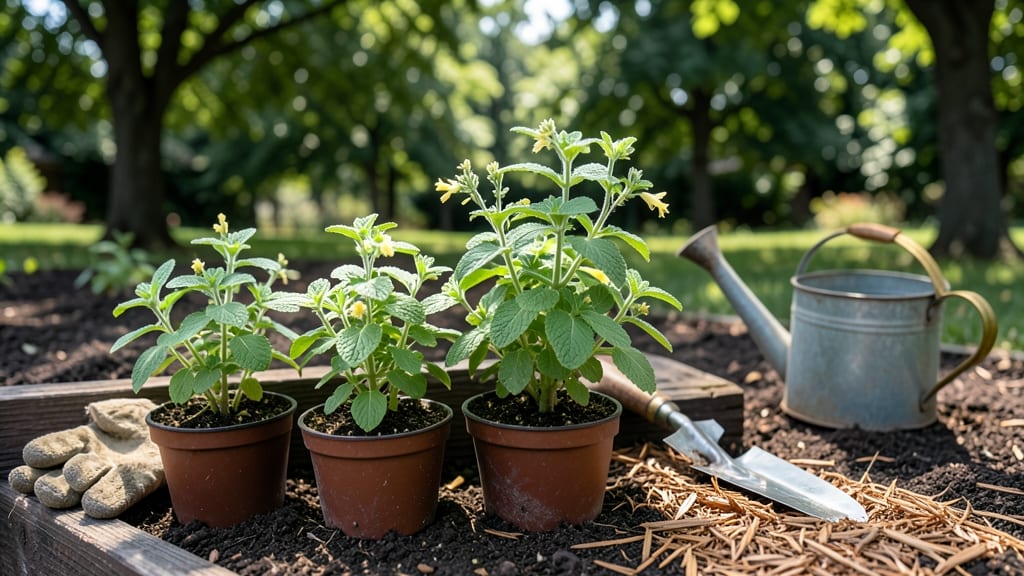
A Lemon Balm Planting Guide is like inviting a sun-drenched, citrus-scented hug into your garden—it thrives where many perennials struggle. 🌿 This cold-hardy plant spreads effortlessly, turning shady corners into fragrant havens with minimal effort, though I’ve learned the hard way that containment matters if you want to keep it from taking over.
The secret to happy lemon balm starts with partial shade and moist, well-draining soil—think of it as the perfect spot where morning sun kisses the leaves before they retreat to cooler afternoon shade.
Most gardeners overlook spacing, but giving plants 18-24 inches between them prevents competition and makes harvesting easier. I’ve seen it choke out nearby flowers when crowded, so don’t skimp on room.
Once planted, water deeply but infrequently—lemon balm hates soggy roots but revives quickly after drought. Within 4-6 weeks, you’ll smell that signature lemony aroma wafting through the air as new leaves unfurl.
The real magic? It’s perennial, meaning every spring it returns stronger, ready to be harvested for teas, pest control, or simply enjoying the scent.
For propagation, cuttings root faster than seeds, but both work. Snip 3-4 inch stems in spring, strip the lower leaves, and dip in rooting hormone before planting in moist soil.
Avoid planting too late in summer—it needs time to establish before winter. And here’s my pro tip: mulch heavily in fall to protect those fragrant roots from freeze-thaw cycles.
📚 In This Guide
- What you need
- Instructions
- Tips and common mistakes
- Wrapping up and next steps
What you need
- ● Lemon balm plants or seeds: 3–5 plants (for a small garden patch) or 1 packet of seeds (about 50–100 seeds per packet).
- ● Choose organic, disease-resistant varieties if possible!
- ● Well-draining soil: Ideal pH: 6.0–7.0 (slightly acidic to neutral).
- ● Amend heavy clay soil with compost or perlite (1 part compost to 2 parts soil).
- ● Sunlight access: Partial shade to full sun (4–6 hours of sunlight daily).
- ● Watering can or hose with a gentle spray nozzle.
- ● Garden trowel or transplanting spade.
- ○ Mulch (optional but recommended): 2–3 inches of organic mulch (straw, wood chips, or shredded leaves) to retain moisture.
- ● Fertilizer: Balanced 10-10-10 or compost tea (apply lightly at planting time).
- ● Pruning shears (for shaping and harvesting).
- ● Garden stakes or cages (to support tall plants if needed).
- ● Pest deterrents: Neem oil or row covers (if aphids or deer are a problem).
- ● Gloves (to protect your hands from prickly stems).
Step-by-Step instructions for planting lemon balm
Here's how to establish this cold-hardy perennial with minimal fuss—it thrives on neglect once settled.
🌱 Step 1: Choose the Perfect Location and Soil
Lemon balm loves partial shade to full sun but tolerates 4-6 hours of morning sun in hotter climates. I always plant mine where it gets dappled light—think under fruit trees or near the north side of the house. The soil should be well-draining but moisture-retentive, so amend heavy clay with 2-3 inches of compost before planting.
This plant spreads aggressively, so contain it with 12-inch deep root barriers if you don't want it taking over. I skip barriers in my garden and let it naturalize—it becomes a fragrant groundcover over time. Test soil pH before planting; lemon balm prefers 6.0-7.0 and struggles in acidic conditions.
🪴 Step 2: Plant Bare-Root or Container-Grown Starts
For bare-root plants, soak roots in lukewarm water for 15-20 minutes before planting to rehydrate them. Dig holes twice as wide as the root ball but only as deep—planting too deep suffocates the crown. Space plants 18-24 inches apart to give them room to spread.
If using container-grown starts, gently squeeze the pot to loosen roots before removing. Place each plant in its hole, then backfill with native soil mixed with 1 cup of compost. Water deeply to settle the soil and eliminate air pockets around the roots. You'll know it's right when the soil surface looks slightly compacted but not rock-hard.
💧 Step 3: Water and Mulch for Establishment
Keep the soil consistently moist for the first 4-6 weeks after planting—this is critical for root establishment. Water deeply every 2-3 days until new growth appears, then taper to once weekly in normal conditions. Lemon balm has shallow roots, so 1 inch of water per week is ideal.
Apply 2-3 inches of organic mulch (straw or shredded leaves) around each plant, keeping it 2 inches away from the stem. This conserves moisture, suppresses weeds, and regulates soil temperature. I always mulch after the first watering—it's the easiest way to reduce maintenance later.
✂️ Step 4: Prune and Harvest for Bushier Growth
Pinch back the top set of leaves when plants reach 6 inches tall to encourage bushier growth. Regular pruning also prevents flowering, which makes the leaves less aromatic. I prune mine every 4-6 weeks during the growing season, cutting back one-third of the plant each time.
Harvest leaves anytime by snipping stems just above a leaf node. For best flavor, harvest morning leaves after the dew has dried but before the heat of the day. Don't harvest more than one-third of the plant at a time—this keeps it productive and prevents stress.
☀️ Step 5: Overwinter and Divide Every 2-3 Years
Lemon balm is hardy to USDA Zone 3, but in colder climates, it may die back to the ground. Cut back stems to 2 inches tall in fall and mulch heavily with 4-6 inches of straw. The roots survive winter just fine and sprout anew in spring.
Divide clumps in early spring before new growth appears. Dig up the entire plant, separate into 3-4 inch sections with roots attached, and replant immediately. This rejuvenates the plant and prevents it from becoming too crowded. I divide mine every 2-3 years—it's the best way to keep it vigorous.
Tips & tricks for perfect lemon balm planting
These simple strategies will help you establish lemon balm with confidence—avoiding common pitfalls while maximizing growth potential.
Location and Sunlight: In Step 1, when choosing your planting spot, prioritize areas with morning sun and afternoon shade. The 4-6 hours of morning sunlight provides just enough energy without stressing the plant in hot afternoons. I've found that planting near fruit trees creates the perfect dappled light environment—just watch for competing roots that might steal moisture.
Root Preparation: For Step 2 with bare-root plants, don't rush the 15-20 minute soaking time—this rehydration step is crucial for root health. I've seen many gardeners skip this and end up with stunted growth. Use lukewarm water (around 70°F) to avoid shocking the roots, and check the water temperature with your finger before soaking.
Pruning Strategy: When you reach Step 4, remember that regular pruning every 4-6 weeks isn't just about shape—it's about flavor preservation. The more you prune, the more vigorously it grows and the more aromatic the leaves become. I always prune in the morning when the oils are most concentrated, and I never take more than one-third at a time to avoid stressing the plant.
Winter Protection: In colder climates during Step 5, don't be afraid to go heavy on the mulch. That 4-6 inches of straw isn't just for show—it acts as an insulating blanket that protects roots down to Zone 3. I've seen lemon balm survive winters with -20°F temperatures thanks to proper mulching. Just remember to remove some mulch in early spring to prevent rot as new growth emerges.
Pro Tips for Lemon Balm Planting Guide
- These simple strategies will help you establish lemon balm with confidence—avoiding common pitfalls while maximizing ...
- Location and Sunlight: In Step 1, when choosing your planting spot, prioritize areas with morning sun and afternoon s...
- Root Preparation: For Step 2 with bare-root plants, don't rush the 15-20 minute soaking time—this rehydration step is...
Frequently asked questions
Got questions about growing lemon balm? You’re not alone—this fragrant herb has its quirks! Here are answers to the most common queries to help you cultivate a thriving lemon balm patch with ease.
When is the best time to plant lemon balm?
Lemon balm thrives when planted in early spring (after the last frost) or early fall. Avoid planting in scorching summer heat, as seedlings can struggle. If you live in a mild climate, fall planting gives roots time to establish before winter. For container growing, you can plant anytime the soil isn’t frozen!
Can lemon balm grow in containers, or does it need a garden bed?
Yes! Lemon balm is perfect for containers—it’s a sprawling plant that benefits from being confined. Use a pot at least 12 inches wide with drainage holes. Place it in full sun to partial shade, and expect it to spread 1–2 feet wide. Just keep an eye on watering—containers dry out faster than garden beds.
Is lemon balm cold-hardy? How do I protect it in winter?
Lemon balm is moderately cold-hardy (USDA zones 3–9), but it may die back in harsh winters. In colder climates, mulch heavily with straw or leaves to insulate roots. If your plant freezes, it’ll often regrow from the base in spring. For extra protection, trim back foliage before winter to reduce moisture loss.
Why is my lemon balm attracting so many bees? Is that bad?
Not at all—lemon balm is a bee magnet! Its fragrant flowers are packed with nectar, making it a fantastic pollinator plant. If bees are overwhelming, try harvesting leaves in the morning (when flowers are closed) or lightly shake plants to deter them. Embrace the buzz—it means your plant is healthy and thriving!
How do I stop lemon balm from spreading everywhere?
Lemon balm is aggressive and can take over a garden if unchecked. To control it:
- Plant in containers with deep sides.
- Trim back stems regularly to discourage spreading.
- Divide and relocate runners to other areas if desired.
- Consider growing it near paths or borders where spread is less problematic.
Wrapping up and next steps
Growing lemon balm is a rewarding journey that brings fragrant beauty and practical benefits to your garden! 🌿 With its cold-hardy nature and easy-care requirements, this perennial is perfect for both beginners and seasoned gardeners.
Whether you're planting it for its soothing aroma, medicinal uses, or culinary potential, you now have all the tools to succeed.
Ready to take the next step? Start by selecting a sunny spot in your garden, gather your supplies, and plant your lemon balm with confidence! Happy gardening—your fragrant, thriving lemon balm awaits! 🌱