
Planting
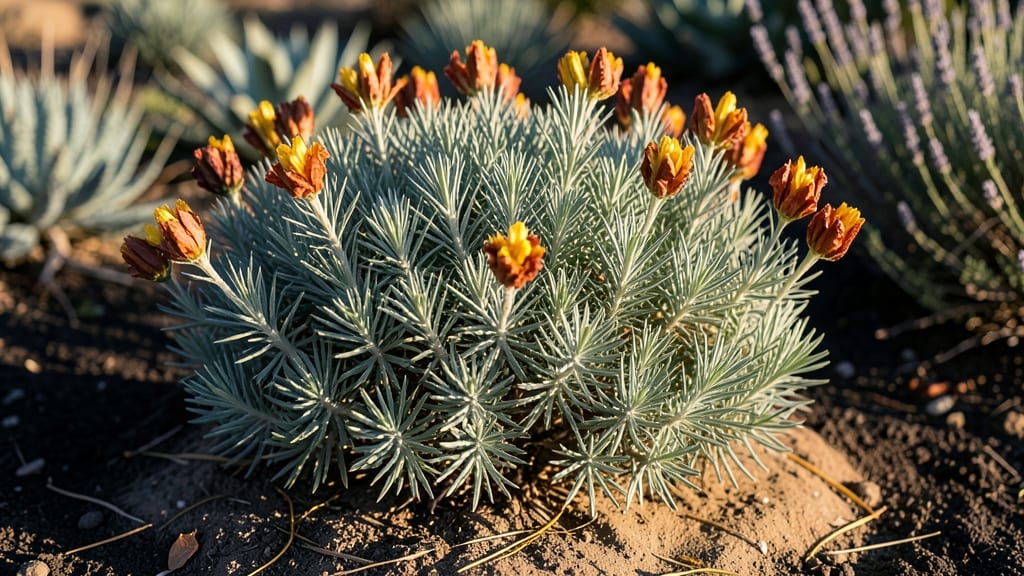
The Leucadendron 'Safari Sunset' plant thrives in USDA zones 9-11, requiring full sun exposure and well-draining, acidic soil with minimal watering to prevent root rot. Prune lightly after flowering to maintain its compact, mounding shape and vibrant foliage colors.
The Leucadendron 'Safari Sunset' is a stunning South African native that loves hot, dry climates—think coastal California or Florida's inland areas. 🌞 Its bright foliage colors actually intensify under full sun exposure, making it a showstopper in sunny gardens.
This drought-tolerant beauty stores water efficiently, so overwatering is the biggest mistake gardeners make with this plant. The key to keeping it vibrant is mimicking its natural habitat: well-draining soil that mimics sandy, acidic conditions found in its native fynbos ecosystem.
For best results, plant it in spring when temperatures are consistently warm. The vibrant foliage colors—ranging from fiery oranges to deep reds—will develop fully only when given at least 6-8 hours of direct sunlight daily.
While it's low-maintenance, a light pruning after flowering helps maintain that perfect rounded shape while encouraging new growth for next season's blooms.
💡 In This Article
- Optimal Growing Conditions for Leucadendron Safari Sunset
- Step-by-Step Planting and Maintenance Guide for Leucadendron
Optimal growing conditions for Leucadendron Safari Sunset
This striking plant evolved in South Africa's fynbos biome, where summers are hot and dry with minimal rainfall—conditions that explain its remarkable drought resistance.
The Safari Sunset variety thrives in USDA zones 9-11 because it handles temperatures up to 100°F without stress, thanks to its deep root system that stores moisture efficiently.
Unlike many ornamental plants, it actually benefits from heat—foliage colors intensify when exposed to full sun, developing those vibrant oranges and reds through a process called anthocyanin accumulation, similar to how red cabbage turns purple when exposed to sunlight.
The plant's native sandy, acidic soils (pH 4.5-5.5) are crucial—alkaline conditions cause nutrient deficiencies that dull its colors. In garden settings, mix 50% native soil with 50% sandy compost and add sulfur to maintain acidity.
The roots need excellent drainage to prevent rot, so amend heavy clay soils with perlite or coarse sand (up to 30% of the mix). This mimics its natural environment where water drains quickly after rare rainfall events.
Light intensity directly affects color vibrancy—plants in partial shade (less than 4 hours of direct sun) will produce softer, less saturated foliage. The Safari Sunset actually performs better in coastal climates where humidity is moderate (40-60%) because excessive moisture can promote fungal issues.
In inland areas with low humidity, increase watering slightly during extreme heat waves, but never let soil stay soggy—this plant's roots suffocate in wet conditions.
What most gardeners overlook is how wind exposure affects this plant's growth pattern. In its native habitat, strong coastal winds prune the plant naturally, creating a compact, mounding shape. Without this natural pruning, stems can grow leggy in sheltered garden spots.
To replicate this effect, place your Safari Sunset in an area with moderate breeze or lightly trim leggy growth in early spring before new shoots emerge.
For those in zones 8 or cooler, consider growing this as a container plant that can be moved indoors during winter. The plant enters dormancy when temperatures drop below 50°F, so reduce watering by 75% and protect it from frost.
Even in ideal zones, avoid overhead watering—wet foliage encourages powdery mildew, which can discolor the leaves and reduce their vibrant hues.
Here's what's actually happening with its drought tolerance: The Safari Sunset has evolved thick, waxy leaves that reduce water loss through transpiration, combined with a deep taproot system that accesses moisture from 2-3 feet underground.
This adaptation allows it to survive on only 1 inch of water every 2-3 weeks once established—far less than most ornamental shrubs require.