
Planting
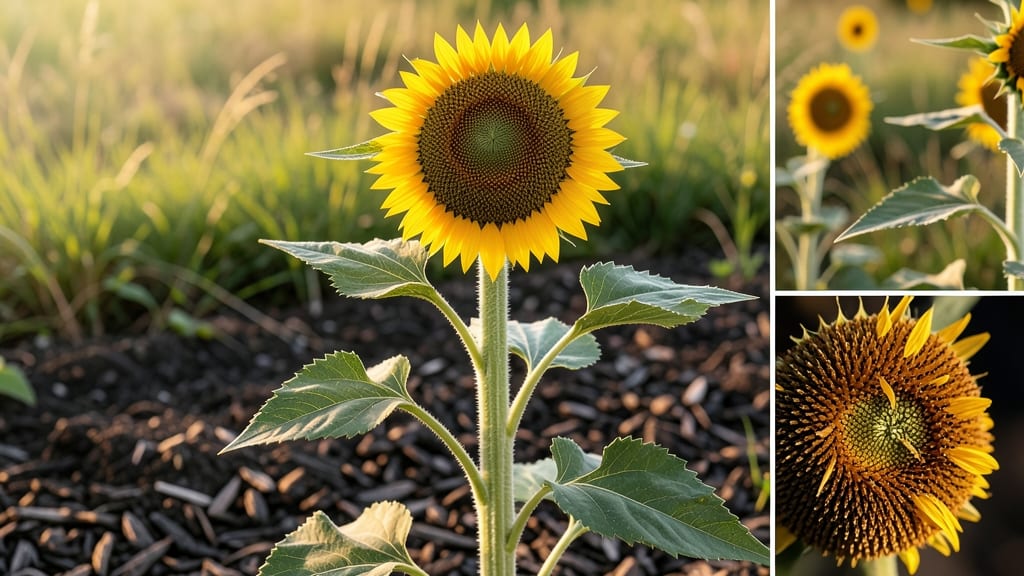
The life of a sunflower plant spans 80 to 120 days as it transforms from a tiny seed into a towering bloom through five key phases: germination, vegetative growth, bud formation, flowering, and seed production. Perfect growing conditions—full sunlight and nutrient-rich soil—help it reach its full potential faster.
Sunflowers are nature's speedsters, completing their entire growth cycle in just a few months. 💫 The magic starts when seeds sprout within 7-14 days, sending up their first leaves.
From there, the plant enters a rapid growth phase where it can add up to 3 inches per day under ideal conditions. What's fascinating is how sunflowers track the sun—this behavior, called heliotropism, maximizes their energy absorption during early growth stages before they mature into stationary blooms.
The flowering phase typically occurs around 6-8 weeks, followed by seed production that takes another 4-6 weeks to fully mature.
This compressed timeline makes sunflowers perfect for gardeners looking for quick rewards. The plant's ability to thrive in diverse climates—from temperate zones to hotter regions—adds to its appeal. Just remember: consistent moisture during germination and flowering is crucial, as drought stress can stall development at critical stages.
💡 In This Article
- Sunflower Growth Stages Explained: Seed to Full Bloom Timeline
- Optimizing Sunflower Growth: Soil, Sun, and Care Tips
Sunflower growth stages explained: seed to full bloom timeline
The sunflower's journey begins with germination, where seeds break through the soil within 7-14 days under optimal conditions. You'll notice the first leaves—called cotyledons—emerge as small, rounded shapes. These aren't true leaves but serve as the plant's initial food source, storing energy until photosynthesis kicks in.
During this phase, maintaining consistent moisture is critical, as seeds need at least 1 inch of water per week to prevent drying out.
Next comes vegetative growth, where the plant enters its rapid expansion phase. Sunflowers can grow 3-4 inches per day during this stage, developing their iconic rosette of leaves.
What's fascinating is their heliotropism—young plants follow the sun's movement across the sky, adjusting their position every 20-30 minutes to maximize light absorption. This behavior stops once the bud forms, allowing the flower to face east for morning sun exposure.
The bud formation stage begins around 4-6 weeks after planting, marked by the emergence of a tight, green bud at the stem's apex. This phase lasts 2-3 weeks, during which the bud swells dramatically, often doubling in size daily.
The plant's stem thickens significantly to support the heavy bloom, and you'll notice the leaves transition from green to yellowish as nutrients shift toward flower development. 🌱
Flowering occurs when the bud finally opens, revealing the vibrant yellow petals that can reach 12-24 inches in diameter. This stage lasts 10-14 days, during which the sunflower produces nectar to attract pollinators.
The center disk transforms from green to brown as seeds begin forming. Interestingly, sunflowers produce 1,000-2,000 seeds per head, though only about 30-50% will germinate if saved for planting.
The final stage is seed maturation, taking 4-6 weeks as the seeds develop from soft and green to hard and brown. The back of the seed head turns yellow, signaling ripeness.
At this point, the plant has completed its 80-120 day lifecycle, though the seeds themselves can remain viable for 2-3 years if stored properly in a cool, dry place.
Understanding these stages helps gardeners anticipate each plant's needs. For example, providing support stakes during vegetative growth prevents stem breakage from heavy buds, while monitoring for bird activity during flowering can protect seed development.
The entire process showcases nature's efficiency—transforming a tiny seed into a towering, energy-rich plant in just a few months. 💫