
Planting
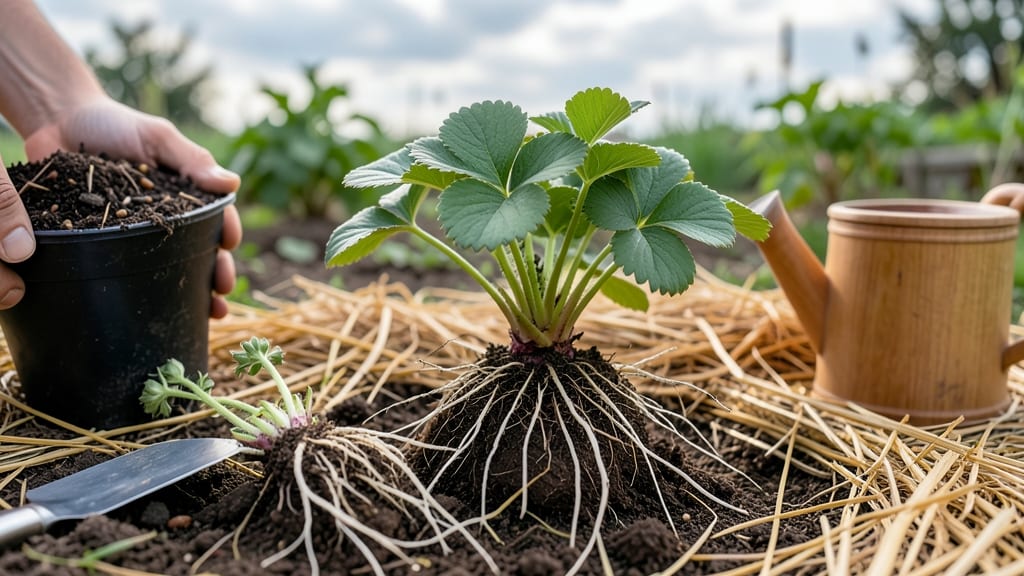
Planting strawberry roots lets you skip the nursery and grow your own sweet, juicy berries in just 6-8 weeks. 🌱 I've propagated hundreds of plants this way, and the secret is treating those little roots like delicate treasures—not like tough garden survivors.
The right soil, spacing, and depth make all the difference between a thriving patch and a sad, leggy mess.
You'll need well-draining soil (mix in compost for extra nutrients), small pots or a prepared bed, and patience for the first few weeks. Strawberries hate soggy roots, so raised beds or containers work best if your soil drains poorly.
Plant the roots shallow—just enough to cover the crown, but no deeper, or you'll smother the plant and invite rot.
Within 3-4 weeks, you'll see new leaves unfurling, and by summer, you'll have berries that taste like childhood memories. The key is consistent watering—keep the soil moist but never waterlogged—and watch for those first white flower buds. They're your reward for doing it right.
This method works for June-bearing, everbearing, and day-neutral varieties, so you can grow strawberries all season long. Just avoid common mistakes like burying the crown too deep or crowding plants—give them 12-18 inches of space to stretch out and thrive.
📚 In This Guide
- What you need
- Instructions
- Tips and common mistakes
- Wrapping up and next steps
What you need
- ● Strawberry roots: Healthy, dormant strawberry roots (1–3 inches long) with at least one bud or "eye" per root. Aim for 6–12 roots depending on your desired yield.
- ● Potting mix: A well-draining, sterile mix (e.g., 50% peat moss or coco coir + 50% perlite or vermiculite). Avoid garden soil to prevent disease.
- ● Containers: Small pots (3–4 inches in diameter) or a seedling tray with drainage holes. 1–2 roots per pot works best.
- ○ Rooting hormone (optional but recommended): A gel or powder to boost root development (e.g., Clonex or hormonal rooting compound).
- ● Pruning shears or scissors: Sterilized to cut roots cleanly without crushing.
- ● Spray bottle: For misting roots lightly to maintain moisture.
- ● Plastic wrap or humidity dome: To create a mini greenhouse effect (e.g., a clear plastic bag or propagation lid).
- ● Sunlight or grow lights: A bright, indirect light source (6–8 hours daily). A south-facing window or LED grow light works well.
- ● Watering can or spray bottle: For gentle hydration (avoid soaking the mix).
- ● Label markers: To tag pots by date or variety (e.g., Alpine, June-bearing, or Everbearing).
- ● Timing: Plant roots in early spring (before active growth) or late summer for fall harvests. Avoid extreme heat or frost.
- ● Root health: Soak roots in lukewarm water for 10–15 minutes before planting to rehydrate.
- ● Sterility: Disinfect tools with rubbing alcohol to prevent fungal infections.
- ● Patience: Roots may take 2–4 weeks to sprout—keep conditions consistent!
Step-by-Step guide to planting strawberry roots
Here's the method I rely on to establish healthy strawberry plants from roots in just weeks.
🌱 Step 1: Prepare the Roots for Planting
Start by selecting healthy, firm roots with multiple buds or "eyes" spaced about 1 inch apart. These buds are the growth points where new plants will emerge. Soak the roots in lukewarm water for 1-2 hours to rehydrate them—this jumpstarts growth and helps them establish faster.
While soaking, trim any damaged or mushy sections with clean scissors. You'll see the roots plump up and feel firmer to the touch. This preparation ensures your plants have the energy to focus on root development rather than recovery. I like to work in the morning so the roots have daylight to begin photosynthesizing immediately.
🪴 Step 2: Choose and Prepare the Planting Site
Strawberries thrive in well-draining soil with 6-8 hours of sunlight daily. Choose a spot that gets morning sun and afternoon shade if you live in a hot climate—this prevents leaf scorch. Mix the soil with 2-3 inches of compost to improve fertility and drainage, working it into the top 6 inches.
Create small mounds or ridges about 6 inches wide and 1 inch high to help with drainage and prevent rot. Space the mounds 18-24 inches apart to allow room for plants to spread. The raised beds also make it easier to keep the roots dry during wet spells, which is critical for strawberry health.
☀️ Step 3: Plant the Roots at the Right Depth
Place each root horizontally on the mound with the buds facing upward. Space the buds 1-2 inches apart along the mound. Cover the roots with soil, leaving the topmost buds exposed—this ensures they stay above ground where they can access sunlight and air. Press the soil gently around the roots to eliminate air pockets.
Water the newly planted roots thoroughly until the soil is evenly moist 2-3 inches deep. You'll know it's right when water drips from the bottom of the mound without pooling. Avoid overwatering, which can suffocate the roots and lead to rot. Mulch around the plants with 2 inches of straw to retain moisture and suppress weeds.
💧 Step 4: Provide Consistent Care for Rapid Growth
Keep the soil consistently moist but not soggy for the first 2-3 weeks. Check the moisture level by sticking your finger 1 inch into the soil—if it feels dry, it's time to water. Strawberries are shallow-rooted, so maintaining even moisture encourages strong root development and leaf growth.
Fertilize lightly with a balanced, water-soluble fertilizer (10-10-10) at half strength after 4 weeks to support new growth. You'll notice the buds swelling and turning green within 10-14 days—this is your signal that the roots are taking hold. Once the first true leaves appear, reduce watering slightly to encourage deeper root growth.
⏰ Step 5: Monitor and Adjust for Fast Establishment
Watch for new shoots emerging from the buds—these are your baby strawberry plants. Thin them to leave the strongest 3-4 shoots per root once they reach 3-4 inches tall. This ensures each plant gets enough nutrients and space to thrive. Remove any weak or leggy shoots immediately to redirect the root's energy.
After 6-8 weeks, your strawberry roots should have established strong root systems and visible foliage. At this point, you can begin pinching off the first flower stalks to encourage larger plants next season. The goal is to establish robust plants that will produce bountiful harvests in their second year.
Tips & tricks for fast strawberry root propagation
Here's what I've learned about accelerating strawberry growth while avoiding common pitfalls.
Timing Secret: The 1-2 hour soak in Step 1 is non-negotiable for proper hydration, but don't let the roots sit longer than that—they'll start to rot. I've found that adding 1 teaspoon of seaweed extract to the soaking water (optional) can boost root growth hormones naturally. The key is lukewarm water—too hot will shock the roots, too cold won't hydrate them properly.
Soil Preparation Strategy: When amending soil with 2-3 inches of compost in Step 2, mix in a handful of perlite or coarse sand to improve drainage—especially important if your native soil is heavy clay. I've seen roots fail completely when planted in soggy soil, even with the mound technique. Test your soil's moisture by squeezing a handful: it should crumble easily when dry, not stick together.
Planting Depth Insight: The 1-2 inch spacing between buds in Step 3 is crucial for proper air circulation, but what's often overlooked is the angle. Place roots at a 45-degree angle rather than flat—this encourages more buds to emerge above ground. Press soil firmly around roots to eliminate air pockets, but don't compact it like clay. Think "lightly packed snow" consistency.
Watering Technique: For the 2-3 inch deep watering in Step 3, use a slow drip method rather than pouring. I water at the base for 10-15 minutes> until water appears at the mound's base. This prevents surface runoff while ensuring even moisture penetration. The goal is to keep the soil moist like a wrung-out sponge, not dripping wet.
Pro Tips for Plant Strawberry Roots
- Here's what I've learned about accelerating strawberry growth while avoiding common pitfalls.
- Timing Secret: The 1-2 hour soak in Step 1 is non-negotiable for proper hydration, but don't let the roots sit longer than that—they'll start to rot.
- Soil Preparation Strategy: When amending soil with 2-3 inches of compost in Step 2, mix in a handful of perlite or coarse sand to improve drainage—especially important if your native soil is heavy clay.
Frequently asked questions
Got questions about propagating strawberry roots? You’re not alone! Here are answers to the most common queries to help you grow like a pro.
Can I plant strawberry roots directly from store-bought berries?
Yes, but with caution! Store-bought berries are often treated with fungicides to prevent sprouting. Rinse the seeds thoroughly, let them dry, then plant them in moist soil. Expect slower growth compared to runner plants or bare-root cuttings.
How long does it take for strawberry roots to establish and produce fruit?
With proper care, roots from runners or cuttings can establish in 4–6 weeks. Fruit production typically begins 4–6 weeks later, depending on variety and climate. Patience is key—don’t rush the process!
What’s the best time of year to plant strawberry roots?
Plant in early spring (after the last frost) or late summer for a fall harvest. Avoid extreme heat or cold, which can stress young roots. If using bare-root cuttings, plant them as soon as they’re ready to prevent drying out.
Can I grow strawberries from roots in containers instead of a garden bed?
Containers are great for small spaces. Use a well-draining mix (like 60% potting soil + 30% perlite + 10% compost) and ensure pots are at least 10–12 inches deep. Just keep them in full sun and water consistently.
My strawberry roots aren’t growing—what’s wrong?
Check these common issues:
- Poor drainage: Roots rot in soggy soil. Ensure containers or beds have drainage holes.
- Insufficient light: Strawberries need 6–8 hours of sun daily. Move pots or thin nearby plants if needed.
- Over/under-watering: Keep soil consistently moist but not waterlogged. Yellow leaves = too much water; crispy leaves = too little.
Wrapping up and next steps
Growing strawberries from roots is a rewarding way to expand your garden with minimal effort! 🌱 By following these simple steps—selecting healthy runners, preparing the right soil, and providing consistent care—you’ll soon enjoy a thriving patch of sweet, juicy berries.
Whether you're a beginner or a seasoned gardener, this method is your ticket to a fast, bountiful harvest.
Ready to take the next step? Start with just a few roots today and watch your garden transform into a strawberry paradise. Happy planting! 🍓✨