
Planting
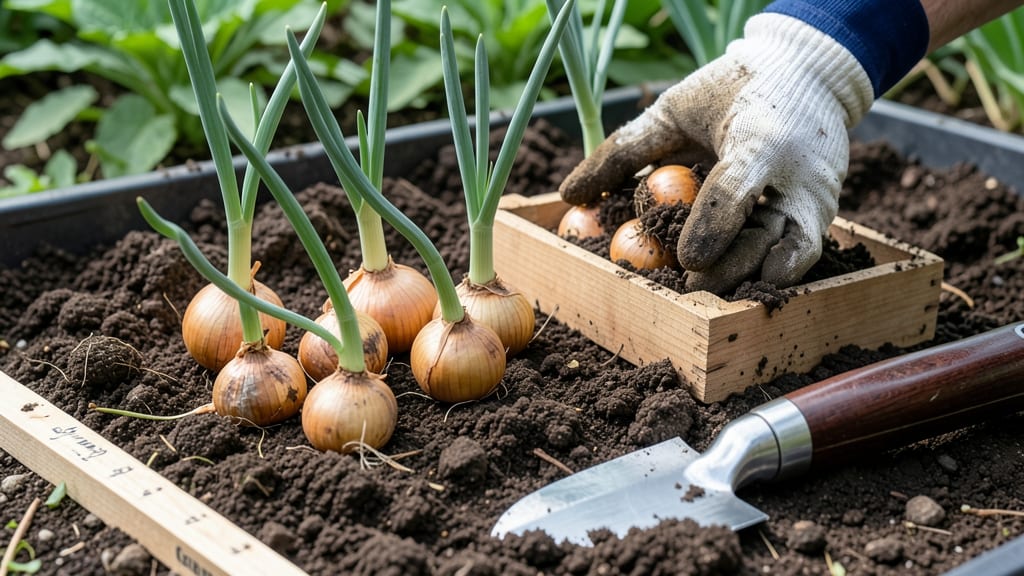
Planting onion sets at the right depth—about 1 inch deep—is the difference between sturdy stems and weak, flopping plants.
Struggling to grow onions with weak stems or poor bulb formation? The secret lies in getting the planting depth just right—too shallow, and they flop; too deep, and they rot.
Most gardeners overlook this detail, but proper depth ensures strong roots and the best yields. Whether you're in Zone 6a or another region, this guide covers soil prep, spacing, and climate tweaks to get it perfect.
You’ll learn how to adjust for loose or heavy soil, spot common mistakes, and keep your onion sets thriving from spring planting to summer harvest.
The perfect planting depth for onion sets (with visual guide)
Getting the planting depth right for onion sets is like finding the Goldilocks zone—too shallow, and they flop over; too deep, and they rot before sprouting. The ideal range is ½ to 1 inch deep, but soil type, climate, and even onion variety can tweak that number.
Let’s break down the exact measurements and why they matter for strong stems and plump bulbs.
Onion sets are small, pre-germinated bulbs that grow directly into mature onions. Unlike seeds, they don’t need light to sprout, so burying them just enough to stabilize them is key.
The root plate (the flat bottom) should sit ½ inch deep, while the pointed tip should peek above the soil. This balance ensures roots anchor properly while the shoot escapes sunlight quickly.
Here’s the science: Onion sets need consistent moisture but hate soggy soil. Planting too deep suffocates them, while shallow planting causes them to lean or dry out. The 1-inch rule works for most garden soils, but adjustments are needed for sandy (plant slightly deeper) or clay-heavy soils (plant shallower).
Climate also plays a role. In hot, dry regions, plant onion sets ½ inch deep to encourage fast sprouting and reduce moisture loss. In cooler, wetter climates, 1 inch deep prevents rot. Always check your local frost dates—planting too early in cold soil can delay germination.
Not all onion varieties are created equal. Short-day onions (like Texas Early White) often need slightly deeper planting (¾ inch) to develop larger bulbs, while long-day varieties (like Sweet Spanish) thrive at ½ inch to promote early growth. Always check the seed packet for variety-specific tips.
Now, let’s visualize the difference between correct and incorrect planting depths with this quick guide:
| Factor | Ideal Depth | Adjustments |
|---|---|---|
| Standard Soil (Loam) | ½ to 1 inch | Root plate at ½ inch; tip above soil |
| Sandy Soil | ¾ to 1 inch | Prevents drying out; retains moisture |
| Clay Soil | ½ inch (or less) | Avoids waterlogging; improves drainage |
| Hot/Dry Climate | ½ inch | Encourages fast sprouting; reduces stress |
| Cool/Wet Climate | 1 inch | Prevents rot; allows airflow |
| Short-Day Varieties | ¾ inch | Supports larger bulb formation |
| Long-Day Varieties | ½ inch | Promotes early, vigorous growth |
To plant correctly, use your finger to make a small hole ½ inch deep (or adjust based on your soil type). Gently place the onion set in the hole with the root plate down and the tip pointing upward.
Cover lightly with soil, then pat it down to remove air pockets. Avoid pressing too hard—you want firm but not compacted soil.
After planting, water lightly but thoroughly to settle the soil around the sets. Avoid overwatering, which can wash them out of the hole or cause rot. Mulch with straw or grass clippings (2-3 inches thick) to retain moisture and regulate soil temperature.
This step is especially critical in hot climates where soil can dry out quickly.
Watch for signs of improper depth in the first 2-3 weeks. If onion sets are leaning or flopping, they’re too shallow—cover them with an extra ¼ inch of soil.
If they’re slow to sprout or rotting, they’re too deep—gently loosen the soil around them to expose more of the bulb. Patience is key; onion sets can take 10-14 days to sprout in cool soil.
Once sprouted, maintain consistent moisture but avoid waterlogging. Onions need about 1 inch of water per week, delivered in the morning to prevent fungal diseases. As they grow, thin seedlings to 4-6 inches apart to give each plant room to develop strong bulbs.
With the right depth and care, you’ll harvest plump, flavorful onions ready for storage or cooking by mid-summer!
How to adjust planting depth for different soil types and climates
Getting the planting depth right for onion sets isn't just about following a rule—it's about reading your soil and climate. In loose, sandy soil, roots need more room to anchor, while heavy clay can smother them if planted too deep.
Even your USDA zone plays a role: cool, moist climates like the Pacific Northwest may need shallower planting than hot, dry regions like the Southwest. Let’s break it down so you can adjust your technique for the best results.
Start by testing your soil’s texture: grab a handful and squeeze. If it crumbles easily, you’ve got sandy soil—plant onion sets 1 to 1.5 inches deep.
If it forms a tight ball that cracks when dropped, you’re dealing with clay soil, where ½ to 1 inch is ideal. The goal is to balance root stability with oxygen flow—too deep, and your sets rot; too shallow, and they flop over like drunk gardeners.
- Loose/Sandy Soil: Plant 1.5 inches deep—roots spread wide and need extra depth to stabilize.
- Loamy Soil: Stick to 1 inch deep, the "goldilocks" zone for most onion varieties.
- Clay Soil: Only ½ inch deep—compacted clay suffocates roots if buried too deep.
- Hot/Dry Climates (Zones 7-10): Plant slightly deeper (1.25 inches) to retain moisture near roots.
- Cool/Moist Climates (Zones 3-6): Shallow ½ to 1 inch prevents rot in damp conditions.
- High-Altitude Gardens: Add ¼ inch extra depth—thinner air means slower root establishment.
Climate also dictates your planting depth adjustments. In hot, dry regions like Arizona or California, planting onion sets 1.25 inches deep helps them access moisture deeper in the soil.
Meanwhile, in cool, wet climates such as the Pacific Northwest, shallower planting (½ to 1 inch) prevents rot from excess moisture. Even within the same zone, microclimates matter: a south-facing bed gets hotter and drier than a north-facing one, so adjust accordingly.
Watch for troubleshooting signs of incorrect depth. If your onion sets flop over or develop weak stems, they’re likely planted too shallow. Conversely, if the tops yellow and rot at the base, they’re buried too deep.
Another red flag? Stunted growth or small bulbs—this often means roots are struggling to breathe or access nutrients. The fix? Dig up a few sets, adjust the depth, and replant firmly but not too deep.
Pro tip: Use a soil gauge or even a pencil to mark your planting depth before dropping onion sets into the hole. This ensures consistency, especially in raised beds or containers where soil compaction varies.
For container gardening, aim for 1 inch deep but use a lighter potting mix to prevent over-compaction. Mulch after planting to regulate soil temperature and moisture—critical for onions, which hate extremes.
Remember, onion sets are tiny but mighty. They’ll forgive minor depth mistakes, but extreme errors can derail your harvest. Start with the 1-inch rule, then tweak based on your soil’s personality and your local weather.
With the right depth, you’ll grow onions with bold stems and plump bulbs—no flopping or rotting in sight! 🧅