
Planting
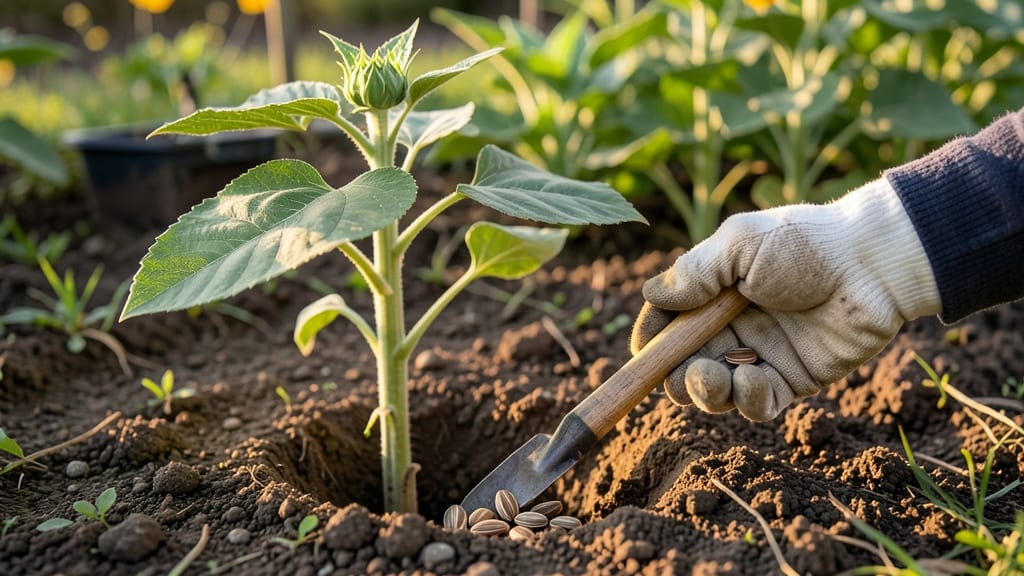
The planting depth of sunflower seeds at 1 inch deep in well-drained soil 🌻 ensures faster germination and stronger growth—but many gardeners still get this wrong.
Miss the mark by even a quarter-inch too deep or too shallow, and you risk stunted growth or slow sprouting—something I’ve seen ruin entire rows of seedlings. The right depth isn’t just about inches; it’s about soil temperature, moisture, and even the type of sunflower you’re growing.
In this guide, I’ll break down the exact planting depth for sunflower seeds, including adjustments for different varieties and climates. You’ll also learn how to test soil readiness and avoid common mistakes that lead to weak stems or poor germination.
By the end, you’ll know not just how deep to plant, but why it matters—and how to give your sunflowers the best start for those towering blooms.
Optimal sunflower seed planting depth by variety and climate
Sunflower seeds are surprisingly sensitive to planting depth—too shallow and they dry out, too deep and they struggle to reach the surface. The ideal depth varies by variety and climate, but most sunflowers thrive when planted between 0.5 to 1.5 inches deep.
Understanding these nuances ensures your seeds germinate faster and grow into strong, vibrant plants. Let’s break down the specifics for giant, dwarf, and oilseed varieties while factoring in regional conditions.
Climate plays a huge role in determining the perfect planting depth. In hot, dry regions, seeds need slightly deeper planting (1 to 1.5 inches) to retain moisture, while cool, moist climates allow for shallower depths (0.5 to 1 inch).
Additionally, soil temperature must reach at least 55°F (13°C) for consistent germination—any colder, and you risk delayed or failed sprouts. Always wait until the soil warms up before planting.
Soil temperature is just as critical as depth. Use a soil thermometer to confirm readiness, especially in early spring or fall plantings. If your soil is still chilly (below 50°F or 10°C), cover seeds with a black plastic mulch to absorb heat and speed up germination. This trick works wonders in cooler climates like USDA Zones 3-5, where sunflowers often struggle to sprout on time.
| Variety | Climate Type | Optimal Depth (inches) | Soil Temp Threshold (°F) | Spacing (inches) |
|---|---|---|---|---|
| Giant (e.g., 'Mammoth', 'Russian Giant') | Hot/Dry (Zones 6-10) | 1.0–1.5 | 55–75°F | 12–18 |
| Giant (e.g., 'Mammoth', 'Russian Giant') | Cool/Moist (Zones 3-5) | 0.75–1.0 | 60–70°F | 12–18 |
| Dwarf (e.g., 'Teddy Bear', 'Sunspot') | Hot/Dry (Zones 6-10) | 0.5–1.0 | 50–65°F | 6–12 |
| Dwarf (e.g., 'Teddy Bear', 'Sunspot') | Cool/Moist (Zones 3-5) | 0.5–0.75 | 55–65°F | 6–10 |
| Oilseed (e.g., 'NuSun', 'Hysun') | Hot/Dry (Zones 6-10) | 0.75–1.25 | 55–70°F | 8–12 |
| Oilseed (e.g., 'NuSun', 'Hysun') | Cool/Moist (Zones 3-5) | 0.5–1.0 | 60–70°F | 6–10 |
For giant sunflower varieties, like 'Russian Giant' or 'Mammoth', aim for a 1 to 1.5-inch depth in hot climates. These towering varieties need extra moisture retention, and deeper planting helps prevent the soil from drying out too quickly.
In cooler regions, like USDA Zone 4, reduce the depth to 0.75 to 1 inch to encourage faster
How to adjust planting depth for faster germination and stronger stems
Adjusting the planting depth of your sunflower seeds can dramatically improve germination rates and stem strength. While the standard recommendation is 1 inch deep, real-world conditions often require tweaks.
Factors like soil moisture, seed age, and local climate all play critical roles in determining the perfect depth for your seeds.
For example, in sandy soil, seeds need to be planted slightly deeper (1.25 inches) to retain moisture, while clay soil benefits from shallower planting (0.75 inches) to prevent suffocation. Understanding these adjustments ensures your seeds get the ideal start they deserve.
⚠️ callout warning
⚠️ Common Mistakes That Stunt Sunflower Growth
- Over-planting: Burying seeds deeper than 1.5 inches delays germination and can cause rot.
- Under-planting: Planting seeds shallower than 0.5 inches exposes them to drying out and predators.
- Ignoring soil temp: Cold soil (below 50°F) slows germination—adjust depth to insulate seeds.
Pro Tip: Use a soil thermometer to check if your soil is ready—ideal temps are 60-85°F.
To test if your soil is ready for planting, perform a simple moisture check. Dig a small hole, add water, and observe how quickly it drains.
If water pools for more than 30 seconds, your soil is too dense, and you should plant seeds shallower than 1 inch. Conversely, if the soil feels like sand, increase depth to 1.25 inches to help retain moisture.
Seed age also affects planting depth. Older seeds (over 1 year) should be planted shallower (0.75 inches) to encourage faster germination, while fresh seeds can handle the standard 1-inch depth. Always store seeds in a cool, dry place to maintain viability.
For container gardening, adjust depth based on pot size. In small pots (5-gallon containers), plant seeds 0.5 inches deep to prevent overcrowding as roots develop. Larger containers allow for the standard 1-inch depth, giving roots room to establish before transplanting outdoors.
After adjusting depth, monitor soil moisture closely. Keep the soil consistently moist (not soggy) until seeds sprout—typically 7-14 days. Once sprouts appear, thin seedlings to 6 inches apart to prevent competition and encourage stronger stems. Thin in the morning to reduce stress on young plants.
By fine-tuning planting depth based on your soil type, moisture levels, and seed age, you’ll give your sunflowers the best possible start. These small adjustments can mean the difference between weak, leggy plants and towering, vibrant blooms that reach their full potential.