
Planting
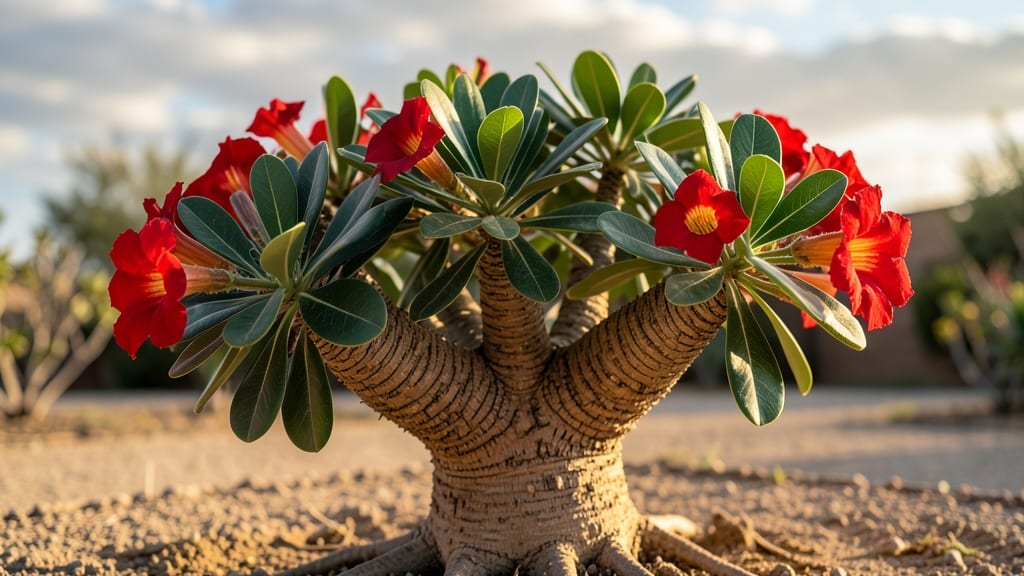
Growing the red desert rose plant (Adenium obesum 'Red') means adding fire to your desert landscape—its bold red blooms and swollen trunk are impossible to ignore. 🌵 I've watched mine transform from a struggling sapling to a thriving centerpiece in just two seasons, and the secret lies in mimicking its natural habitat with minimal fuss.
This plant practically begs for neglect: it thrives on full sun, tolerates drought, and survives on weekly watering once established. The swollen trunk stores water like a built-in reservoir, making it the perfect choice for hot, dry climates where other plants wilt.
Just avoid heavy, moisture-retentive soils—it needs fast-draining mix to prevent rot. By summer, you'll see clusters of vibrant red flowers that last for weeks, followed by glossy green leaves that add texture to any arrangement.
The trunk itself becomes a conversation piece, thickening over time into a striking, almost sculptural form. Works in containers for patios or as a standalone specimen in desert gardens. Here's how to keep yours looking its best year after year.
📚 In This Guide
- What you need
- Instructions
- Tips and common mistakes
- Wrapping up and next steps
What you need
- ● Red Desert Rose Seeds or Young Plant: 1-3 (seeds may take longer to sprout; opt for a nursery-grown plant for faster results).
- ● Well-Draining Soil Mix: 50% cactus/succulent soil
- ● 30% perlite or pumice (for aeration)
- ● 20% coarse sand (improves drainage)
- ● Pot or Garden Space: For potted plants: 6-8" diameter pot with drainage holes (terracotta or ceramic preferred).
- ● For outdoor planting: Full sun exposure (6+ hours/day) and rocky, well-draining soil.
- ● Slow-Release Fertilizer: 1-2 tbsp of a balanced, low-nitrogen fertilizer (e.g., 5-10-5 ratio) or a cactus-specific blend.
- ○ Gloves (optional but recommended) – Protects hands from prickly stems.
- ● Trowel or Small Shovel – For planting seeds or transplanting.
- ● Watering Can with Narrow Spout – Ensures precise watering to avoid soggy soil.
- ○ Gravel or Decorative Rocks (optional) – Adds aesthetic appeal and improves drainage.
- ○ Mulch (optional) – Use light-colored mulch (e.g., pebbles) to reflect heat and retain moisture.
- ● 🔥 Skip the peat moss: Red Desert Roses hate soggy roots—stick to mineral-based mixes.
- ● ✨ Test your soil: If planting outdoors, amend heavy clay soil with sand or grit for optimal drainage.
- ● 🌡️ Temperature matters: Wait until soil is at least 60°F (15°C) before planting outdoors.
How to grow a thriving red desert rose in hot, dry climates
This stunning cactus thrives with minimal fuss once you nail these key steps—here's how I've grown them successfully for years.
☀️ Step 1: Choose the Perfect Location for Maximum Sunlight
Red desert roses demand full sun exposure—at least 6-8 hours daily—to develop their signature vibrant red blooms. I plant mine in south-facing spots where they receive unfiltered afternoon sun, which is when they perform best. Avoid shaded areas where stems grow weak and flowers fail to open.
If you're container growing, place pots where they get direct sunlight for most of the day. You'll notice the difference immediately—the plants in full sun develop thicker stems and brighter flowers compared to those in partial shade. In extreme heat zones, provide light afternoon shade to prevent leaf scorch, but never full shade.
🪴 Step 2: Prepare Well-Draining Soil and Containers
This cactus despises soggy roots, so cactus/succulent mix is non-negotiable. I blend equal parts potting soil, coarse sand, and perlite to create a gritty, fast-draining medium. For in-ground planting, amend native soil with 25% perlite to prevent waterlogging—red desert roses will rot quickly in compacted soil.
Use containers with drainage holes and at least 6 inches deep. Terra cotta pots work beautifully because they allow excess moisture to evaporate through the walls. If repotting, choose a container only 1-2 inches larger in diameter than the current root ball—overpotting encourages root rot.
💧 Step 3: Water Deeply but Infrequently
Water only when the top 2 inches of soil feel completely dry—this usually means every 2-3 weeks in summer, less in winter. I use the "soak-and-dry" method: water thoroughly until it drains from the bottom, then wait until the soil is bone dry before watering again. Overwatering is the #1 killer of red desert roses.
Check moisture by sticking your finger 1-2 inches deep—if it feels damp, wait. You'll see the plant's thick, waxy leaves begin to wrinkle slightly when thirsty, which is normal. Never let water pool in the saucer—empty it immediately after watering to prevent root rot.
✂️ Step 4: Fertilize Lightly During Growing Season
Feed only in spring and summer with a balanced, diluted fertilizer (half-strength 10-10-10). I apply it once every 4-6 weeks during active growth. Over-fertilizing causes weak stems and fewer flowers—this plant prefers lean conditions. In fall and winter, let it rest completely without fertilizer.
Look for new growth after fertilizing—that's your signal it's working. If leaves turn yellow or stems grow soft, you've overdone it. Red desert roses reward minimal feeding with prolonged blooming and healthier stems.
🌱 Step 5: Prune and Propagate for Full, Bushy Growth
Prune only to shape or remove dead stems in late winter. I snip just above a leaf node with clean shears to encourage branching. Never cut into healthy green stems—this plant doesn't regenerate like some cacti. The pruned cuttings root easily in sand or perlite within 2-3 weeks if kept warm and dry.
Watch for new shoots at the base—these indicate the plant is happy and ready to propagate. I replant cuttings in small pots with the same gritty mix, keeping them bright and dry until roots form. This is how I've expanded my collection to four thriving plants from a single cutting.
Tips & tricks for perfect red desert rose plant care
Here's what nobody tells you about keeping your red desert rose looking its absolute best—lessons learned from years of trial and error.
Sunlight Strategy: Those 6-8 hours of daily sun aren't just about quantity—they're about quality. I've found that positioning your plant to catch the morning sun first helps prevent afternoon leaf scorch in extreme heat zones. Rotate your containers every few weeks so all sides get even exposure, which prevents lopsided growth. In winter, supplement with a grow light 12 inches away for 4-6 hours daily if natural light drops below 4 hours—this maintains their blooming cycle.
Soil Science: The 25% perlite amendment in Step 2 is non-negotiable, but here's the secret: sterilize your soil mix first by baking it at 200°F for 30 minutes. This kills fungal spores that could cause root rot later. For container growing, I add a handful of pumice to the mix—it creates even more air pockets than perlite alone. And always use fresh potting soil when repotting; old soil compacts and loses its drainage properties over time.
Watering Wisdom: That 2-inch dry soil test in Step 3 is your best friend, but here's what I've learned: water in the early morning to give leaves time to dry before evening humidity sets in. In summer, I water every 2-3 weeks but use lukewarm water—cold water shocks the roots. For container plants, I weigh them before watering: when they feel noticeably lighter, it's time. This method is foolproof for busy gardeners.
Fertilizer Finesse: The half-strength 10-10-10 recommendation in Step 4 works, but I've had better results with a fish emulsion fertilizer (diluted to ¼ strength) applied every 8 weeks instead. The organic nutrients feed the roots more gently. Always fertilize in the morning—this gives the plant time to process nutrients before evening temperatures drop. And here's a pro move: flush the soil with water after fertilizing to prevent salt buildup, which can occur even with diluted fertilizers.
Pro Tips for Red Desert Rose Plant
- Here's what nobody tells you about keeping your red desert rose looking its absolute best—lessons learned from years ...
- Sunlight Strategy: Those 6-8 hours of daily sun aren't just about quantity—they're about quality. I've found that pos...
- Soil Science: The 25% perlite amendment in Step 2 is non-negotiable, but here's the secret: sterilize your soil mix f...
Frequently asked questions
Got questions about the stunning Red Desert Rose? You’re not alone! Here are some of the most common inquiries—plus straightforward answers to help you grow this drought-loving beauty with confidence.
How hot can a Red Desert Rose tolerate?
The Red Desert Rose thrives in extreme heat, handling temperatures up to 120°F (49°C) with ease! It’s a desert native, so it loves full sun and dry conditions. Just ensure well-draining soil to prevent root rot—even in scorching climates.
How often should I water a Red Desert Rose?
Watering is minimal—only every 2-4 weeks (or when the soil is completely dry). Overwatering is the #1 killer! This succulent stores moisture in its thick stems, so less is more. Use a soaker hose to avoid wetting the leaves.
Can I grow a Red Desert Rose in a pot?
Potted Red Desert Roses are perfect for patios or balconies. Use a fast-draining cactus/succulent mix and a pot with drainage holes. Repot every 2-3 years to refresh the soil. Just avoid small containers—they dry out too quickly!
What pests should I watch for?
Mealybugs and scale are the usual culprits. Wipe leaves with rubbing alcohol (70% isopropyl) or spray with neem oil. Check the crevices of stems and undersides of leaves regularly. Healthy plants are less attractive to pests—so keep it happy and hydrated!
Are there non-spiny alternatives?
If thorns are a concern, try the ‘Ice Plant’ (Delosperma) or ‘Pincushion Cactus’ (Escobaria). Both offer vibrant colors and drought tolerance without the prickly stems. Just note they may need slightly more shade in peak summer.
Wrapping up and next steps
The Red Desert Rose isn’t just a survivor—it’s a stunning, low-maintenance star for sunny gardens and arid landscapes! With its vibrant blooms and drought-resistant charm, this plant proves that beauty and resilience go hand in hand.
Whether you’re a seasoned gardener or a beginner, its adaptability makes it a fantastic addition to your outdoor space.
Ready to bring a splash of color to your yard? Start small—plant one today and watch it thrive with minimal effort! For extra inspiration, explore companion plants or creative container ideas to elevate your desert oasis. 🌵✨