
Planting
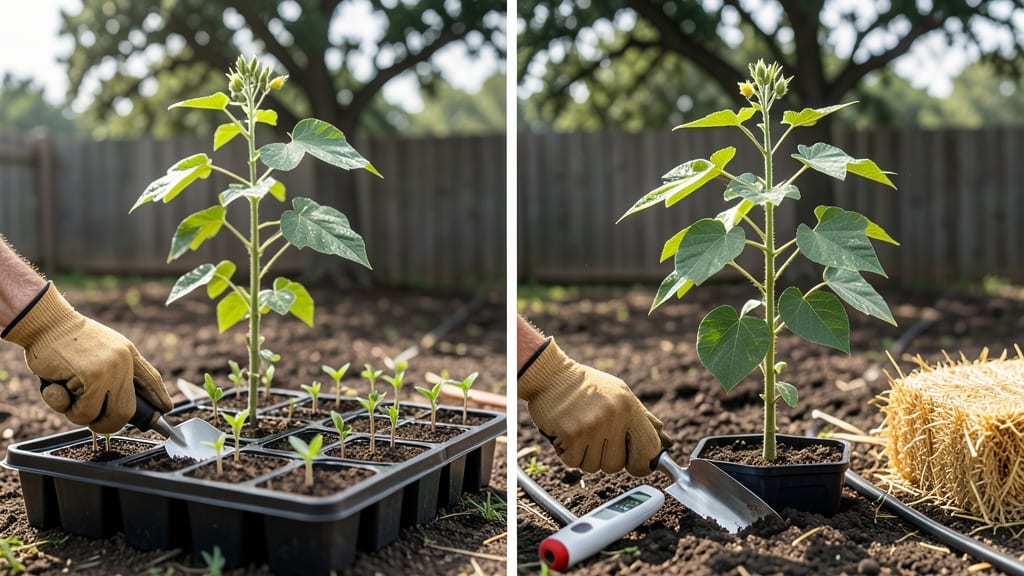
To plant cotton in Texas, time your seeds between February and May—skipping this window means risking heat stress or pests before harvest.
Texas farmers know timing is everything when planting cotton—get it wrong, and your yield could suffer from extreme heat or late-season pests. But with the right heat-tolerant varieties and precise planting windows, you can maximize your harvest in the Lone Star State.
The North Texas zones (8a-9a) wait until mid-March to early May, while Central and South Texas (9b-10b) can start as early as February. Soil temperature is the key—wait until it hits 60°F (15°C) and the last frost has passed.
Below, I’ll break down the best varieties for your zone, how to prep soil for Texas’ unpredictable weather, and the 3 mistakes that wreck harvests every year.
Optimal planting months for cotton in Texas by hardiness Zone
Texas stretches across USDA hardiness zones 7a to 10a, meaning planting windows vary dramatically from the Panhandle to South Texas. In Zone 7a, you’ll need to wait until late April to avoid frost, while Zone 10a growers can start as early as February.
The key is aligning your planting with soil temperatures above 60°F (15°C) and local rainfall patterns.
Cotton thrives in Texas’ heat but struggles with early-season cold snaps or late-season droughts. Early varieties like ‘Deltapine 1646’ mature in 120-130 days, while late-season types like ‘FM 966’ take 150+ days.
Match your variety to your zone to avoid bolting too early or too late—both reduce fiber quality.
Soil temperature is your best guide: Use a soil thermometer to confirm readings of 60°F+ at 2 inches deep. In North Texas (Zones 7a-8a), wait until mid-April for safety, while Central Texas (Zones 8b-9a) can plant by late March. South Texas (Zones 9b-10a) has the longest window, starting as early as February.
| Zone | Last Frost Date | Ideal Planting Window | Soil Temp Requirement | Rainfall Adjustment |
|---|---|---|---|---|
| 7a (Panhandle) | March 15 | Mid-April to early May | 60°F+ (15°C) | Irrigate if <1 inch/week |
| 8a (North TX) | March 1 | Late March to April | 60°F+ (15°C) | Monitor drought risk |
| 8b (Central TX) | February 15 | Late February to March | 60°F+ (15°C) | Natural rains often sufficient |
| 9a (East TX) | January 31 | February to early April | 60°F+ (15°C) | Humidity increases fungal risk |
| 10a (South TX) | January 15 | February to early April | 60°F+ (15°C) | Drought-tolerant varieties recommended |
In North Texas (Zones 7a-8a), prioritize early-maturing varieties like ‘STV 474’ to avoid September heat stress. These zones benefit from black plastic mulch to warm soil faster and retain moisture. Central Texas (Zones 8b-9a) can handle mid-season varieties like ‘FM 906’, which balance yield and heat tolerance.
For South Texas (Zones 9b-10a), focus on drought-resistant hybrids such as ‘Paymaster HS 26’. Here, late April plantings avoid spring rains that can spread fungal diseases like bacterial blight. Always test soil pH (6.0-7.0) and amend with gypsum if needed—cotton hates alkaline soils.
Adjust your planting date by 1-2 weeks if unpredictable weather looms. For example, if April showers delay soil warming in Zone 8a, shift to early May instead of risking seed rot. Use row covers for 2-3 weeks post-planting in cooler zones to protect seedlings.
Pro tip: Plant successive batches every 2 weeks in Zones 9a-10a to extend harvest time. This staggered approach ensures some bolls mature before late-summer heat waves reduce fiber quality. Always harvest before bolls crack open naturally—this prevents seed loss and pest attraction.
Remember, Texas cotton thrives with consistent moisture but hates waterlogged soil. Use drip irrigation to deliver
Best heat-tolerant cotton varieties for Texas growers
Texas’ scorching summers and unpredictable rainfall make selecting the right cotton varieties critical for a successful harvest. The wrong choice can lead to stunted growth or poor fiber quality. Fortunately, several heat-tolerant cotton varieties thrive in our climate, offering drought resistance, early maturity, and strong disease defense.
These varieties are specifically bred to handle Texas’ 100°F+ temperatures and occasional dry spells while still delivering high yields.
For Texas growers, the key is choosing between upland cotton (most common) and Pima cotton (longer fibers, higher quality). Upland varieties like STV 474 and FM 966 dominate commercial fields due to their drought tolerance and quick maturation.
Meanwhile, Pima varieties such as Pima S-7 produce premium fibers but require more consistent moisture. Let’s break down the top performers in our comparison table below.
| Variety | Type | Days to Maturity | Drought Tolerance | Disease Resistance | Yield Potential |
|---|---|---|---|---|---|
| STV 474 | Upland | 120-130 days | Excellent | High (Verticillium, Fusarium) | Very High |
| FM 966 | Upland | 110-120 days | Good | Moderate (Bacterial Blight) | High |
| Pima S-7 | Pima | 140-150 days | Moderate | Good (Root Rot) | Moderate-High |
| Deltapine 1646 B2XF | Upland | 125-135 days | Excellent | Very High (Boll Rot) | Very High |
| FM 1898 W3FE | Upland | 115-125 days | Good | High (Nematodes) | High |
If you’re growing in North Texas (Zone 8a), prioritize early-maturing varieties like FM 966 or FM 1898 W3FE to escape late-season heat stress. These varieties mature in 110-125 days, giving you a harvest before temperatures peak.
For Central and South Texas (Zones 9a-10a), where heat arrives earlier, STV 474 and Deltapine 1646 B2XF excel with their exceptional drought tolerance and ability to thrive in consistent 90°F+ conditions.
For those focused on fiber quality rather than quantity, Pima S-7 is the gold standard—but it demands more consistent irrigation. This variety’s longer fibers make it ideal for high-end textiles, but its 140-150 day maturity means you’ll need to plant earlier in February or early March to avoid heat-related stress.
Always pair Pima cotton with a drip irrigation system to maintain soil moisture during Texas’ dry spells.
No matter which variety you choose, soil preparation is key. Texas cotton thrives in well-draining, slightly acidic soil (pH 6.0-6.5). Before planting, amend your soil with compost or aged manure to improve water retention and nutrient availability.
Mulching with straw or wood chips helps retain moisture and suppress weeds, reducing competition for resources during critical growth stages.
Remember, the best variety depends on your specific goals: high yield, drought resistance, or premium fiber quality. For most Texas growers, STV 474 or Deltapine 1646 B2XF strike the perfect balance between performance and adaptability.
Start with these proven varieties, and you’ll be well on your way to a bountiful cotton harvest despite Texas’ challenging climate. 🌱