
Vegetables
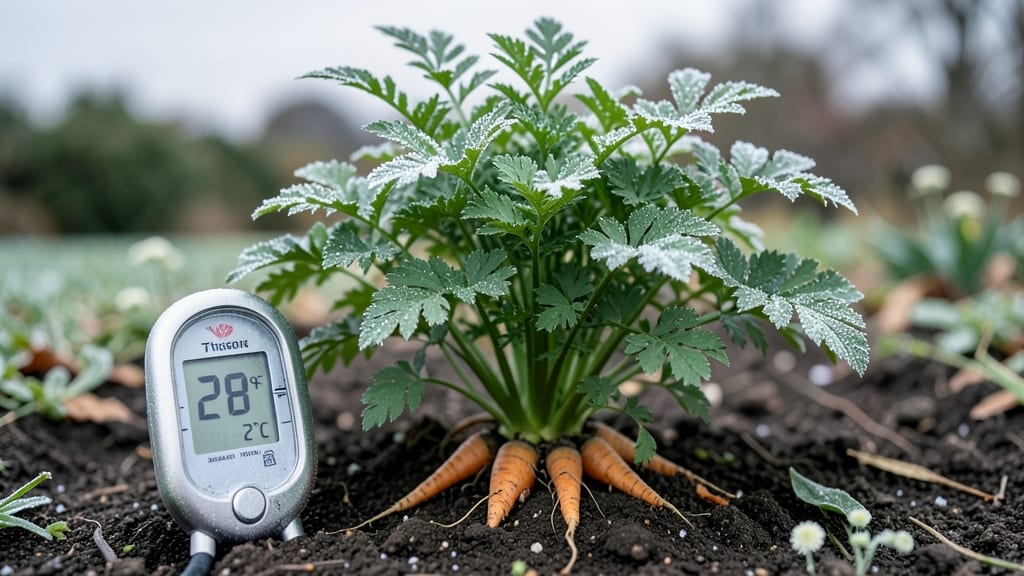
Carrots are cold hardy vegetables that thrive in chilly climates, surviving down to 20°F (-6°C) when fully mature, though young plants may suffer damage below 30°F (-1°C). Their resilience comes from proper soil insulation and protective mulching.
This cold tolerance makes carrots one of the most reliable winter crops for gardeners in zones 3-7. 🥕 Unlike many vegetables that bolt or rot in freezing soil, carrots actually sweeten when exposed to light frost—a natural flavor enhancement!
The key difference lies in their growth stages: seedlings are far more vulnerable, while established roots can handle prolonged cold if the ground stays unfrozen.
I've found that adding a thick layer of straw mulch (at least 4 inches) can push their survival limit even further, sometimes protecting them through 15°F (-9°C) temperatures.
For gardeners in colder regions, timing is everything. Planting carrots in late summer allows them to mature before hard frosts arrive, while early spring plantings benefit from cooler soil temperatures that prevent forking.
The secret weapon here is soil preparation—loose, well-drained earth prevents root damage, and a cloche or row cover can create a microclimate that extends the growing season by weeks.
💡 In This Article
- Carrot Frost Tolerance by Growth Stage
- Protecting Carrots from Freezing Temperatures
Carrot frost tolerance by growth stage
Carrots exhibit dramatically different cold tolerance depending on their growth phase. Seedlings and young plants are particularly vulnerable, with foliage often suffering damage at 30°F (-1°C) or lower.
The delicate leaves can develop frostburn—visible as brown, crispy patches—while the tiny roots may blacken if soil temperatures drop below 32°F (0°C). This is because young plants haven't developed sufficient root mass to draw moisture from deep soil layers, making them prone to dehydration in freezing conditions.
The real resilience appears once carrots reach maturity, particularly when their roots have developed fully. Mature carrots can withstand temperatures as low as 20°F (-6°C) because their thickened roots act as natural insulation against cold.
The key difference lies in their underground storage organ: unlike leafy greens that freeze solid, carrot roots contain higher sugar concentrations that act as natural antifreeze. Studies show that carrot roots can survive brief exposures to 15°F (-9°C) if the soil remains unfrozen and moisture levels stay balanced.
What makes carrots unique among winter vegetables is their ability to improve in flavor after frost. The plant converts starches to sugars as a protective response to cold, creating that sweet, almost honey-like taste we love in winter carrots.
This process is most effective when carrots experience light frosts (28-32°F (-2 to 0°C)) over several days. However, this sweetening effect only works if the roots themselves don't freeze solid—once the cellular structure ruptures from ice crystal formation, the damage becomes irreversible.
The foliage tells a different story. While mature carrots can handle cold, their tops often succumb to frost damage. This is why many gardeners practice "topping" (cutting off foliage) before hard freezes—it redirects the plant's energy to root development.
The roots themselves remain protected below the frost line, which typically sits 4-6 inches deep in most climates. This natural insulation from surrounding soil is why carrots often survive where other root vegetables like beets or turnips might fail.
Consider this comparison: while mature carrots can handle 20°F (-6°C) temperatures, their foliage may show damage at 32°F (0°C). This creates an interesting gardening strategy—allowing the tops to freeze while protecting the roots through mulching.
The roots continue growing and sweetening underground even when the above-ground parts appear dead, demonstrating nature's clever adaptation mechanisms.
For gardeners in marginal climates, this stage-specific tolerance explains why late-summer plantings often succeed where early spring ones fail. Planting in late August allows carrots to mature before hard frosts arrive, giving their roots time to develop that crucial cold resistance.
The foliage may get nipped by early frosts, but the roots continue storing energy underground until harvest time.