
Planting
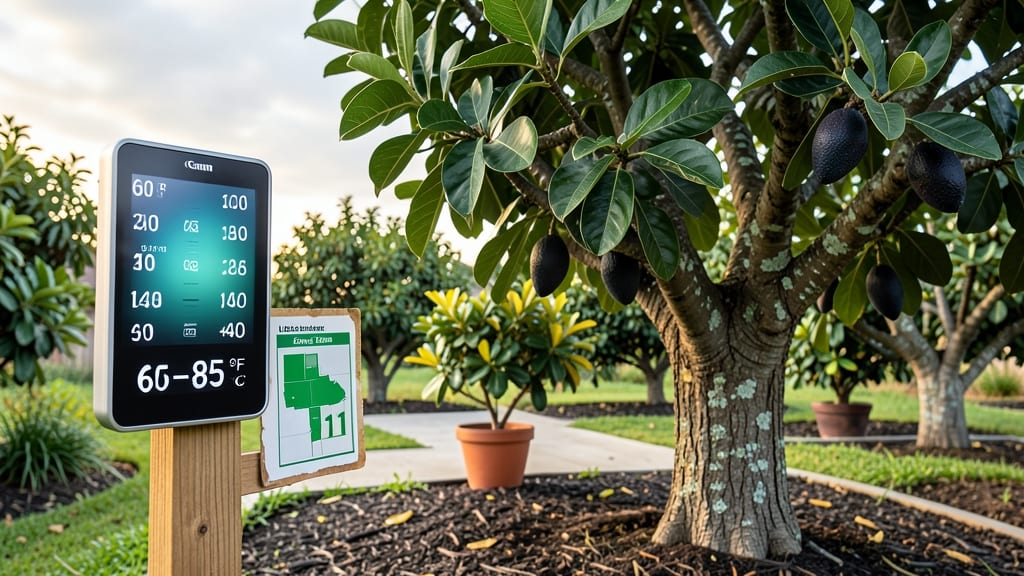
Your avocado plant’s temperature tolerance determines whether it thrives or struggles—most varieties need consistent warmth between 60°F and 85°F to grow strong and produce fruit.
Struggling to keep your 🥑 happy? Even a single night below 32°F can kill a mature tree, while prolonged heat above 90°F stunts growth and drops fruit. The key isn’t just avoiding extremes—it’s managing humidity, airflow, and seasonal shifts to keep your plant in its ideal zone.
In Zone 6, winter dormancy is a must, while Zone 9b+ growers can enjoy year-round growth with the right care. Whether you’re growing in pots, a greenhouse, or your backyard, small adjustments—like moving plants indoors before frost or providing shade in summer—can make all the difference.
Below, I’ll break down the exact temperature ranges for each growth stage, how to spot stress signs early, and proven tips to protect your avocado from heatwaves and cold snaps—so you can enjoy homegrown fruit for years.
Optimal temperature ranges for avocado plant growth by life stage
Avocado plants thrive in warm climates, but their temperature needs change dramatically as they mature. From delicate seedlings to towering fruit-bearing trees, each stage requires precise conditions to avoid stress or stunted growth.
Understanding these ranges helps you create the perfect environment—whether you're growing in pots indoors or outdoors in your garden.
Seedlings are the most vulnerable, needing consistent warmth to establish strong roots before they can handle wider temperature fluctuations. As they mature, juvenile plants develop slightly more resilience, while established trees can tolerate brief dips in temperature—though varieties like Hass and Fuerte still prefer heat.
Let’s break down the ideal ranges for each stage to keep your avocado plant healthy and productive.
🌱 Key Insight: Avocados are tropical/subtropical plants, so cold sensitivity varies by variety. Hass avocados (the most common) are slightly more cold-hardy than Fuerte or Reed varieties, but none tolerate frost. Even a light freeze can kill young plants instantly.
For seedlings, maintaining temperatures between 75–85°F is critical. If you’re starting from seed indoors, use a heat mat to keep soil warm and prevent damping-off disease. Even a dip below 50°F can stunt root development, so avoid placing them near drafty windows or AC vents.
Once your avocado reaches the juvenile stage (6 months to 3 years), it becomes slightly more adaptable but still needs protection from cold snaps. Hass varieties can handle temperatures down to 40°F for short periods, while Fuerte and Reed varieties struggle below 50°F.
During this phase, focus on gradual acclimation to outdoor conditions if transitioning from pots to garden beds.
Mature trees, especially those bearing fruit, prefer 60–85°F but can survive brief exposures to cooler temps if established. However, frost is always fatal, so in Zone 6 or colder, protect your tree with mulch, frost cloth, or a greenhouse.
In hot climates, shade cloth can prevent heat stress, which manifests as yellowing leaves or fruit drop.
Pro tip: Monitor your avocado’s leaf color for temperature stress. Dark green leaves indicate ideal conditions, while yellowing signals heat stress or purpling suggests cold damage. Adjust care immediately if you spot these signs to prevent long-term harm.
If you’re growing avocados in containers, they’ll need extra attention during temperature swings. Pots heat up faster in sun and cool down quickly at night, so move them to a sheltered spot during extreme weather.
For outdoor gardeners in Zone 6 or colder, winterizing with insulated wraps or moving pots indoors can save your tree.
🌿 Remember: Avocados are not frost-hardy, but with the right care, you can extend their growing season in nearly any climate. Whether you’re nurturing a seedling or tending to a mature tree, keeping temperatures in the ideal range ensures robust growth and bountiful harvests.
Danger zones: how extreme heat and cold damage avocado plants
Avocado plants are tropical divas that thrive in warm climates, but even they have their limits. When temperatures dip below 32°F (0°C) or soar above 95°F (35°C), your plant goes into survival mode—leaving you with wilted leaves, stunted growth, or worse.
Understanding these danger zones helps you protect your avocado before damage becomes permanent.
Cold snaps are the biggest threat, especially for young plants or those in Zone 6 or colder. A single night below 28°F (-2°C) can kill tender new growth, while mature trees might survive 20°F (-7°C) for short periods—but with lasting stress.
Heat stress, while less deadly, causes leaf scorch and reduced fruit production when humidity drops below 40%.
⚠️ CRITICAL TEMPERATURE THRESHOLDS
❄️ Cold Damage: Below 32°F (0°C) → Leaf blackening; Below 28°F (-2°C) → New growth dies; Below 20°F (-7°C) → Root damage (mature trees only).
☀️ Heat Stress: Above 95°F (35°C) → Leaf burn; Above 100°F (38°C) → Fruit drop; Below 40% humidity → Wilting (even with water).
💡 Pro Tip: Monitor your plant’s soil temperature—roots suffer when soil drops below 50°F (10°C).
Frost is the silent killer for avocado plants. When temperatures hover around 32°F (0°C), ice crystals form in plant cells, rupturing them like a frozen balloon. You’ll notice blackened leaves first, followed by brown stems if the cold persists.
Even if your plant recovers, it’ll be weakened for months, making it vulnerable to pests and disease.
Heat stress shows up differently—usually as crispy leaf edges or yellowing foliage, even when soil is moist. This happens because high temperatures increase transpiration rates, causing the plant to lose water faster than it can absorb.
In extreme cases, fruit may drop prematurely, and new growth will curl inward to conserve moisture.
Recovery starts with immediate protection. For cold damage, move potted plants to a garage or insulated shed and wrap the pot in bubble wrap. If outdoors, cover the tree with a frost blanket secured with bricks.
For heat stress, shade cloth (30-50%) and daily misting can lower leaf temperatures by 10°F (5°C) or more.
Long-term solutions include choosing cold-hardy varieties like Mexicola or Lamb Hass, which tolerate brief dips to 18°F (-8°C). For heat, drip irrigation and mulching with straw keep roots cool. And remember: container growers have an advantage—they can move their plants indoors during extreme weather.