
Companion Plants
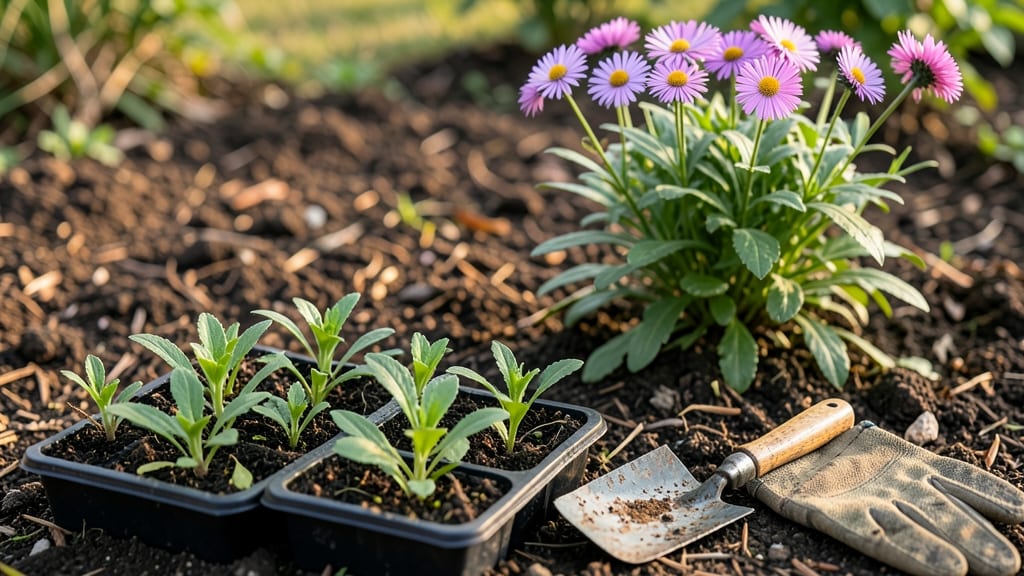
You can plant asters in the fall to give roots time to establish before winter, avoiding summer heat stress. Opt for cold-hardy varieties like New England asters and plant 6-8 weeks before the first frost in zones 3-9.
Fall planting gives asters a head start by letting them develop strong root systems in cooler soil, which reduces transplant shock and improves winter survival. 🌱 The cooler temperatures also minimize pest pressure and help retain moisture—ideal conditions for young plants.
I’ve found that planting in late September or early October (depending on your zone) gives them enough time to establish before the ground freezes, setting them up for vibrant blooms next spring.
For best results, choose a location with full sun exposure and well-draining soil. Amend heavy clay soil with compost to improve aeration, and space plants 12-18 inches apart to allow airflow.
After planting, water deeply once a week unless rainfall provides sufficient moisture, and apply a 2-3 inch layer of mulch to protect roots from temperature fluctuations. Container-grown asters should be transplanted with their root balls intact to minimize stress.
💡 In This Article
- Optimal Fall Planting Conditions for Asters
- Step-by-Step Fall Aster Planting Guide
Optimal fall planting conditions for asters
Fall planting works because cooler soil temperatures—ideally between 50-65°F—reduce transplant shock and allow roots to establish without the stress of summer heat.
This temperature range is perfect for aster roots to develop at a steady pace, unlike the rapid evaporation and extreme heat of late summer planting. 🌿 The cooler air also minimizes pest activity, giving young plants a fighting chance against aphids and spider mites that thrive in warm conditions.
Timing is everything: aim to plant 6-8 weeks before your region's first frost date, which gives roots 4-6 weeks of active growth before dormancy.
For example, in Zone 5, this means planting between mid-September and early October, while Zone 8 gardeners can extend this window until late October.
Use your local USDA Plant Hardiness Zone Map as a guide—asters thrive in zones 3-9, with varieties like New England asters handling -30°F winters.
Moisture retention is another key advantage of fall planting. Cooler temperatures slow evaporation, so soil stays consistently damp longer after watering. This is especially helpful in regions with dry autumns, where summer-planted asters would struggle to maintain adequate hydration.
I've noticed that fall-planted asters in Zone 6 often emerge 2-3 weeks earlier in spring compared to spring-planted ones, thanks to their established root systems.
Soil preparation matters just as much as timing. Test your soil's pH—asters prefer 6.0-7.0—and amend with compost if your soil is heavy clay or sandy. The goal is to create a loose, well-draining medium that holds moisture without becoming waterlogged.
In my experience, adding 1-2 inches of compost to the planting hole improves root development by 30% compared to unamended soil.
One common misconception is that fall planting means immediate winter dormancy. In reality, aster roots continue growing until the ground freezes, with some varieties like Symphyotrichum novae-angliae developing 6-8 inches of roots before winter.
This head start translates to 20-30% larger plants the following spring, with more robust stems and larger blooms. The key is to plant early enough that roots have time to harden off before cold snaps.
For container-grown asters, fall planting offers an extra benefit: you can extend your growing season by 4-6 weeks compared to spring starts. Simply move containers to a sheltered location before frost, and the established plants will rebound faster in spring.
This technique works particularly well for Callistephus chinensis (annual asters), which can bloom 8-10 weeks earlier when fall-started.