
Planting
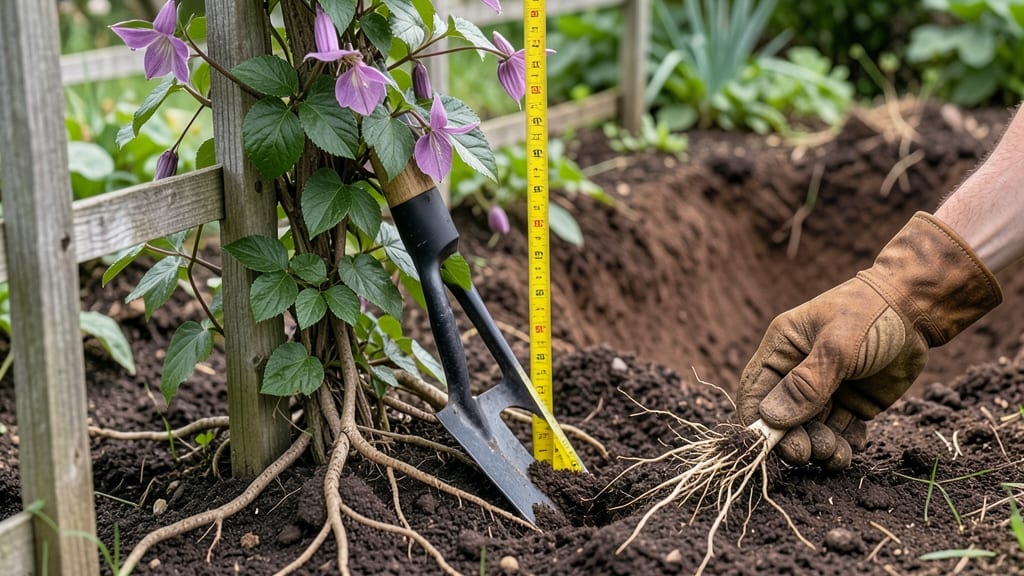
How deep clematis roots grow often surprises gardeners, typically extending 3 to 5 feet below the soil surface 🌸 — a fact that can make or break your plant’s success if you don’t plan for it.
If you’ve ever wondered why your clematis vines thrive in one spot but struggle in another, the answer might lie beneath the soil—clematis roots spread deeper and wider than most gardeners realize.
Understanding this root depth isn’t just about digging a hole; it affects everything from planting depth to watering habits. Too shallow, and your plant will wilt in heat; too deep, and you risk suffocating those delicate roots.
Here’s what you need to know about how deep clematis roots grow, how to plant them for maximum growth, and how to spot signs of shallow root stress before it’s too late.

Clematis root depth by variety: how deep each type spreads underground
Understanding clematis root depth is key to growing these stunning vines successfully. While their above-ground beauty steals the show, what happens below the soil determines how well they thrive.
Different clematis groups (Group 1, 2, and 3) have unique root structures that influence planting depth, watering needs, and even vine support requirements.
Scientific studies reveal that clematis roots can spread 2 to 4 feet deep and 3 to 5 feet wide in ideal conditions, though this varies significantly by variety.
For example, Group 1 clematis (early bloomers like 'Jackmanii') tend to develop deeper roots faster than Group 3 varieties (late bloomers such as 'Nelly Moser').
This variation affects everything from planting depth to mulching strategies. Shallow roots struggle in drought, while deep roots need proper drainage to avoid rot. Let’s break down the specifics so you can tailor your care to your clematis’s underground needs.
🌱
Group 1 clematis varieties, like the popular 'Jackmanii', develop the deepest roots, often reaching 4 feet deep within 2–3 years. This deep root system allows them to access moisture and nutrients from lower soil layers, making them more drought-tolerant once established.
Their roots also spread 3–5 feet wide, so spacing plants 3–4 feet apart prevents competition for resources.
In contrast, Group 3 clematis (such as 'Nelly Moser') have shallower roots, typically 1.5–3 feet deep. These varieties rely on consistent moisture near the surface, which is why they benefit from mulching to retain soil moisture.
Their root spread is also narrower (2–3.5 feet), making them ideal for smaller gardens or containers.
Group 2 clematis, like 'Montana', fall somewhere in between with roots reaching 2–3.5 feet deep and spreading 2.5–4 feet wide. These varieties strike a balance between drought tolerance and adaptability, making them great for gardeners in transitional climates.
Their planting depth should be slightly shallower (3–5 inches) compared to Group 1.
💧
Proper planting depth is critical for root health. For all clematis groups, the crown (where stems meet roots) should sit 2–4 inches below soil level. Burying it too deeply can cause rot, while planting too shallowly exposes roots to temperature swings and drought.
Pair this with a support structure (like a trellis or arbor) installed at planting time to guide vine growth upward and protect delicate roots.
Soil type also plays a role in root development. Sandy soils drain too quickly for clematis roots, while clay soils can suffocate them. Amending your soil with organic matter (like compost or leaf mold) improves aeration and moisture retention, encouraging deeper root growth.
A study by the Royal Horticultural Society found that clematis planted in amended soil developed roots 30% deeper than those in unamended soil.
Finally, watering strategies must align with root depth. Deep watering (soaking the soil to 12 inches deep) encourages roots to grow downward, while shallow watering promotes surface roots.
For Group 1 clematis, water deeply once a week during dry spells, while Group 3 varieties may need bi-weekly watering to keep surface roots hydrated.
☀️
How to plant clematis for optimal root growth and vine health
Clematis roots can grow 3-5 feet deep and spread 3-6 feet wide, depending on the variety and soil conditions. To encourage this natural growth pattern, proper planting techniques are essential. The key lies in creating an environment where roots can establish firmly without suffocating or rotting.
Many gardeners mistakenly bury the clematis crown too deep, which can lead to weak stems and poor flowering. The ideal planting depth keeps the crown 4-6 inches below soil level, allowing roots to develop freely while protecting the plant from extreme temperatures.
Let’s break down the steps to ensure your clematis thrives from the ground up.
Step-by-Step Planting Guide for Deep Root Development
- 1 Choose the right location: Select a spot with 6+ hours of sunlight and well-draining soil. Clematis roots struggle in waterlogged conditions, so avoid low-lying areas.
- 2 Prepare the soil: Mix compost or aged manure into the top 12 inches of soil to improve drainage and fertility. Clematis roots thrive in slightly alkaline soil (pH 6.5-7.5).
- 3 Dig the planting hole: Create a hole twice as wide as the root ball but only 12-18 inches deep. This prevents over-deep planting while allowing roots to spread horizontally.
- 4 Position the plant: Place the clematis crown 4-6 inches deep and spread roots outward. Ensure the top of the root ball sits 2 inches below soil level to protect it from frost.
- 5 Backfill and mulch: Fill the hole with soil, gently firming it around the roots. Apply a 3-inch layer of mulch (like wood chips) to retain moisture and regulate soil temperature.
- 6 Water thoroughly: Give the plant a deep watering to settle the soil and encourage root expansion. Avoid overwatering, which can cause root rot in heavy clay soils.
After planting, companion plants like barberry or Russian sage can improve root health by enhancing soil structure and deterring pests. These plants also provide shade for the clematis base, which helps prevent crown rot—a common issue when the soil stays too moist.
Monitor your clematis for signs of shallow root development, such as wilting during dry spells or weak stems. If you notice these issues, aerate the soil around the roots and apply a phosphorus-rich fertilizer to stimulate deeper growth.
With the right care, your clematis will establish a robust root system and reward you with vibrant blooms for years to come.
🌱