
Planting
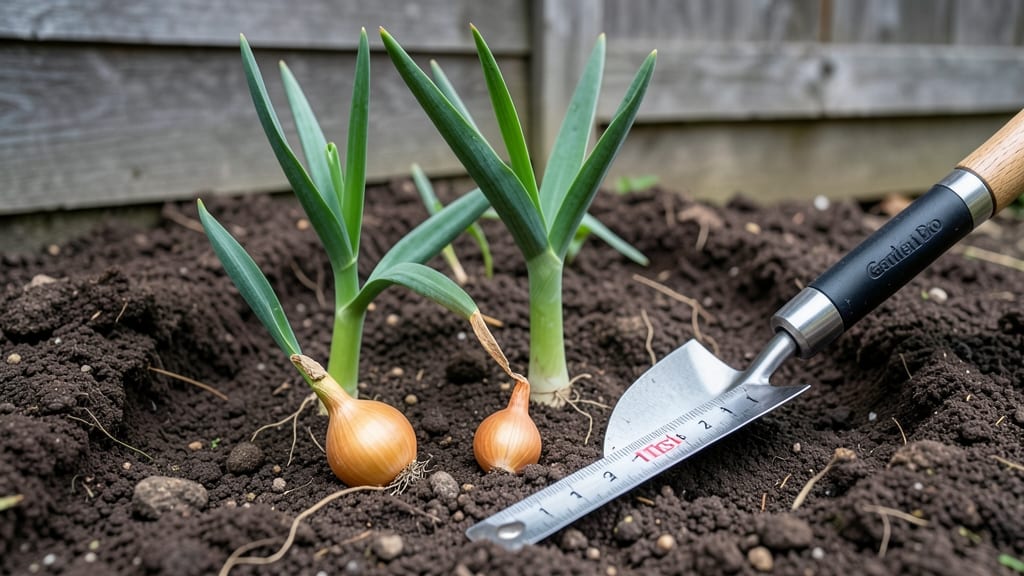
Onions need to grow ½ to 1 inch deep in loose soil to form strong bulbs 🧅 — too shallow and they’ll flop, too deep and they’ll rot.
Most gardeners guess the depth, but that’s how you end up with stunted harvests or uneven growth. The secret isn’t just the measurement—it’s the soil consistency, spacing, and even the type of onion you’re growing.
Whether you’re planting sets, seeds, or transplants, getting the depth right means fewer weeds, better airflow, and bulbs that reach their full size by July or August in Zone 6a.
Below, I break down the exact planting depth for each type, how to fix common mistakes, and why soil type makes all the difference in your onion’s success.

Optimal onion planting depth by type (sets, seeds, transplants)
Getting the planting depth right for onions is the difference between a bountiful harvest and wasted effort. Onions are finicky about their position in the soil—too shallow, and they bolt or produce weak bulbs; too deep, and they rot before forming properly.
The key lies in understanding how each type—sets, seeds, or transplants—requires slightly different treatment to maximize bulb development.
Research shows that soil temperature also plays a critical role. Onion seeds and sets germinate best when soil reaches 45-50°F (7-10°C). If you plant too early, the seeds may rot; too late, and you’ll miss the ideal bulb-forming window.
For most regions, this means starting in early spring (March-April) or late summer for fall varieties. Let’s break down the science-backed depths for each type.
Visual Guide Below: Use this chart as your reference when preparing your garden beds. The depth measurements are based on decades of horticultural trials and aim to balance root development with bulb expansion—critical for flavor and storage life.
For onion sets, the 1–2 inch depth ensures the bulb has enough soil to anchor while leaving the top exposed for photosynthesis. I’ve found that leaving 1/3 of the set above soil prevents rot while encouraging strong leaf growth.
Pro tip: Use a soil thermometer to confirm temperatures—cold soil delays germination, while warm soil (above 60°F) can cause bolting.
When planting onion seeds, the shallower 0.5–1 inch depth is crucial because seeds need light to germinate. Over-burying them leads to poor emergence. I recommend pressing seeds lightly into the soil with your finger or a small board to ensure even contact without compacting.
If your soil is heavy clay, consider mixing in compost or sand to improve drainage and prevent seed rot.
Transplants require the most care because their root systems are already established. Planting them at 1–1.5 inches deep mimics their nursery conditions and reduces transplant shock. I’ve had success by digging holes slightly wider than the root ball and backfilling with a mix of soil and compost to encourage root spread. Water deeply after transplanting to settle the soil and eliminate air pockets.
One common mistake I’ve seen is adjusting depth based on soil type without considering bulb expansion space. In sandy soil, roots spread quickly, so you can plant slightly deeper (up to 2 inches for sets) to provide stability.
Conversely, in clay soil, stick to the shallower end of the range (1 inch for sets) to prevent suffocation. Always loosen the soil to 2–3 inches deep before planting to give roots room to grow.
Soil temperature isn’t just about germination—it also affects bulb formation. Onions need cool soil (50–65°F) during early growth but warmer conditions (70–80°F) as bulbs swell. If your spring starts warm, opt for short-day onion varieties, which tolerate heat better.
For fall planting, choose long-day onions that mature before winter sets in. Timing is everything!
To maximize your harvest, pair the right depth with proper spacing. Crowded onions compete for nutrients and produce smaller bulbs. I’ve had the best results with 6–12 inches between transplants and 4–6 inches between sets.
This spacing also improves airflow, reducing the risk of fungal diseases like onion smut. After planting, apply a thin layer of mulch (straw or grass clippings) to retain moisture and regulate soil temperature.
Remember, the goal is to create an environment where onions can focus their energy on bulb development rather than struggling to establish roots.
Whether you’re growing from sets, seeds, or transplants, the depth guidelines above—paired with the right soil prep—will give you the best chance for large, flavorful onions ready for harvest in 90–120 days. Happy planting! 🌱
Common mistakes that stunt onion growth (and how to fix them)
Onions are surprisingly sensitive to planting depth—get it wrong, and you'll end up with weak bulbs, rot, or stunted growth. I've seen gardeners plant onion sets too deep, thinking they'll get bigger bulbs, only to watch them rot in the soil.
The truth? Onions need just the right balance of air exposure and soil coverage to thrive.
Shallow planting is just as bad. When onions aren't covered enough, their roots struggle to anchor, leading to floppy stems and poor bulb formation. Even worse, they become prime targets for pests like onion flies because they're not buried enough to deter them.
The key is understanding how depth affects each stage of growth—from sprouting to bulb development.
Planting onions too deep (over 2 inches) causes rot by suffocating roots, while planting too shallow (under ½ inch) leads to weak stems and poor bulb formation. The ideal depth is 1-1.5 inches for most varieties, but adjust based on soil type—clay soil needs looser conditions, while sandy soil may require slightly deeper planting to retain moisture.
Pro Tip: Use your finger to create a ½-inch-deep trench for seeds and a 1-inch-deep hole for sets. Press soil gently around the plant to avoid displacing roots.
One of the biggest mistakes I see is planting green onions and bulb onions the same way. Green onions (scallions) can handle shallower planting—just ¼ inch deep—because you harvest their leaves, not bulbs.
Bulb onions, however, need that 1-1.5 inch depth to develop properly. Mixing them up leads to disappointing harvests.
Soil type plays a huge role in depth adjustments. In clay soil, which compacts easily, onions need slightly shallower planting (½ inch) because the dense soil can smother roots. Amend clay with compost or sand to improve drainage before planting.
In sandy soil, which drains too quickly, you can plant up to 1.5 inches deep to help retain moisture around the roots.
Uneven growth is another red flag. If your onion plants are growing at different rates, check their depth. Plants that emerge first were likely planted too shallow, while those struggling may be buried too deep.
To fix this, gently loosen the soil around struggling plants and adjust their depth to 1 inch. Water lightly afterward to help them recover.
Finally, don't forget about soil temperature. Onions planted in cold soil (below 50°F) may struggle to germinate, regardless of depth. Wait until the soil reaches at least 55°F for optimal growth. Use a soil thermometer to check—it's a small investment that saves hours of frustration.