
Planting
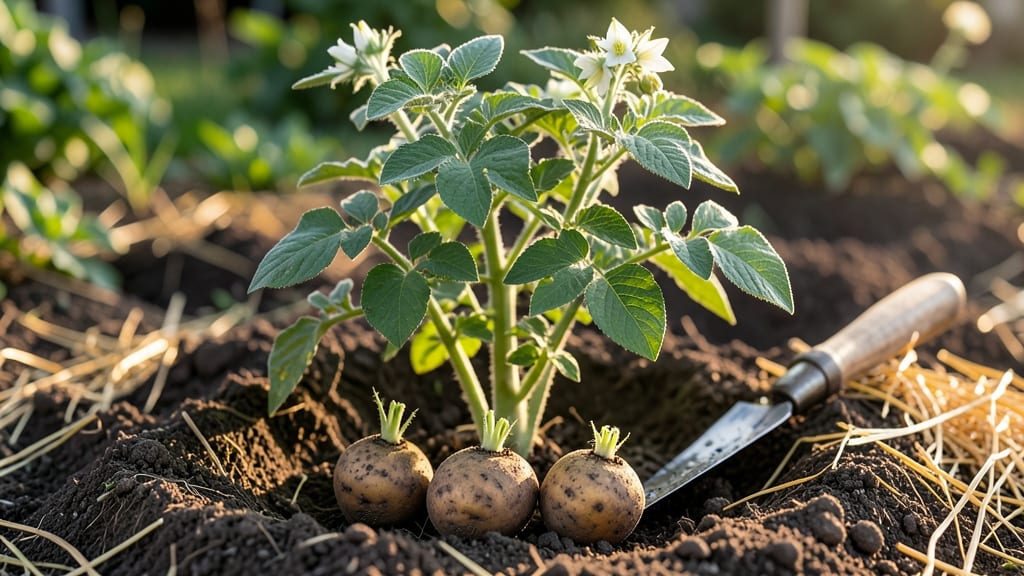
How deep to plant sprouted potatoes—2 to 4 inches—is the secret to strong stems and a bountiful harvest.
Too shallow, and your 🥔 tubers bake in the sun; too deep, and they rot before they even sprout. I’ve seen both mistakes ruin a whole season’s work, but the fix is simple once you know the science behind it.
Most gardeners guess the depth, but the truth is, soil type, sprout length, and even your local climate play a role. Below, I’ll break down the exact measurements you need, plus how to adjust for rocky soil, heavy clay, or early frosts.
You’ll also discover how to tell if you’ve nailed the depth—and what to do if your plants start looking weak anyway. No more wasted effort, just thick, healthy stems and a harvest you can count on.
The ideal planting depth for sprouted potatoes (with exact inch measurements)
Getting the planting depth right for your sprouted potatoes is one of the most critical steps to ensure strong stems and a high-yield harvest. Too shallow, and your potatoes risk exposure to sunlight (turning green and toxic), while planting too deep can stunt growth or cause rot.
The ideal depth range is between 2–4 inches, but this varies based on sprout size, soil type, and climate conditions.
Most gardeners aim for 3 inches deep as a starting point, but adjusting slightly based on your specific conditions can make all the difference.
For example, sandy soil drains faster, so you might plant slightly deeper (closer to 4 inches) to retain moisture, while clay soil holds moisture well, allowing for shallower planting (around 2–3 inches). Let’s break it down by sprout stage and soil type to help you customize your approach.
Why depth matters: Potatoes need enough soil coverage to develop sturdy stems while keeping their eyes (sprouts) protected from drying out. The right depth also encourages tuber formation underground. When planted correctly, your potatoes will grow thick, robust stems that support abundant foliage and a bountiful harvest.
Here’s a quick reference to guide your planting, followed by deeper insights into adjustments for different conditions:
For small sprouts (1–2 inches), aim for 2 inches deep to avoid burying them too much, which can cause rot or slow growth. This depth gives the sprouts enough support while allowing them to emerge quickly.
If your soil is sandy or rocky, increase the depth by 1 inch to provide better moisture retention and protection from temperature fluctuations.
When your sprouts reach 2–3 inches, the ideal depth shifts to 3 inches. This depth balances protection and growth, ensuring the sprouts have enough soil to anchor while still receiving adequate sunlight for photosynthesis.
In clay-heavy soil, reduce the depth slightly to 2.5–3 inches to prevent waterlogging, which can suffocate the roots and lead to rot.
If your sprouts are 3 inches or longer, plant them 4 inches deep to match their size and strength. Longer sprouts need deeper planting to stabilize them and prevent them from bending or breaking.
In rocky or compacted soil, consider planting 4–5 inches deep to avoid obstacles that could damage the stems as they grow.
Climate plays a surprising role in planting depth. In warmer climates, where soil dries out faster, planting slightly deeper (3–4 inches) helps retain moisture and protect the sprouts from heat stress.
Conversely, in cooler climates, planting 3 inches deep is sufficient, as the soil stays moist longer. Always check your local frost dates to avoid planting too early in cold regions.
One common mistake is planting unsprouted potatoes too deep (4–6 inches), which can delay emergence and reduce yield. However, if you’re planting large, unsprouted tubers, this depth is acceptable, but ensure the soil is loose and well-draining. For sprouted potatoes, stick to the 2–4 inch range for best results.
After planting, gently firm the soil around the sprouts to eliminate air pockets and encourage root contact. Avoid compacting the soil too much, as this can restrict root growth. If you notice the soil settling after watering, add a little more to maintain the recommended depth.
Finally, remember that mulching is your best friend when it comes to maintaining consistent soil depth and moisture. Apply a 2–3 inch layer of straw or shredded leaves after planting to protect the soil from erosion and keep the temperature stable.
This simple step can make a huge difference in your potato’s success.
How to adjust planting depth for different sprout stages and soil conditions
Adjusting the planting depth based on your sprouts' size and soil conditions can make the difference between a thriving potato patch and struggling plants. While the general rule is 2–4 inches deep, real-world factors like soil texture and climate demand precise tweaks.
Let’s explore how to fine-tune your approach for optimal results.
For small sprouts (1–2 inches), the key is balance—plant them 2 inches deep to prevent over-burdening while ensuring stability. In sandy soil, increase depth to 3 inches to combat rapid drying, while clay soil allows you to reduce to 1.5–2 inches to avoid suffocation.
Warmer climates may need 1 extra inch of coverage to retain moisture.
When sprouts reach 2–3 inches, deepen your planting to 3 inches to match their growth stage. This depth provides the perfect anchor for developing stems. In rocky or compacted soil, add 0.5–1 inch extra to prevent physical stress on emerging stems.
Cooler climates benefit from 3–4 inches to protect tender sprouts from temperature swings.
For large sprouts (3+ inches), the rule shifts to 4 inches deep to provide stability without restricting growth. In loose, well-draining soil, you can maintain this depth, but high-humidity areas may require shallower planting (3–3.5 inches) to prevent rot.
Always orient the eyes upward to encourage vertical growth and prevent bending.
Soil moisture plays a critical role in depth adjustments. After planting, monitor soil moisture closely—sandy soils may need daily watering to maintain depth, while clay soils can go 5–7 days between waterings.
Mulching with straw or grass clippings helps maintain consistent soil levels and prevents erosion that could expose your sprouts.
Troubleshooting depth issues starts with observing your plants. Wilting or yellowing leaves often signal over-deep planting, while green stems indicate exposure. Adjust by adding or removing soil gently around the base, then water thoroughly to settle the soil.
For hollow stems, reduce planting depth by 0.5–1 inch in future plantings and ensure proper fertilization.
Remember, every garden is unique—experiment with small batches of potatoes to test different depths in your specific soil and climate. With these adjustments, you’ll give your sprouted potatoes the perfect foundation for strong stems and abundant harvests all season long. 🌱