
Planting
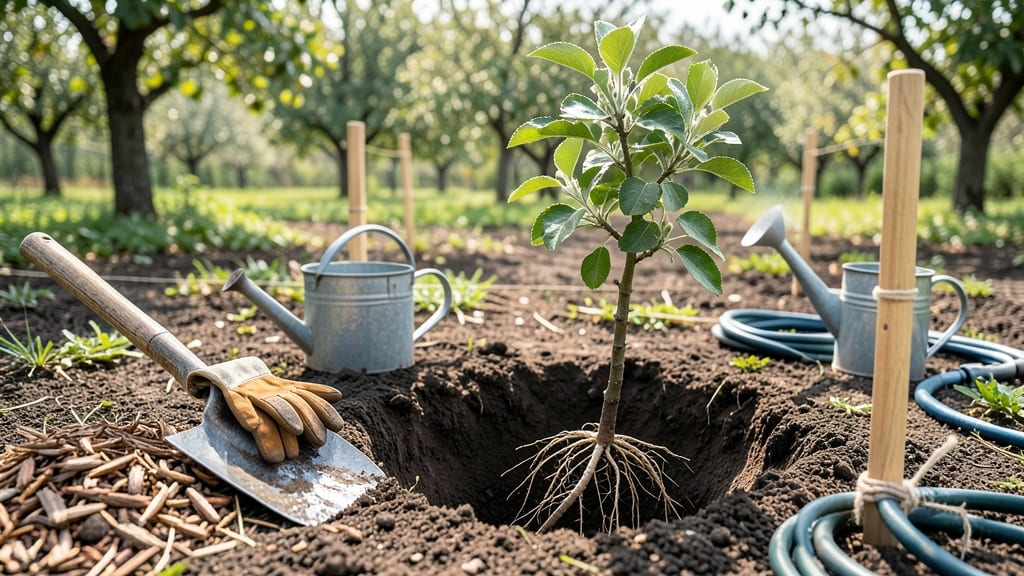
How to plant an apple tree step by step starts with the right timing and preparation—spring or early fall gives roots time to establish before extreme weather. 🌱 I’ve planted dozens over the years, and the difference between a thriving tree and a struggling one often comes down to these first few hours in the ground. The key is loosening the soil, choosing the perfect spot, and getting the depth just right so the roots don’t suffocate or dry out.
You’ll need a few basic supplies: a shovel, compost or well-rotted manure, mulch, and—most importantly—a dwarf or semi-dwarf variety if space is limited (they produce fruit faster and handle smaller yards).
Dig a hole twice as wide as the root ball but no deeper, then mix in organic matter to improve drainage. The goal is to create a cozy, nutrient-rich home where roots can spread freely without competition.
Once planted, water deeply to settle the soil and eliminate air pockets, then add a 3-inch layer of mulch to retain moisture and protect roots from temperature swings.
Within a year, you’ll see new growth—proof the tree is settling in. The first harvest might take 3-5 years, but proper care now means fewer struggles later.
Seasonal timing matters: spring planting (after last frost) gives roots time to establish before summer heat, while fall planting (6-8 weeks before frost) lets them grow in cooler weather. Avoid planting in extreme heat or cold—roots need stability to start their journey toward that first apple harvest.
📚 In This Guide
- What you need
- Instructions
- Tips and common mistakes
- Wrapping up and next steps
What you need
- ● Apple tree sapling: 1 bare-root or potted sapling (choose a variety suited to your climate—e.g., Honeycrisp, Fuji, or Granny Smith).
- ● Age: 1–3 years old (younger trees establish faster).
- ● Shovel: 1 medium-sized digging shovel (for planting hole and soil prep).
- ● Garden fork or trowel: 1 for loosening soil and creating air pockets.
- ● Pruning shears: 1 pair (sterilized with rubbing alcohol for cuts).
- ● Organic compost or well-aged manure: 5–10 gallons (blend with native soil for nutrients).
- ● Mulch: 2–3 bags of wood chips or straw (3–4 inches thick, keep 6 inches away from trunk).
- ● Watering can or hose with a gentle spray nozzle: 1 (for deep watering).
- ○ Tree stake (optional but recommended for young trees): 1–2 (if needed for support).
- ● Tree tie or soft fabric strip: 1 roll (to secure the tree to stakes).
- ● Root stimulator: 1 bottle (e.g., Mycorrhizal fungi or seaweed extract to boost root growth).
- ● Soil test kit: 1 (to check pH—apple trees prefer 6.0–7.0).
- ● Fertilizer (balanced, slow-release): 1 bag (e.g., 10-10-10 NPK ratio).
- ● Pest/disease control: Copper fungicide spray (for fungal diseases).
- ● Neem oil (natural insect repellent).
- ● Drip irrigation system: 1 (for consistent watering, especially in dry climates).
- ● Tree guard or protective wrap: 1 roll (to shield from animals or harsh weather).
Step-by-step instructions for planting an apple tree
Planting an apple tree is simpler than you think—just follow these steps for strong roots and bountiful harvests.
🪴 Step 1: Choose the Right Tree and Location
Select a disease-resistant variety suited to your climate zone, like 'Honeycrisp' or 'Fuji.' Apple trees need full sun—at least 6-8 hours daily—and space: 15-20 feet apart for dwarf varieties, 25-30 feet for standard trees. Avoid low spots where water pools, as soggy roots invite rot.
Test your soil's pH (aim for 6.0-7.0). If it's too acidic, add lime in the fall before planting. I always dig a 12-inch-deep hole twice as wide as the root ball—this prevents root circling and encourages outward growth.
🌱 Step 2: Prepare the Planting Hole and Amend Soil
Loosen the soil in the hole with your hands or a trowel—don’t compact it. Mix the native soil with compost (about 1 part compost to 3 parts soil) and a handful of slow-release fertilizer (like 10-10-10). This boosts nutrients without overwhelming the tree.
Place the tree in the hole so the root flare (where roots meet trunk) sits 1-2 inches above ground level. Fill halfway with amended soil, then water deeply to settle it. The hole should be deep enough that the top of the root ball sits 2-3 inches below soil level after settling.
⏰ Step 3: Plant and Water for Stability
Backfill the hole with the remaining soil, tamping gently to remove air pockets. Water again until the soil is moist 6-8 inches deep. Stake the tree only if needed (windy areas)—use two stakes at a 45-degree angle, tied loosely with rubber tubing to avoid girdling the trunk.
Mulch with 3-4 inches of organic mulch (like wood chips) in a 3-foot-wide ring, keeping it 6 inches away from the trunk. Water deeply once a week for the first year, aiming for 1-1.5 inches of water per week. You’ll know it’s right when the soil stays evenly damp but not soggy.
☀️ Step 4: Prune and Protect New Growth
Prune in late winter before buds swell, removing dead, crossing, or inward-growing branches. Cut just outside the branch collar (the swollen area where the branch meets the trunk). Leave 3-5 scaffold branches evenly spaced for structure.
Wrap the trunk with tree guard (not plastic wrap) to protect from rodents and sun scorch. In the first year, focus on root establishment—avoid heavy fruiting. You’ll see new growth in 4-6 weeks, signaling the tree is settling in.
Tips & tricks for planting an apple tree
Took me years of trial and error to learn these tricks—now you can skip the mistakes and plant with confidence.
Location Intelligence: The 6-8 hours of daily sun requirement is non-negotiable, but here's the secret: face your tree south (in the Northern Hemisphere) to maximize sunlight exposure. I've noticed trees planted on east-west axes often develop uneven canopies—south-facing gets that even light distribution we want for balanced growth.
Soil Prep Secret: When mixing your 1 part compost to 3 parts soil blend, add a handful of mycorrhizal fungi (available at garden centers) to the soil mix. These beneficial microbes form symbiotic relationships with your tree's roots, dramatically improving nutrient uptake—especially important during that critical first year when roots are establishing. Think of it as a natural growth booster.
Watering Wisdom: That 1-1.5 inches of water per week guideline is perfect, but timing matters more than you'd think. Water deeply in the morning to allow foliage to dry before evening, preventing fungal diseases. I've seen trees planted with evening watering develop more leaf spots—always better to let that water soak in while the sun is out.
Mulching Mastery: The 3-4 inches of organic mulch should be the right material—wood chips work great, but avoid fresh sawdust which can rob nitrogen from your soil. Create that 3-foot-wide ring but leave that 6-inch gap around the trunk—this prevents moisture buildup that can cause rot. I've had to replant trees where mulch touched the trunk because of this exact problem.
Pro Tips for Plant An Apple Tree Step By Step
- Took me years of trial and error to learn these tricks—now you can skip the mistakes and plant with confidence.
- Location Intelligence: The 6-8 hours of daily sun requirement is non-negotiable, but here's the secret: face your tre...
- Soil Prep Secret: When mixing your 1 part compost to 3 parts soil blend, add a handful of mycorrhizal fungi (availabl...
Frequently asked questions
Got questions?
Planting an apple tree is exciting, but every gardener has doubts—especially when it comes to timing, care, and troubleshooting. Here’s what you need to know before digging in!
Can I plant an apple tree in any season, or is there a best time?
The ideal time to plant is early spring (just as buds swell) or early fall (6 weeks before your first frost). Spring gives roots time to establish before summer heat, while fall planting avoids winter stress. Avoid extreme heat or freezing temps—both can shock young trees. If you must plant outside these windows, prioritize watering and mulching to protect roots!
How long does it take for an apple tree to bear fruit?
Patience is key! Dwarf varieties may produce fruit in 3–5 years, while standard-sized trees can take 5–7 years or longer. Factors like variety, soil quality, and pollination partners (many apples need a second tree) play a role. Pro tip: Choose disease-resistant varieties like ‘Honeycrisp’ or ‘Gala’ for faster, healthier yields!
What if my tree’s leaves turn yellow or wilt after planting?
Yellowing leaves (chlorosis) often signal nutrient deficiency (like iron or nitrogen) or overwatering. Wilting could mean root stress from poor drainage or transplant shock. Fix it: Test soil pH (aim for 6.0–7.0), water deeply but infrequently, and add compost. If issues persist, consult a local extension service for targeted advice.
Do I need to prune my apple tree right after planting?
Light pruning (removing dead/damaged branches) is fine, but avoid heavy cuts immediately after planting—this can stress the tree. Focus on shaping in late winter (when the tree is dormant). Use clean, sharp shears to make cuts at a 45° angle just above a bud. Pro tip: Prune to open the center for airflow and sunlight!
How do I ensure my apple tree gets pollinated if I only have one?
Most apple varieties are self-pollinating but not self-fertile, meaning they need cross-pollination for fruit set. Plant a second tree within 50–100 feet with a different variety (e.g., ‘Granny Smith’ + ‘Fuji’). If space is limited, choose self-fruitful varieties like ‘Anna’ or ‘Golden Delicious’. Bees and other pollinators do the rest—just keep them happy with native flowers nearby!
Wrapping up and next steps
Planting an apple tree is a rewarding journey that blends patience with the joy of nurturing life! By following these step-by-step guidelines, you’ve equipped yourself with the knowledge to choose the right variety, prepare the soil, and care for your tree year-round.
Whether you’re a beginner or a seasoned gardener, every well-placed sapling is a step toward fresh, homegrown fruit—and the satisfaction of watching nature thrive.
Now that you’re ready to dig in, take the next step: mark your calendar for planting season (or dive into container growing if space is tight!) and gather your tools. Your future orchard awaits—let’s make it delicious! 🍏🌱