
Planting
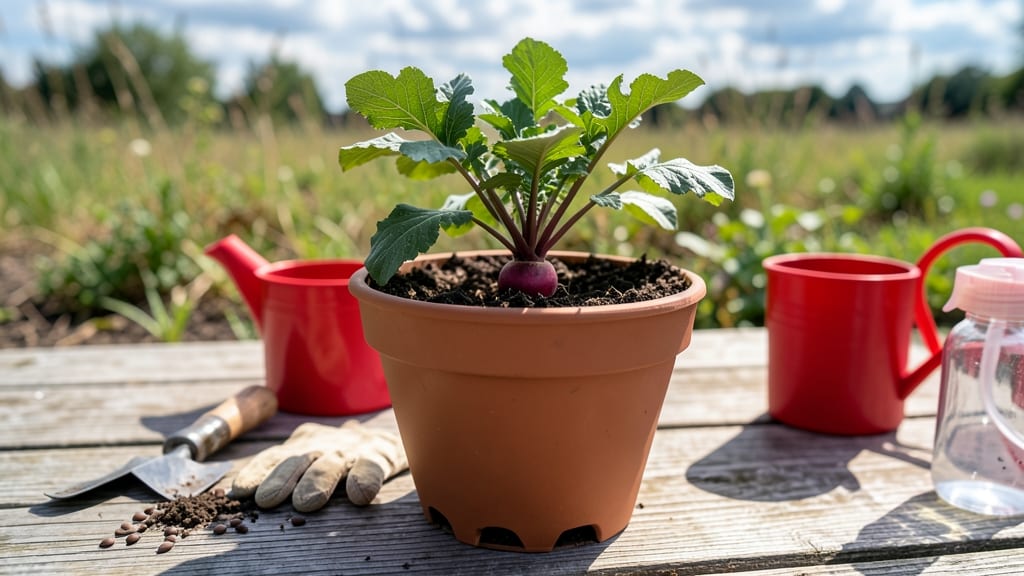
To plant radishes in pots, start with containers that are at least 6 inches deep and give each seedling room to spread—this is the secret to fast, crisp harvests.
Radishes are one of the fastest-growing vegetables in your garden—but planting them in pots can be tricky if you don’t get the depth, spacing, and soil right. With the right container setup, you’ll harvest crisp, flavorful radishes in as little as 3 weeks, even on a balcony or patio.
Most beginners make two big mistakes: choosing pots that are too shallow or crowding the seeds. Too little depth means stunted roots, while overcrowding leads to bitter, misshapen radishes.
I’ve tested everything from ceramic pots to fabric grow bags, and I’ll show you exactly which setups work best for fast, reliable growth.
In this guide, you’ll learn the exact pot sizes to use, how to space seeds for maximum yield, and the watering schedule that keeps roots happy without drowning them. Let’s get those 🥕 growing!
Choosing the right pot size and depth for radish success
Radishes thrive in containers but need the right pot size and depth to grow quickly and avoid becoming woody or bitter. Since radishes mature in just 25-30 days, they don’t need deep roots—but they do require enough space to spread.
A minimum depth of 6 inches is critical, while pot diameter should match your radish variety. Long varieties like 'Mammoth Red' need wider pots, while round types like 'Cherry Belle' can squeeze into smaller containers.
Many gardeners overlook drainage holes, which are essential to prevent root rot. Without proper drainage, radish roots suffocate, leading to slow growth or complete failure. If your pot lacks holes, add a layer of gravel or perlite at the bottom to mimic drainage.
I’ve found that fabric grow bags work surprisingly well for radishes—they allow excess water to escape while still providing structure.
Let’s compare the best pot types for radishes to help you decide what works for your space. Whether you’re using hanging baskets, ceramic pots, or plastic containers, each has unique pros and cons for growing radishes.
| Pot Type | Minimum Depth | Ideal Diameter | Drainage Needs | Pros | Cons |
|---|---|---|---|---|---|
| Hanging Baskets | 6+ inches | 8-10 inches | Built-in holes | Space-saving, great for balconies | Limited root space, needs frequent watering |
| Fabric Grow Bags | 6-8 inches | 10-12 inches | Excellent airflow, self-draining | Prevents root circling, lightweight | Dries out faster, less stable in wind |
| Ceramic Pots | 6+ inches | 12+ inches | Add drainage holes | Aesthetic, retains moisture well | Heavy, can crack if frozen |
| Plastic Containers | 6+ inches | 6-12 inches | Add holes if none exist | Lightweight, affordable, reusable | Can warp, less breathable |
For long radish varieties, like 'Black Spanish', aim for pots that are at least 12 inches in diameter. These varieties need extra room to develop their elongated shapes without becoming stunted.
In contrast, round radishes, such as 'French Breakfast', can thrive in pots as small as 6 inches wide, making them perfect for urban gardeners with limited space.
One mistake I see often is using pots that are too shallow. Radishes planted in containers with less than 6 inches of depth will struggle to develop properly, leading to small, tough roots.
If you’re repurposing containers, like old buckets or troughs, drill drainage holes and add a 1-inch layer of coarse sand or pebbles at the bottom to improve drainage.
If you’re growing radishes in hanging baskets, choose ones with a depth of at least 6 inches and a diameter of 8-10 inches. These baskets work well for round varieties but may not provide enough space for long radishes.
I’ve had great success with fabric grow bags because they allow roots to breathe and prevent the soil from becoming compacted, which is a common issue in traditional pots.
Another tip: Avoid overcrowding by spacing seeds 1 inch apart in rows that are 2 inches apart. This spacing ensures each radish has enough room to grow without competing for nutrients.
If you’re planting multiple varieties in the same pot, stick to types with similar maturity times to avoid uneven harvests.
Finally, always place your pots in a location with at least 6 hours of sunlight daily. Radishes need full sun to develop their signature crisp texture and vibrant colors. If your space is shady, consider using reflective surfaces or grow lights to supplement natural light.
Step-by-step radish planting guide for containers
Planting radishes in containers is a fantastic way to grow these quick-harvest vegetables even in small spaces. The key to success lies in proper soil prep, correct seed spacing, and consistent moisture.
Unlike in-ground planting, containers require extra attention to drainage and depth to prevent root issues. With the right approach, you’ll enjoy crisp, ready-to-eat radishes in just 3-4 weeks!
Before you begin, choose a container with at least 6 inches of depth—this ensures radish roots have room to grow without becoming root-bound. Use a high-quality potting mix blended with compost for optimal nutrient delivery.
Avoid garden soil, as it compacts easily in containers and drains poorly. For round varieties like Cherry Belle, you’ll need slightly more space than for long varieties like French Breakfast.
How to Plant Radishes in Pots
- Step 1: Fill your container with moistened potting mix, leaving about 1 inch of space at the top. Gently press the soil down to remove air pockets.
- Step 2: Plant radish seeds ½ inch deep, spacing them 1 inch apart in rows. For long varieties, space seeds 2 inches apart to allow for root length.
- Step 3: Cover seeds with a thin layer of soil and lightly water until the surface feels damp. Avoid overwatering, which can cause seeds to rot.
- Step 4: Place your container in a spot with full sun (6+ hours daily). If using a balcony, rotate pots weekly for even growth.
- Step 5: Keep the soil consistently moist (not soggy) by watering every 2-3 days. Use a spray bottle for delicate seedlings to avoid disturbing the soil.
- Step 6: Once seedlings reach 1 inch tall, thin them to maintain 1 inch spacing between plants. Snip unwanted seedlings at the base with scissors to avoid disturbing roots.
- Step 7: Harvest radishes when they reach ½ to 1 inch in diameter. Pull gently to avoid damaging nearby plants. For continuous harvests, replant seeds every 2 weeks.
Avoid these common mistakes that can ruin your radish harvest: Overcrowding seeds leads to stunted growth, while poor drainage causes root rot. Always use containers with drainage holes and elevate pots to prevent waterlogging.
For long varieties, choose deeper containers (8+ inches) to accommodate their elongated roots. If your radishes start to bolt (sprout flowers), they’ll become bitter—so harvest promptly!
Pro tip: Mix in a slow-release fertilizer at planting to give your radishes a nutrient boost without overfeeding. For round varieties, you can plant up to 4 seeds per 6-inch pot, while long varieties thrive best with 1-2 seeds per pot.
With these steps, you’ll enjoy a steady supply of fresh radishes straight from your containers!
🥕