
Planting
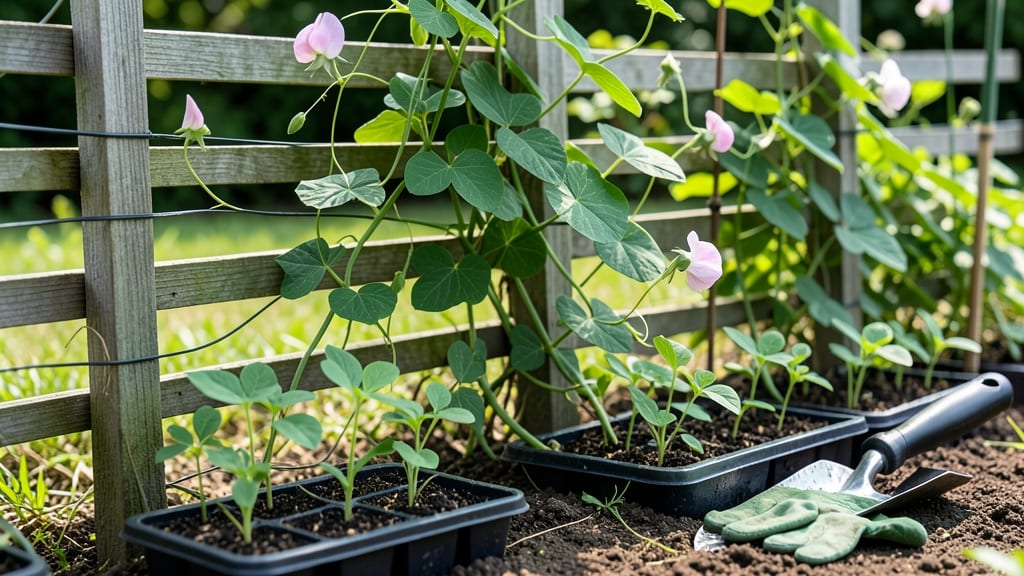
Planting sweet peas on a trellis transforms your garden into a fragrant cloud of color—fast and dramatic. 🌿 I learned the hard way that skipping the trellis means floppy vines and missed blooms, but once you master this, you’ll get 6-foot-tall cascades of flowers by early summer.
The secret lies in starting early, choosing the right support, and giving those delicate stems the right conditions to climb.
You’ll need 6-inch-deep soil, a sturdy trellis (at least 6 feet tall), and sweet pea seeds soaking overnight. The soil should be loose and rich—think crumbly, not compact—so roots can spread easily.
Plant seeds 1 inch deep and 2 inches apart, then water gently to settle the soil without disturbing the seeds. Sweet peas love cool weather, so aim for late winter or early spring planting in most climates.
Within 3-4 weeks, you’ll see those first tendrils reaching for the trellis. Guide the vines upward by tying them loosely with soft twine or clips—never pull them tight, or you’ll snap the stems.
Once established, these vines grow 1-2 feet per week, and the scent? Intoxicating—like walking through a perfume garden. Regular watering (about 1 inch per week) keeps them thriving, and deadheading spent blooms encourages even more flowers.
Common mistakes? Overcrowding (space them out!) or waiting too long to trellis (they’ll flop). But once you get it right, you’ll have a vertical garden that’s disease-resistant, space-efficient, and packed with fragrance. Next year, you’ll be the one sharing your trellis secrets with neighbors. Ready to grow?
📚 In This Guide
- What you need
- Instructions
- Tips and common mistakes
- Wrapping up and next steps
What you need
- ● Sweet pea seeds: Choose disease-resistant varieties like 'Cupani' or 'Spencer' (50–100 seeds for a small trellis, 100+ for larger displays).
- ● Trellis or support structure: Height: 6–8 feet (sweet peas are vigorous climbers!).
- ● Width: 3–4 feet (for airflow and easy maintenance).
- ● Material: Wooden lattice, metal grid, or sturdy bamboo stakes with twine.
- ● Well-draining potting mix or garden soil: Amend with compost (1 part compost to 3 parts soil) for nutrient-rich growth.
- ● Containers or garden bed: Containers: 5–7 gallon pots (with drainage holes) for patio setups.
- ● Garden beds: 6+ inches deep with loose, fertile soil.
- ● Fertilizer: Balanced 10-10-10 or low-nitrogen organic fertilizer (e.g., fish emulsion).
- ● Watering can or hose with gentle spray nozzle.
- ○ Garden twine or soft ties: For securing vines to the trellis (optional if using a lattice).
- ● Mulch: Straw or shredded leaves to retain moisture and suppress weeds.
- ● Plant supports: Additional stakes or cages for windy areas.
- ● Peat moss or vermiculite: For improving drainage in heavy clay soil.
- ● Slow-release fertilizer tablets: Place 1–2 inches below seeds for steady nutrition.
- ● Plant markers: Label varieties if growing multiple types.
Step-by-step instructions for planting sweet peas on a trellis
Sweet peas climb fast—here's how to turn your trellis into a fragrant vertical garden in weeks.
🌱 Step 1: Choose the Right Trellis and Prepare the Site
Select a trellis at least 6 feet tall with 12-inch spacing between supports—sweet peas need room to twine their vines. I prefer metal or wooden lattice designs because they're sturdy enough to support the weight of blooms. Install it in a spot with full sun to partial shade (at least 6 hours of sunlight daily).
Sweet peas thrive in well-draining soil with a slightly alkaline pH (6.5-7.5). Work in 2-3 inches of compost into the top 6 inches of soil before planting. If your soil is heavy clay, mix in 1 part perlite to 3 parts soil to improve drainage. The roots of sweet peas are delicate, so avoid compacting the soil during prep.
🌱 Step 2: Soak Seeds and Plant at the Correct Depth
Sweet pea seeds have hard outer coats, so soak them overnight in lukewarm water to soften the shell. This speeds germination from 2-3 weeks to just 7-10 days. Plant seeds 1 inch deep in early spring (4-6 weeks before last frost) or late summer (8-10 weeks before first frost) for fall blooms.
Space seeds 4-6 inches apart in rows 18 inches apart if planting multiple varieties. I like to plant 3-4 seeds per stake and thin to the strongest vine once they sprout. Press the soil gently around the seeds—don't pack it down, or the roots will struggle to push through. Water lightly after planting to settle the soil without disturbing the seeds.
☀️ Step 3: Provide Support and Encourage Climbing
The moment seedlings reach 4-6 inches tall, they'll start twining. Install soft twine or jute string horizontally across the trellis every 12 inches to guide their growth. Sweet peas don't cling like morning glories—they need gentle encouragement. Weave the vines through the string as they grow, or they'll flop over.
Watch for first true leaves (the second set after the initial cotyledons) as your signal to begin training. If a vine misses the string, gently tuck it back in place—don't force it, or you'll snap the delicate stems. Mulch around the base with 2 inches of straw to retain moisture and suppress weeds, which compete with sweet peas for nutrients.
💧 Step 4: Water and Fertilize for Fast, Fragrant Growth
Sweet peas need consistent moisture—water deeply 1-2 times per week, aiming for 1 inch of water per week. Let the top 2 inches of soil dry out between waterings to prevent root rot. I water in the early morning to reduce evaporation and fungal risks. You'll know your watering is right when the soil feels damp but not soggy down to 4 inches deep.
Fertilize lightly with a balanced, low-nitrogen fertilizer (10-10-10) at planting, then again when vines reach 12 inches tall. Too much nitrogen promotes leafy growth at the expense of flowers. Instead, side-dress with 1 tablespoon of bone meal every 4-6 weeks to encourage blooming. Deadhead spent flowers regularly to prolong the season—this prevents seed pods from forming and redirects energy to new blooms.
✂️ Step 5: Prune and Maintain for Continuous Blooms
Pinch back the tips of young plants when they reach 12 inches tall to encourage bushier growth. This isn't pruning—it's training the plant to produce more side shoots, which means more flowers. Remove any yellowing or diseased leaves immediately to keep the plant healthy. Sweet peas are annuals, so they won't regrow from old wood.
Once vines reach the top of the trellis, trim the tips of the main stems to encourage lateral branching. This creates a fuller display of blooms. Harvest flowers in the morning when they're fully open for the best fragrance and vase life. Cut stems at a 45-degree angle just above a leaf node to promote new growth. With proper care, your trellis will be a fragrant vertical garden in just 8-10 weeks.
Tips & tricks for fast, fragrant sweet pea vines
Sweet peas reward patience with explosive growth—here's how to turn weeks into days of fragrant blooms.
Soaking Secret: That overnight soak in lukewarm water isn't just about speeding germination—it's about breaking dormancy. I add a pinch of compost tea to the soaking water for extra microbial boost, which helps the seeds recognize it's time to sprout. The key is lukewarm (not hot) water—think bath temperature. Too hot and you'll cook the seeds; too cold and the hard coat won't soften enough.
Trellis Training Timing: The 4-6 inch height mark for twining is your first critical window. I've learned the hard way that waiting too long means vines get tangled and break under their own weight. Install your horizontal string guides immediately when you spot that first true leaf set—these are the little leaves that come after the initial seed leaves. Pro tip: Use biodegradable twine so it won't need removing later.
Watering Wisdom: The "1 inch per week" rule works, but I've found sweet peas actually thrive with daily light watering in dry climates rather than deep weekly sessions. The goal is consistent moisture at the root zone—think of it like keeping a sponge damp, not soaking it then letting it dry out completely. A moisture meter helps here; aim for 40-50% soil moisture at 4 inches deep.
Fertilizer Finesse: That 10-10-10 fertilizer is your baseline, but here's what I do differently: I mix half the recommended dose with the bone meal right at planting. Too much nitrogen too soon will give you leafy monsters instead of fragrant blooms. The bone meal takes 3-4 weeks to show effects, so don't expect immediate results—patience pays off with more flowers.
Pro Tips for Plant Sweet Peas On Trellis
- Sweet peas reward patience with explosive growth—here's how to turn weeks into days of fragrant blooms.
- Soaking Secret: That overnight soak in lukewarm water isn't just about speeding germination—it's about breaking dormancy.
- Trellis Training Timing: The 4-6 inch height mark for twining is your first critical window.
Frequently asked questions
Got questions about growing sweet peas on a trellis? You’re not alone! Here are answers to the most common queries to help you cultivate fragrant, thriving vines with confidence.
When is the best time to plant sweet peas on a trellis?
Sweet peas thrive in cool weather, so plant them in early spring (4–6 weeks before the last frost) or late summer (6–8 weeks before the first frost) for a fall bloom. Avoid planting when soil temps exceed 75°F (24°C)—they’ll bolt or struggle to climb. For year-round blooms in mild climates, try a second planting in late summer!
Can I plant sweet peas directly in the soil, or do they need to start indoors?
Both methods work! Direct sowing is easiest for warm climates (plant seeds 1 inch deep, 2–3 inches apart). For cooler regions, start seeds indoors 6–8 weeks before the last frost in biodegradable pots. Harden off seedlings before transplanting to the trellis. Pro tip: Soak seeds overnight to speed germination!
What if my sweet peas aren’t climbing the trellis? How can I encourage them?
Sweet peas need gentle guidance! If they’re lagging, tie vines loosely to the trellis with soft twine or plant ties every 6–8 inches as they grow. Avoid tight knots—gentle support prevents stem damage. If growth stalls, check for pests (aphids, slugs) or nutrient deficiencies (add compost or a balanced fertilizer). Prune leggy stems to encourage bushier, stronger climbers.
How do I protect sweet peas from heat or drought?
Sweet peas hate heat and drought—they’ll sulk or stop flowering. To keep them happy:
- Water deeply 1–2 times per week (keep soil moist but not soggy).
- Mulch around the base to retain moisture and cool roots.
- Provide afternoon shade in hot climates with a shade cloth (30–50%).
- Choose heat-tolerant varieties like ‘Cupani’ or ‘Blue Moon’ if summers are scorching.
What’s the best trellis material for sweet peas?
Sweet peas need lightweight, sturdy support to climb without snapping. Top choices:
Material
Pros
Cons
Bamboo stakes or hoops
Natural, affordable, easy to install
May need reinforcement for heavy vines
Metal or wooden A-frame trellis
Durable, long-lasting, professional look
Heavier to move; risk of rust (metal)
Plastic or wire mesh
Lightweight, budget-friendly, reusable
Less aesthetic; may sag over time
For tall varieties (6+ feet), opt for a freestanding trellis or fence. Avoid flimsy materials—they’ll collapse under blooming vines!
Wrapping up and next steps
Planting sweet peas on a trellis is a rewarding way to grow fragrant, fast-climbing vines that transform any garden into a blooming paradise! 🌸 With the right trellis setup, soil prep, and care routine, you’ll enjoy cascades of vibrant flowers in no time.
Whether you’re a beginner or seasoned gardener, these tips ensure your sweet peas thrive—and soon, your garden will be filled with their sweet, intoxicating scent.
Now that you’re ready to plant, take the next step: watch your trellis come alive! Start by choosing a sunny spot, stake your trellis firmly, and plant your seeds with confidence.
Before you know it, you’ll be harvesting buckets of fresh, fragrant blooms—perfect for bouquets or simply admiring their beauty. Happy gardening—your trellis awaits! 🌱✨