
Planting
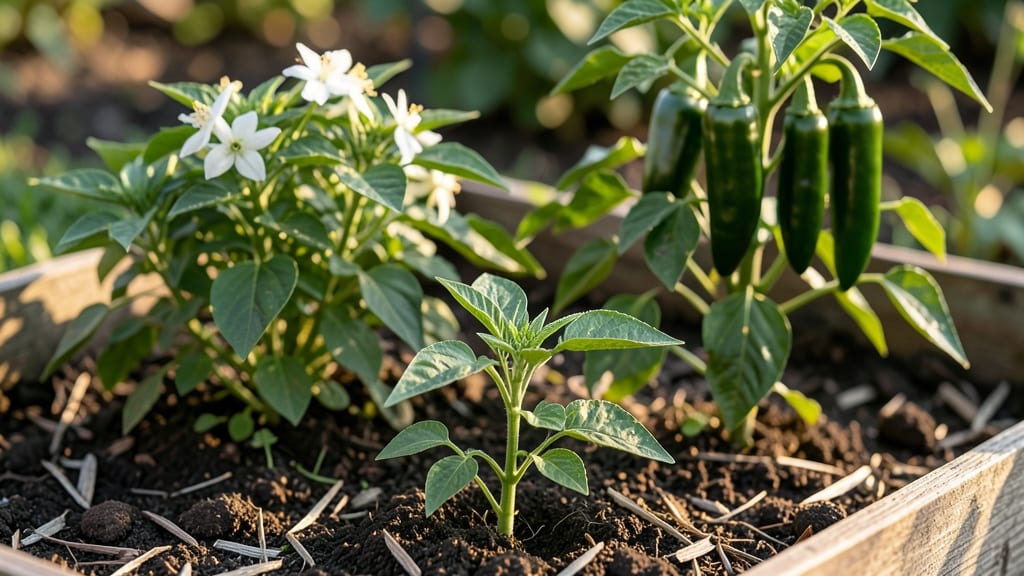
Watching a jalapeño pepper plant grow from a tiny seed to a heat-packed harvest is one of gardening's most rewarding journeys. 🌱 The stages unfold in predictable phases—germination, seedling, vegetative growth, flowering, fruiting, and maturity—each with its own care requirements and telltale signs of progress.
First, those delicate seedlings emerge within 7-14 days of planting, their first true leaves unfurling like tiny green sails. This is when you'll notice roots searching for soil and stems reaching for light, a clear sign they're ready to graduate from their cozy seed-starting setup.
Proper spacing now prevents competition, giving each plant room to grow strong and sturdy.
By 6-8 weeks, you'll spot the first white flowers blooming—tiny but unmistakable signals that fruit is on the way. These blossoms eventually transform into the jalapeños you know and love, turning green to red as they ripen.
The heat builds with each passing day, and before you know it, you're harvesting peppers packed with flavor.
What makes this journey special is how each stage builds on the last—good soil prep in early stages means bigger harvests later, and proper pruning now leads to more productive plants down the road. Whether you're a first-timer or a seasoned grower, understanding these stages turns guesswork into confidence.
📚 In This Guide
- What you need
- Instructions
- Tips and common mistakes
- Wrapping up and next steps
What you need
- ● Jalapeño Seeds: 10–20 seeds (choose heirloom or hybrid varieties like 'Early Jalapeño' or 'Big Jim').
- ● Seed Starting Mix: 1–2 quarts of sterile, well-draining potting soil (avoid garden soil—it’s too dense!).
- ● Seed Trays or Small Pots: 4–6 biodegradable or plastic pots (2–3 inches deep) or a seed tray with cell inserts.
- ● Grow Lights or Sunny Window: A full-spectrum LED grow light (12–16 hours/day) or a south-facing window with 6+ hours of sunlight.
- ● Watering Can or Spray Bottle: With a fine mist nozzle for gentle watering.
- ● Plant Fertilizer: Balanced liquid fertilizer (e.g., 10-10-10) or
- ● Slow-release granular fertilizer (like Osmocote).
- ● Transplant Pots or Garden Beds: 5–6 inch pots (for container gardening) or
- ● Well-draining garden soil amended with compost (pH 6.0–7.0).
- ● Mulch: Straw or shredded leaves to retain moisture and suppress weeds.
- ● Heat Mat: For germinating seeds faster (70–80°F is ideal).
- ● Humidity Dome: Keeps seedlings cozy until they sprout.
- ● Pruning Shears: For trimming leggy seedlings or shaping plants.
- ● Trellis or Cage: Supports tall varieties (e.g., 'Jalapeño M').
- ● pH Test Kit: Ensures soil is in the perfect range for peppers.
- ● Pest Control: Neem oil (for aphids/spider mites) or
- ● Row covers (to deter pests early on).
Jalapeño pepper plant stages: a clear timeline for Success
Growing jalapeños is a rewarding journey from tiny seeds to fiery harvests—here's how to track each stage with confidence.
🌱 Step 1: Germination and Seedling Emergence
Start indoors 8-10 weeks before your last frost date. Plant seeds ½ inch deep in warm (75-85°F) soil, using a heat mat if needed. Germination takes 7-14 days, with the first sign being tiny white roots breaking through the seed coat. Keep soil consistently moist but never soggy—overwatering here causes damping-off.
Once seedlings emerge, place them under grow lights 12-14 hours daily to prevent leggy growth. You'll know they're thriving when the first true leaves (not the initial seed leaves) appear 2-3 weeks after germination. These leaves are your signal to start fertilizing lightly with a balanced liquid fertilizer.
🌿 Step 2: Vegetative Growth and Transplanting
When seedlings reach 4-6 inches tall with 4-6 true leaves (about 4-6 weeks after sowing), it's time to transplant. Harden them off by moving them outside for 1-2 hours daily over 10 days, gradually increasing exposure. Plant in full sun with well-draining soil amended with compost.
After transplanting, watch for new growth within 1-2 weeks. Healthy plants develop a sturdy stem and bushy foliage. This is when you'll notice the first flower buds forming at the leaf nodes—your first clue that fruiting is coming soon. Pinch off any early flowers to encourage stronger root and stem development.
☀️ Step 3: Flowering and Fruit Set
Flowering begins 6-8 weeks after transplanting, marked by small white or pale green flowers. These blooms open in the morning and close by afternoon, so hand-pollinate if needed by gently shaking plants or using a small brush. Fruit sets 1-2 weeks after successful pollination, starting as tiny green peppers.
During this stage, reduce nitrogen fertilizer to prevent excessive leaf growth at the expense of fruit. You'll see peppers grow rapidly—from 1 inch to 3-4 inches in just 3-4 weeks. Thin crowded fruit to 1-2 peppers per node to ensure larger, higher-quality harvests. Watch for pests like aphids, which thrive on new growth.
🌶️ Step 4: Maturation and Harvest
Jalapeños reach harvest readiness 75-90 days after transplanting, when they're 3-4 inches long and firm to the touch. They start green but turn red, yellow, or orange when fully ripe—each color brings different heat levels. Harvest by twisting gently or cutting stems with pruners to avoid damaging the plant.
For continued production, remove spent peppers and fertilize lightly after each harvest. In warm climates, plants may produce for months; in cooler areas, they'll slow down as temperatures drop. You'll know it's time to stop harvesting when leaves yellow and drop—this signals the plant's energy is shifting toward dormancy.
⏰ Step 5: Post-Harvest Care and Winter Prep
After the first frost or when growth slows significantly, prune back dead leaves and stems to 12 inches to encourage new growth in spring. In mild climates, mulch heavily and protect plants with row covers. In colder zones, dig up the entire plant and pot it for indoor overwintering in bright light.
This is also the time to collect seeds from fully ripe peppers for next year's crop. Let peppers dry on the plant, then scoop out seeds, rinse, and dry thoroughly. Store in a cool, dark place until ready to sow again. You'll have a head start next season by knowing exactly which varieties produced the best heat for your climate.
Tips & tricks for perfect jalapeño pepper growth
Transforming jalapeño seeds into thriving plants takes patience—but these insights will help you avoid common pitfalls along the way.
Germination Success: The 75-85°F soil temperature range is non-negotiable for consistent germination. I use a heat mat for those first critical days, especially if your home stays cooler. Place a thermometer in the soil to monitor—anything below 70°F slows germination dramatically. Once those first white roots appear, resist the urge to water heavily; damping-off from overwatering is the #1 killer of young seedlings.
Transplanting Strategy: Timing matters in Step 2: wait until your seedlings reach 4-6 inches with 4-6 true leaves—this ensures they're strong enough to handle transplant shock. I harden off mine by placing them in a sheltered spot where they get morning sun and afternoon shade for the first few days. Gradually increase their outdoor time to prevent stress. After transplanting, watch for new growth within 1-2 weeks—if nothing happens, check your soil moisture and ensure they're getting full sun.
Flowering Optimization: Hand-pollination becomes crucial when those delicate white flowers appear 6-8 weeks after transplanting. I've found gently tapping the stems with a small brush works better than shaking the whole plant—it prevents accidental damage to developing fruit. After successful pollination, you'll see tiny peppers form in 1-2 weeks. This is when you should thin to 1-2 peppers per node—crowded fruit leads to smaller, less flavorful peppers. Watch for aphids during this stage; they love new growth and can stunt your plants.
Harvesting Insight: Jalapeños hit peak flavor when they're 3-4 inches long and firm to the touch, typically 75-90 days after transplanting. I harvest mine in the morning when heat levels are highest. For continued production, always remove spent peppers—this signals the plant to focus energy on new fruit rather than seed development. In cooler climates, expect production to slow as temperatures drop below 60°F.
Pro Tips for Jalapeno Pepper Plant Stages
- Transforming jalapeño seeds into thriving plants takes patience—but these insights will help you avoid common pitfalls along the way.
- Germination Success: The 75-85°F soil temperature range is non-negotiable for consistent germination.
- Transplanting Strategy: Timing matters in Step 2: wait until your seedlings reach 4-6 inches with 4-6 true leaves—this ensures they're strong enough to handle transplant shock.
Frequently asked questions
Got questions about growing jalapeño peppers? You’re not alone—these spicy plants can be tricky! Here are answers to the most common queries about their growth stages, care, and troubleshooting.
How long does it take for jalapeño plants to mature from seed?
Jalapeño plants typically take 80–100 days to mature from seed to harvest, depending on your climate and growing conditions. If you start indoors, seedlings usually need 6–8 weeks before transplanting outside. For faster results, opt for young plants from a nursery (ready in 4–6 weeks).
When should I expect flowers and fruit on my jalapeño plant?
Flowers appear 60–70 days after transplanting (or 45–50 days after planting seeds), signaling the start of fruit production. Jalapeños grow best in warm, sunny conditions (70–85°F), so if flowers drop without fruiting, check for heat stress, poor pollination, or lack of sunlight.
Can jalapeño plants survive cold weather? What stages are most vulnerable?
Jalapeños are tender perennials and die in frost (below 32°F). Seedlings and young plants (first 4–6 weeks) are most vulnerable—use row covers or containers to protect them. Mature plants can tolerate brief dips to 50°F, but fruit won’t develop well in cool temps. In cold climates, grow them in containers for easy relocation.
Why are my jalapeño peppers turning yellow or red before harvest?
Jalapeños turn yellow, orange, or red as they ripen—this is normal! However, if peppers yellow prematurely or stay small, check for:
- Overwatering (leads to blossom-end rot or mold).
- Nutrient deficiency (add balanced fertilizer or compost).
- Pests (aphids or spider mites).
- Heat stress (peppers may drop flowers/fruit in extreme heat).
What can I do if my jalapeño plant stops producing fruit?
Common culprits for low fruit production include:
- Lack of pollination: Gently shake plants or hand-pollinate with a brush.
- Over-fertilizing with nitrogen: Switch to a low-nitrogen, high-phosphorus fertilizer to boost flowering.
- Stress (drought, extreme heat/cold, or transplant shock).
- Older plants: Jalapeños produce best in their first year—consider renewing plants if they’re past their prime.
Wrapping up and next steps
Growing a jalapeño pepper plant from seed to harvest is a rewarding journey filled with science, patience, and a little spicy magic! 🌱 From nurturing tiny seedlings to enjoying homegrown heat, each stage teaches you the art of gardening.
Whether you're a beginner or a seasoned grower, your efforts will pay off with bold, flavorful peppers—and maybe even a few extra to share with neighbors.
Now that you’ve mastered the stages, take the next step: experiment with varieties, try container growing, or even preserve your harvest! 🌶️ The garden is your playground—so get out there and grow something fiery!