
Planting
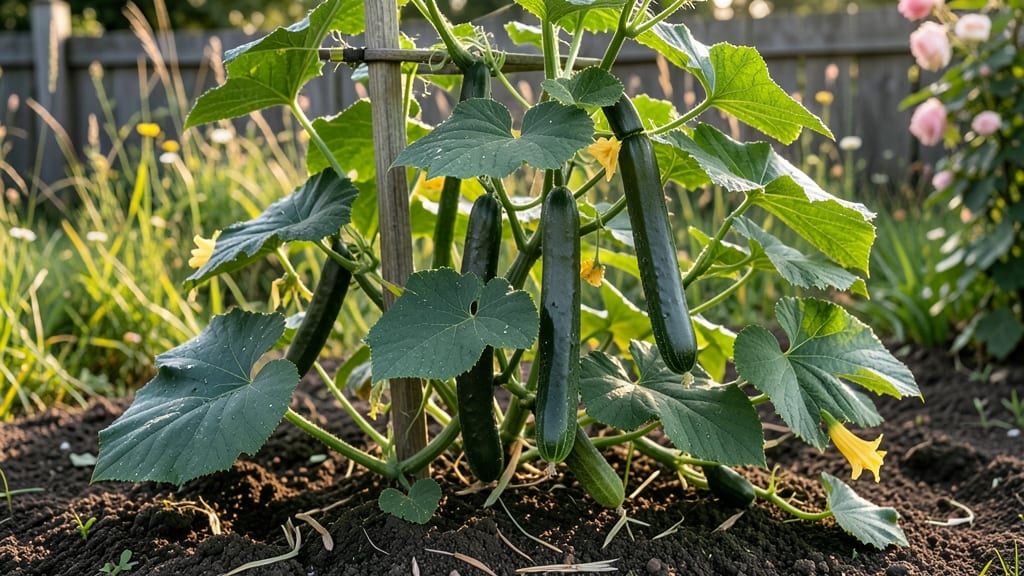
The Japanese cucumber plant care you provide determines whether your garden yields crisp, sweet cucumbers or bitter, underwhelming ones. These long, slender varieties demand more attention than their common counterparts, but the reward—fewer seeds and a superior texture—is worth the effort.
The foundation starts with soil that drains well while retaining moisture, paired with consistent watering to avoid bitterness.
Most gardeners overlook humidity, but Japanese cucumbers thrive in it—aim for 60% or higher. If your air feels dry, mist the leaves or place a shallow tray of water nearby. They also require 6-8 hours of direct sun daily, so a south- or west-facing spot is ideal.
Trellising isn’t just for aesthetics: it keeps vines off the ground, improves airflow, and reduces disease risk.
You’ll know you’re on the right track when vines climb eagerly and produce 1-2 pound fruits in just 50-60 days. The secret? Prune regularly to encourage bushier growth, and fertilize lightly with compost tea every 2 weeks. Avoid overdoing it—excess nutrients lead to leafy vines instead of cucumbers.
Even seasoned gardeners face challenges like powdery mildew or uneven ripening. The solution? Space plants 12-18 inches apart, rotate crops yearly, and harvest frequently. With these adjustments, you’ll go from struggling to bursting with homegrown Japanese cucumbers—crisp, sweet, and ready for slicing in weeks.
📚 In This Guide
- What you need
- Instructions
- Tips and common mistakes
- Wrapping up and next steps
What you need
- ● Japanese cucumber seeds – Choose heirloom varieties like Suyo Long or Shishido for that authentic crunch. (1–2 packs, ~20–30 seeds)
- ● Containers or garden bed – Containers: 5–10 gallon pots (with drainage holes) for each plant.
- ● Garden bed: Well-draining soil in a sunny spot (6+ hours of light daily).
- ● High-quality potting mix – Lightweight, well-draining blend (avoid heavy clay soil). (~2–3 bags, depending on container size).
- ● Organic compost or fertilizer – Balanced (10-10-10) or veggie-specific blend. (1–2 cups per plant at planting).
- ● Trellis or stakes – 4–6 ft tall for vining varieties (bamboo or metal works great).
- ● Hand trowel or transplanting tool – For planting seeds or seedlings.
- ● Spray bottle – For gentle watering post-transplant.
- ● Pruning shears – To trim excess vines or yellow leaves.
- ● Mulch (straw or shredded leaves) – Retains moisture and suppresses weeds.
- ○ pH test kit – Ideal soil pH: 6.0–6.8 (optional but helpful).
- ● Shade cloth (30–50%) – Protects seedlings from intense midday sun if needed.
Instructions for cultivating Japanese cucumbers: sunlight and soil mastery
Here’s how I transform delicate Japanese cucumber vines into prolific producers—using precise light, soil, and support techniques.
Select the Perfect Planting Location
Japanese cucumbers demand full sun exposure—at least 8 hours of direct sunlight daily—to develop their signature sweet, tender fruit. I choose a south-facing spot where the vines receive morning sun and afternoon light without afternoon shade that invites fungal issues. If your garden lacks ideal sunlight, a reflective surface like white gravel or a light-colored wall can redirect sunlight to the plants.
Test your location by observing how sunlight moves across the area. Mark the 4-foot diameter planting zone with stakes to ensure consistent light access. Avoid areas where water pools after rain, as soggy soil leads to root rot. The ideal spot combines bright light, good drainage, and shelter from strong winds that can snap tender vines.
Prepare Nutrient-Rich Soil for Vigorous Growth
Japanese cucumbers thrive in loose, well-draining soil with a pH between 6.0 and 6.8. I amend the soil with 3 inches of compost and 1 cup of balanced fertilizer (10-10-10) per plant before planting. Work the amendments into the top 12 inches of soil to create a fertile root zone. Avoid heavy clay or compacted soil, which restricts root development and leads to stunted vines.
To improve drainage, mix in 1 part perlite or coarse sand for every 3 parts soil. This ensures excess water drains away while retaining moisture for the shallow roots. Conduct a simple soil test by squeezing a handful—if it forms a tight ball, add more organic matter. The soil should crumble easily when dry and hold moisture without becoming waterlogged.
Plant with Proper Spacing and Support
Space Japanese cucumber plants 3 feet apart in rows 5 feet apart to allow airflow and prevent disease. I plant 2-3 seeds per hole at a depth of 1 inch, then thin to the strongest seedling once the plants reach 4 inches tall. Use a trellis, cage, or sturdy stakes to support the vines early—Japanese cucumbers grow 6-10 feet long and benefit from vertical training to improve air circulation and fruit quality.
Install supports immediately after planting to avoid disturbing roots later. I use 5-foot tall bamboo stakes or a wire trellis positioned 1 foot away from the planting hole. Gently weave the main vine onto the trellis as it grows, securing it with soft plant ties. This encourages upward growth and prevents the fruit from touching the soil, reducing the risk of rot.
Water Deeply and Consistently
Japanese cucumbers require 1-1.5 inches of water per week, delivered at the base of the plant to keep foliage dry and prevent fungal diseases. I water early in the morning to allow foliage to dry before evening, reducing humidity-related issues. Use drip irrigation or soaker hoses to deliver water slowly and evenly, avoiding overhead sprinklers that can spread disease.
Monitor soil moisture by inserting your finger 2 inches deep—if the soil feels dry, it’s time to water. Mulch around the base with 2-3 inches of straw or shredded leaves to retain moisture and suppress weeds. Avoid letting the soil dry out completely, as this causes bitter fruit and poor yields. Consistency is key: too much or too little water both lead to stressed plants and reduced production.
Prune and Fertilize for Maximum Yield
Prune Japanese cucumbers by removing yellow or diseased leaves and side shoots that develop below the first 6 inches of the main vine. This directs energy to fruit production and improves airflow. I also pinch off the first few flowers to encourage stronger vine growth before the plant sets fruit. Once the vines are established, fertilize every 2-3 weeks with a low-nitrogen, high-potassium fertilizer (5-10-10) to promote flowering and fruiting.
Watch for powdery mildew or cucumber beetles, common pests that target stressed plants. Treat mildew with a baking soda spray (1 tablespoon per gallon of water) and deter beetles with row covers or neem oil. Harvest fruit when it reaches 6-8 inches long and deep green color—overripe cucumbers become seedy and bitter. Regular harvesting encourages more production and keeps the plant focused on growth.
Tips & tricks for perfect Japanese cucumber cultivation
Transforming delicate Japanese cucumber vines into thriving plants requires attention to detail—here’s how to optimize every step for maximum growth and flavor.
Sunlight Optimization: While the instructions emphasize 8 hours of direct sunlight, I’ve found that morning sun paired with afternoon shade (using shade cloth) can actually improve fruit quality in hot climates. The key is maintaining that 8-hour minimum—use a sun tracker app to map your garden’s light patterns before planting. If your location gets intense afternoon sun, consider planting near a reflective surface like a white fence to bounce additional light to the plants during early morning hours.
Soil Preparation Pro Tip: When amending soil with 3 inches of compost and 1 cup of balanced fertilizer (10-10-10), I recommend adding a handful of crushed eggshells to the mix. The calcium boost prevents blossom-end rot, a common issue with cucumbers, while the compost provides essential micronutrients. For even better drainage, incorporate 1 part perlite into the soil—this creates air pockets that prevent waterlogging while maintaining moisture retention for the shallow roots.
Support System Strategy: The instructions suggest using 5-foot tall bamboo stakes or wire trellises, but I’ve had great success with a hybrid approach: install a 4-foot trellis first, then add a second 3-foot extension once the vines reach 3 feet tall. This gradual support prevents the vines from snapping under their own weight as they grow toward their full 6-10 foot height. Always position supports 1 foot away from the planting hole to avoid disturbing roots when securing the vines.
Watering Wisdom: The 1-1.5 inches of water per week guideline works perfectly, but timing matters just as much. I’ve found that splitting this into two waterings—one in the morning and one in the late afternoon—prevents fungal issues better than a single watering. Use a rain gauge to measure your water output, and always water at the base of the plant to keep foliage dry. For container-grown Japanese cucumbers, check soil moisture every other day since pots dry out faster.
Pro Tips for Japanese Cucumber Plant Care
- Transforming delicate Japanese cucumber vines into thriving plants requires attention to detail—here’s how to optimize every step for maximum growth and flavor.
- Sunlight Optimization: While the instructions emphasize 8 hours of direct sunlight, I’ve found that morning sun paired with afternoon shade (using shade cloth) can actually improve fruit quality in hot climates.
- Soil Preparation Pro Tip: When amending soil with 3 inches of compost and 1 cup of balanced fertilizer (10-10-10), I recommend adding a handful of crushed eggshells to the mix.
Frequently asked questions
Got questions about growing Japanese cucumbers?
You’re not alone! Here are some of the most common queries—plus quick, actionable answers to keep your plants thriving.
How often should I water my Japanese cucumber plant?
Japanese cucumbers need consistent moisture—aim for 1-2 inches of water per week, especially during flowering and fruiting. Water at the base (not the leaves) to prevent disease. Let the top inch of soil dry out between waterings, but avoid soggy roots. Pro tip: Mulch around the plant to retain moisture and keep roots cool!
When is the best time to harvest Japanese cucumbers?
Harvest when cucumbers are 6-8 inches long and still firm for the best flavor and texture. Use a sharp knife or pruners to avoid damaging the vine. Check plants every 2-3 days—overripe cucumbers can stunt future growth. Bonus: Pick in the morning for sweeter, juicier results!
Why are my Japanese cucumber leaves turning yellow?
Yellow leaves usually signal overwatering, underwatering, or nutrient deficiency. Check the soil—if it’s soggy, reduce watering; if dry, increase it. Yellowing edges often mean low nitrogen (use a balanced fertilizer). Pest alert: Inspect for aphids or spider mites, which can also cause discoloration. Act fast to save your plant!
Can I grow Japanese cucumbers in containers?
Choose a large container (at least 12 inches deep and wide) with drainage holes. Use a lightweight potting mix and provide a trellis for vertical growth. Containers dry out faster, so water daily in hot weather. Just ensure the pot gets 6+ hours of sunlight daily.
What’s the difference between Japanese cucumbers and regular cucumbers?
Japanese cucumbers (like Suyo Long) are sweeter, crunchier, and less seedy than their greenhouse cousins. They’re thin-skinned, perfect for snacking, and grow on vining plants (not bush types). Plus, they’re less watery and packed with flavor—ideal for fresh eating!
Still stumped?
Drop your question in the comments—we’re happy to help your Japanese cucumbers reach their full potential!
Wrapping up and next steps
Growing Japanese cucumbers is a rewarding journey—just a little sunlight, patience, and the right care can turn your garden into a lush, productive paradise! 🌱 Whether you’re a beginner or a seasoned gardener, these sunny spot secrets will help you nurture thriving vines and bountiful harvests.
Now that you’re armed with the essentials, why not plant your first seeds or seedlings this weekend? Grab your gloves, pick a sunny patch, and watch your green thumb shine! 🌞