
Planting
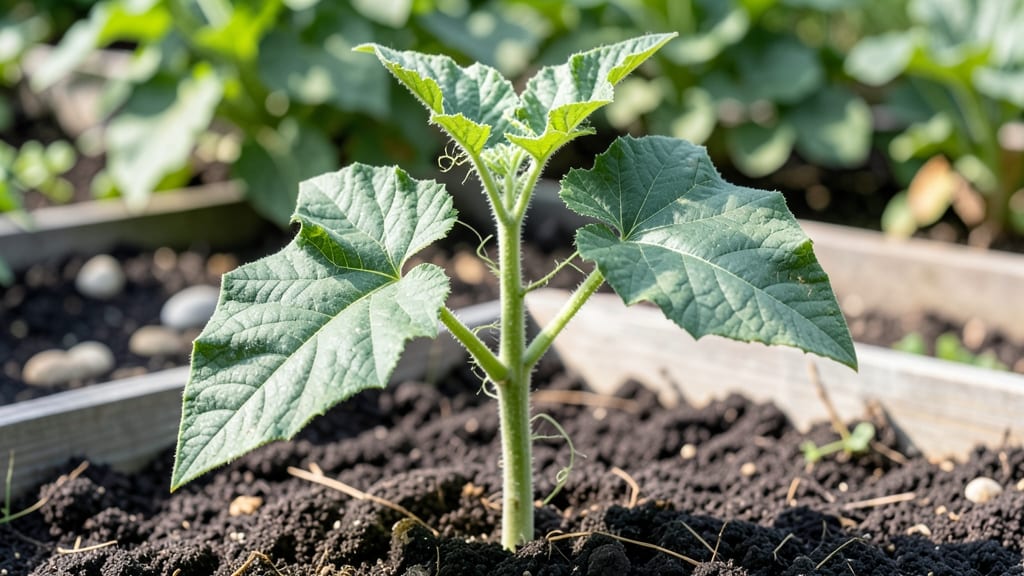
Growing a small muskmelon plant from seed lets you enjoy sweet harvests even on a tiny balcony. 🌱 The key is selecting dwarf varieties like 'Minnesota Midget' or 'Tiny Tim'—these stay under 3 feet tall while still producing flavorful fruit.
Unlike their sprawling cousins, these vines grow in tight circles, making them perfect for containers. Start seeds indoors 3-4 weeks before your last frost, or buy sturdy seedlings from a trusted nursery. Use a well-draining potting mix in 5-gallon containers with drainage holes—muskmelons hate soggy roots.
Plant seeds 1 inch deep, spacing them 2 inches apart, then thin to the strongest seedling once true leaves appear. Keep soil consistently moist but never waterlogged, and provide 6-8 hours of direct sunlight daily. Young plants need regular feeding with a balanced fertilizer (10-10-10) every 2 weeks.
Watch for yellowing leaves—a sign of overwatering or nutrient deficiency—and adjust care immediately. With proper pruning (removing side shoots) and support (small trellises or cages), your compact vines will thrive. By midsummer, you'll be harvesting melons right outside your door—no sprawling garden required!
📚 In This Guide
- What you need
- Instructions
- Tips and common mistakes
- Wrapping up and next steps
What you need
- ● Muskmelon seeds: Choose compact varieties like 'Sugar Baby' or 'Minnesota Midget' (3–5 seeds per plant).
- ● Biodegradable pots or seed-starting trays: 4–6 inches deep (1–2 per seed).
- ● Potting mix: Lightweight, well-draining blend (1–2 gallons). Pro tip: Mix in perlite or vermiculite for aeration!
- ● Grow lights or sunny balcony spot: 6+ hours of sunlight daily (or LED grow lights for 12–14 hours/day).
- ● Balcony planter or hanging basket: At least 18–24 inches deep (1–2 plants per container).
- ○ Trellis or sturdy stakes: 3–4 feet tall (optional but helps save space!).
- ● Watering can with a gentle spray nozzle: Muskmelons hate soggy roots!
- ● Fertilizer: Balanced 10-10-10 or organic compost tea (feed every 2–3 weeks).
- ● Mulch: Straw or shredded leaves to retain moisture.
- ● Pruning shears: For trimming excess vines (keep it tidy!).
- ● Hand pollination tool: A small paintbrush to help flowers set fruit (if bees are scarce).
Step-by-step guide to growing compact muskmelon vines for balcony gardens
Here's how to coax sweet, manageable muskmelon vines into your small-space garden—no sprawling chaos required.
🌱 Step 1: Select and Prepare the Right Varieties
Not all muskmelons thrive in containers, so choose compact varieties like 'Minnesota Midget' or 'Tiny' cantaloupes, which produce 3-5 pound fruits on vines that stay under 6 feet when trained. These varieties are bred for small spaces and won't overwhelm your balcony. Start with 4 plants for a productive harvest—each vine will produce 1-2 fruits if given proper care.
I always buy seeds from a reputable supplier because store-bought melon seeds often come from hybrid varieties that won't perform well in containers. Look for seed packets labeled "bush" or "compact" to avoid disappointment. Planting too many vines in a small space leads to crowded, underproducing plants, so stick to the 4-plant limit for your balcony setup.
🪴 Step 2: Choose and Prepare Containers
Muskmelon vines need 5-gallon containers minimum—anything smaller restricts root growth and reduces fruit size. I use fabric grow bags because they allow excess water to evaporate through the walls, preventing root rot. Each container should have drainage holes (at least 3) to avoid waterlogged soil, which muskmelons hate.
Fill the containers with a sterile potting mix (never garden soil—it compacts and suffocates roots). Mix in 1 cup of compost per container to provide nutrients without overwhelming the plants. Tap the soil gently to remove air pockets, then water until moisture runs freely from the drainage holes. This ensures the roots start in a well-hydrated environment.
☀️ Step 3: Plant and Provide Support Early
Plant 1-2 seeds per container at a depth of 1 inch, spacing them 2 inches apart. Muskmelons germinate best in 75-85°F soil, so use a seedling heat mat if your balcony runs cooler. Once seedlings emerge, thin to the strongest plant per container—removing the weaker one prevents competition for nutrients.
Install a 5-foot trellis or tomato cage immediately after planting. Muskmelons are vining plants, and giving them support early prevents tangled, unruly growth. I use soft plant ties to gently secure the main vine to the trellis as it grows, encouraging upward growth instead of sprawling vines. Without support, even compact varieties will flop and produce smaller, less flavorful fruit.
💧 Step 4: Water and Fertilize for Balcony Success
Water deeply every 2-3 days, aiming for 1 inch of water per week. Muskmelons are sensitive to inconsistent moisture—too little causes blossom drop, while too much rots the roots. I water in the early morning to reduce evaporation and fungal risks. Check soil moisture by sticking your finger 1 inch deep; if it feels dry, it's time to water.
Feed plants with a balanced liquid fertilizer (10-10-10) every 2 weeks once flowers appear. Muskmelons are heavy feeders, and container-grown plants exhaust nutrients faster than in-ground varieties. Stop fertilizing 2 weeks before harvest to allow the fruit to sweeten naturally. Yellowing leaves usually mean it's time to fertilize again—don't wait until the plant looks stressed.
✂️ Step 5: Prune and Harvest for Maximum Yield
Prune side shoots (suckers) that grow in the leaf axils to direct energy into 1-2 main vines per plant. This keeps the plant manageable and improves air circulation, reducing disease risk. I pinch off the first few flowers to encourage stronger vine growth—this ensures the plant can support fruit later. Once flowers appear, hand-pollinate by gently shaking the vines in the morning to transfer pollen.
Harvest when the stem near the fruit slips easily from the vine and the fruit has a creamy color (not green). Muskmelons continue to ripen after picking, so don't wait until they're fully yellow—overripe fruit loses flavor and texture. With proper care, your 4 compact vines should yield 4-8 sweet, ready-to-eat muskmelons by mid-summer. Store harvested fruit in a cool, dry place to extend freshness.
Tips & tricks for perfect compact muskmelon vines
Here's what I learned after years of growing these sweet vines in tight spaces—these tricks make all the difference for balcony gardeners.
Soil Temperature Secret: The 75-85°F soil temperature range isn't just a suggestion—it's critical for germination. I've tried planting in cooler soil and ended up with spotty, weak seedlings. Use a seedling heat mat if your balcony runs chilly, especially in spring or fall. You'll notice germination speeds up dramatically when soil stays in that sweet spot, and seedlings emerge stronger and more uniform. This is particularly important for container growing where soil cools faster than ground soil.
Container Placement Strategy: Position your 5-gallon containers where they'll receive at least 6-8 hours of direct sunlight daily. South-facing balconies work best in the Northern Hemisphere, but even west-facing spots can work if you rotate containers weekly. I've found that muskmelons grown in partial shade develop smaller, less flavorful fruit. Watch for leaves turning yellow—this often signals insufficient light. If you notice this, move containers to a sunnier location immediately.
Support System Upgrade: While a standard 5-foot trellis works, I've had better results with a modified A-frame trellis made from PVC pipes. This design provides more stable support for the vines as they grow heavier with fruit. Install it immediately after planting to give roots time to establish before supporting the plant's weight. The PVC version also resists wind better than wire cages, which is crucial for balcony gardens where breezes can easily topple lighter supports.
Watering Wisdom: The "1 inch per week" guideline is perfect, but timing matters just as much. I've learned that watering in the early morning gives the plants time to absorb moisture before the heat of the day. If you water in the evening, the leaves stay damp longer, increasing the risk of fungal diseases. Also, always water at the base of the plant rather than overhead—this prevents water from splashing onto leaves and spreading potential pathogens. Container plants dry out faster than in-ground plants, so check soil moisture daily during hot weather.
Pro Tips for Muskmelon Small Plant
- Here's what I learned after years of growing these sweet vines in tight spaces—these tricks make all the difference for balcony gardeners.
- Soil Temperature Secret: The 75-85°F soil temperature range isn't just a suggestion—it's critical for germination.
- Container Placement Strategy: Position your 5-gallon containers where they'll receive at least 6-8 hours of direct sunlight daily.
Frequently asked questions
Got questions about growing muskmelon small plants in tight spaces? You’re not alone! Here are answers to the most common queries to help you crush your balcony harvest—no green thumb required.
Can I grow muskmelons in containers?
Muskmelons thrive in containers as long as the pot is at least 5 gallons (bigger is better). Use well-draining soil, and place the plant in a spot with 6-8 hours of sunlight daily. Just be ready to prune vines early to keep them compact—think of it like training a tiny, fruit-bearing vine!
How long does it take for a small muskmelon plant to produce fruit?
Patience is key! From seed to fruit, expect 70-90 days for most compact varieties. Start seeds indoors 4-6 weeks before your last frost, then transplant outdoors after the soil warms. Pro tip: Male flowers appear first, followed by female flowers (look for tiny melon shapes at the base)—that’s your cue to pollinate by hand if bees are scarce.
What’s the best temperature for growing muskmelons?
Muskmelons love warmth—ideal temps are between 75-90°F (24-32°C). They won’t germinate if soil is below 60°F (15°C), so wait until all frost risk has passed. If your balcony gets scorching hot, provide afternoon shade to prevent stress. Cold snaps? Cover plants with frost cloth at night.
Why isn’t my small muskmelon plant flowering?
No flowers? Check these fixes:
- Light: Move to a sunnier spot—muskmelons need full sun.
- Fertilizer: Switch to a low-nitrogen, high-phosphorus feed (like 5-10-10) to boost blooms.
- Water: Keep soil consistently moist but not soggy.
- Age: Plants need 4-6 weeks to mature before flowering.
What’s the easiest small muskmelon variety for beginners?
Start with ‘Minnesota Midget’ or ‘Tiny Tim’—both stay under 3 feet tall and produce 3-5 lb fruits in compact vines. ‘Sugar Baby’ is another crowd-pleaser, perfect for containers. Pro tip: Look for “bush” or “compact” labels on seed packets to avoid sprawlers!
Wrapping up and next steps
Growing a muskmelon small plant on your balcony isn’t just possible—it’s a rewarding way to enjoy fresh, homegrown fruit without the space! With the right variety, compact vines, and a little care, you can turn even the tiniest corner into a thriving harvest.
Whether you’re a beginner or a green thumb, this recipe proves that big flavors come in small packages.
Now that you’re armed with tips and tricks, why not plant your first seeds this week? Start small, experiment with containers, and watch your balcony bloom—literally! 🌱🍉 Ready to dig in?