
Planting
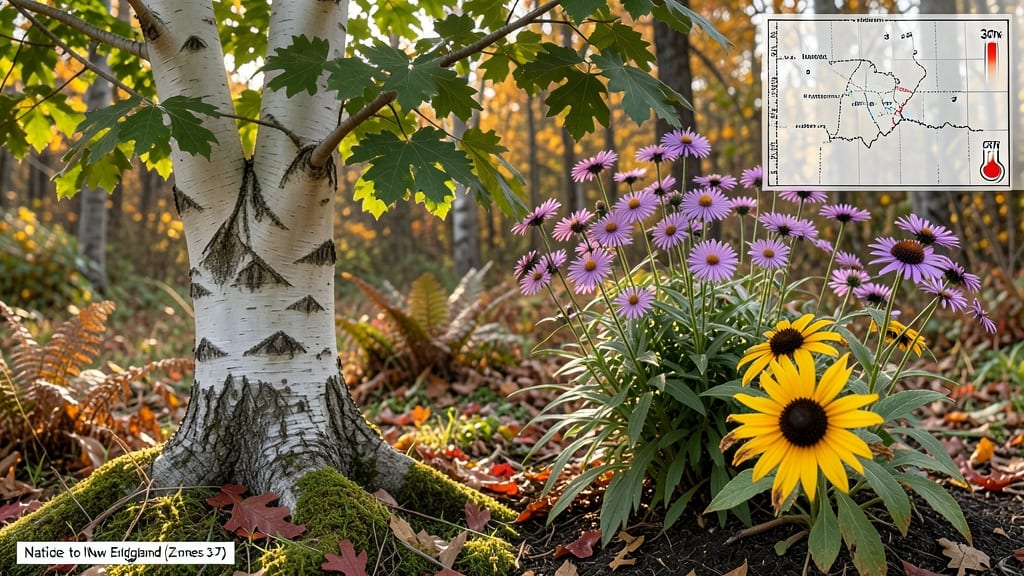
Understanding New England's hardiness zones is essential for successful gardening, as the region spans USDA Zones 3 through 7—with coastal areas typically in Zones 6-7 and inland regions reaching as cold as Zone 3. Frost dates vary significantly by location, with spring frost-free periods arriving between late April and early June, while fall frost often occurs from mid-September to early November, shaping when to plant annuals, perennials, and cold-hardy crops.
New England's diverse geography creates microclimates that dramatically affect plant survival.
Coastal areas like Portland, Maine benefit from ocean breezes, pushing them into Zone 6-7, while inland valleys such as Burlington, Vermont, can dip into Zone 4 due to colder air settling in low-lying areas. 🌿 These variations mean a tomato plant might thrive in Zone 6 coastal gardens but struggle in Zone 3 high-altitude regions like the White Mountains.
The key is knowing your specific last-frost date—most garden centers provide local averages, but elevation changes can shift these by 2-4 weeks.
For practical planting, Zone 3 gardeners should wait until mid-May for warm-season crops, while Zone 7 coastal areas can start as early as April 15th.
Cold-hardy vegetables like kale and potatoes can often go in the ground 2-4 weeks before the last frost, but tender plants like basil and peppers need to wait until after Memorial Day in most areas. Pro tip: Use row covers to extend your growing season in colder zones!
💡 In This Article
- How New England’s Climate Affects Plant Hardiness Zones
- Best Planting Timelines for New England Gardens by Zone
How New England’s climate affects plant hardiness zones
New England’s hardiness zones are shaped by a mix of geographic and climatic factors that create dramatic microclimates. Coastal regions like Portland, Maine, benefit from the Gulf Stream’s moderating influence, keeping temperatures milder and pushing them into Zone 6-7.
Meanwhile, inland valleys such as Burlington, Vermont, experience colder air settling in low areas, often landing in Zone 4. This variation is why a Zone 3 garden in the White Mountains might struggle with the same plants that thrive in Zone 6 coastal gardens.
The ocean isn’t the only moderator—large lakes like Lake Champlain and Lake Winnipesaukee also create localized warmth, delaying frost in nearby areas.
Elevation plays a critical role too: temperatures drop 3.5°F per 1,000 feet in elevation, meaning high-altitude spots like Mount Washington (Zone 3) can be 10°F colder than valleys just miles away.
These shifts explain why frost-free periods vary—coastal areas might see 180 frost-free days, while inland regions average only 120-140 days.
Understanding these patterns helps gardeners adjust planting times. For example, Zone 5 areas like Boston typically see their last frost around May 15th, while Zone 3 spots in the Green Mountains may not reach safety until June 1st.
The same logic applies in reverse for fall: coastal gardens can extend harvests until October 15th, while inland zones may face frost by September 20th.
This is why perennials like peonies thrive in Zone 4 but may struggle in Zone 7 coastal gardens—their hardiness limits are tied to these microclimate realities.
Another key factor is wind exposure. Coastal winds can dry out soil and stress plants, while sheltered valleys retain moisture longer. This is why Zone 6 gardens near the ocean might need windbreaks or mulching to protect tender crops.
Even within a single city, neighborhoods can differ by 1-2 zones—a north-facing slope might be Zone 4, while a south-facing hillside could be Zone 5. These nuances mean gardeners should always check local frost records rather than relying solely on broad zone maps.
For those tracking long-term trends, climate change is shifting these zones upward. Over the past 30 years, New England has seen 2-3°F warming, pushing some Zone 5 areas into Zone 6 territory.
However, this doesn’t mean gardeners can ignore historical data—late spring frosts still occur, and Zone 3 areas remain vulnerable to -30°F winters. The takeaway? Use zone maps as a starting point, then adjust based on microclimate observations and 3-5 years of local records.
One often-overlooked detail is how urban heat islands affect cities like Providence, RI, where pavement and buildings trap heat, creating Zone 6-7 pockets in areas that might otherwise be Zone 5.
This urban warming can extend growing seasons by 10-14 days compared to rural outskirts. For gardeners, this means city plots may support tropical plants like hibiscus where rural gardens would struggle.
To visualize these differences, imagine planting tomatoes in Zone 4 Burlington versus Zone 7 Portland. In Burlington, you’d wait until June 1st and use row covers for early starts, while Portland gardeners could plant by May 15th with minimal protection.
The same crop in Zone 3 White Mountains might only yield partial harvests unless grown in a greenhouse. These examples show why zone awareness isn’t just academic—it’s the difference between a bountiful harvest and a failed experiment. 🌱