
Planting
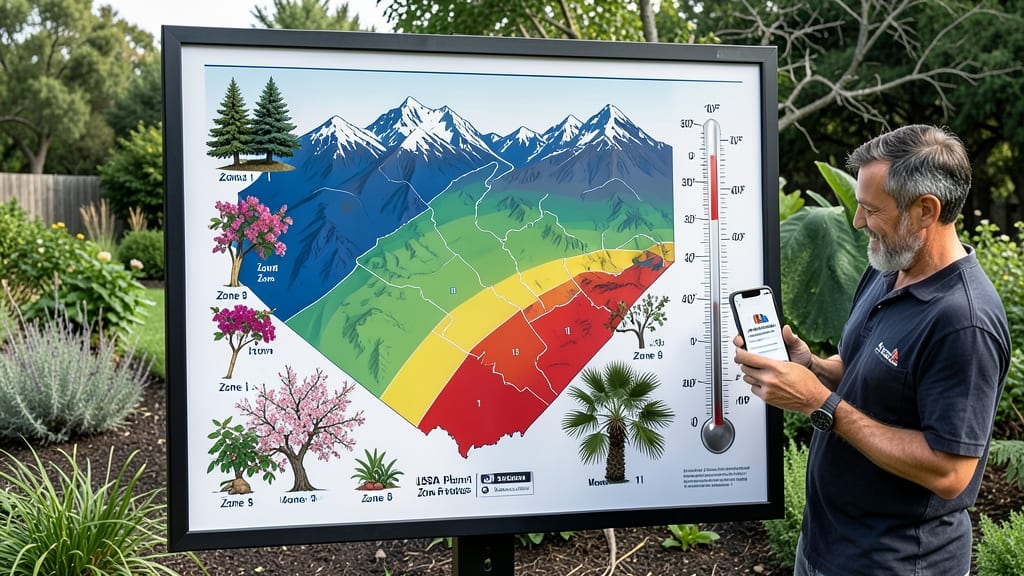
Understanding the new plant hardiness zones helps you select cold-resistant plants that match your region's average winter lows, maximizing your garden's success with data-driven plant choices. The updated 2023 USDA maps now account for climate change and urban heat islands.
The USDA's updated plant hardiness zone system now divides the country into 13 distinct zones based on the coldest average winter temperatures, with each zone representing a 10°F difference.
These zones help gardeners predict which plants will survive winter in their area by accounting for both macroclimates and microclimates—like urban heat pockets or sheltered garden spots. 🔥 The 2023 revision shifts many zones northward due to warming trends, meaning some plants previously considered risky may now thrive where they once wouldn't. For example, a Zone 7 plant might now survive in areas previously classified as Zone 6.
To use these zones effectively, start by locating your zone using the interactive USDA map, then adjust for your specific microclimate. If you're on the border between two zones, opt for plants rated for the colder zone to ensure survival.
The system also accounts for frost-free periods, which are critical for warm-season crops. For instance, a Zone 8 area with a short frost-free season might still support tropical plants if given proper winter protection.
💡 In This Article
- How USDA Plant Hardiness Zones Work and Why They Matter
- Finding Your Zone and Choosing Plants for Success
How USDA plant hardiness zones work and why they matter
The USDA's plant hardiness zone system is built on 30 years of temperature data collected from weather stations across the country. Each zone represents a 10°F range of average annual minimum winter temperatures, from Zone 1 (-60°F) to Zone 13 (60-70°F).
This classification system helps gardeners predict which plants will survive winter by matching their cold tolerance to local climate patterns.
For example, a Zone 5 area (average lows of -20°F to -10°F) can support hardy perennials like coneflowers, while Zone 10 (average lows of 30-40°F) is better suited for citrus trees and bougainvillea.
The science behind these zones involves heat summation models that account for both extreme cold events and gradual temperature declines. The USDA now uses 1981-2010 climate normals for their maps, but the 2023 update incorporates 2020-2023 data to reflect recent warming trends.
This shift has caused many areas to move into warmer zones—sometimes by 1-2 zones—meaning plants that were once considered marginal may now thrive. For instance, peach trees, which need Zone 5 protection, are now growing successfully in areas previously classified as Zone 6 due to milder winters.
What makes these zones particularly valuable is their ability to predict plant survival rates with remarkable accuracy. Studies show that when plants are selected according to their hardiness zone, survival rates exceed 90% during average winters.
The system also accounts for frost-free periods, which determine when warm-season crops can be planted.
For example, a Zone 7 area with a 210-day frost-free season can support tomatoes and peppers, while a Zone 4 area (with only 120 days) might require earlier varieties or container gardening for heat-loving plants.
Microclimates add another layer of complexity to zone-based gardening. Urban areas, for instance, can experience urban heat islands where temperatures are 5-10°F warmer than surrounding rural areas.
This means a backyard in downtown Phoenix (Zone 10) might feel more like Zone 9, while a shaded garden spot in the same city could behave like Zone 10.
Similarly, south-facing slopes warm up faster in spring, allowing earlier planting, while low-lying areas may experience colder temperatures due to cold air settling. These microclimates can shift your effective zone by 1-2 degrees, so always observe your garden's unique conditions.
Beyond winter survival, hardiness zones also influence plant growth rates and disease susceptibility. Warmer zones often see faster growth but may struggle with heat stress, while cooler zones can experience slower maturation.
For example, roses in Zone 5 may need 2-3 years to establish, while the same variety in Zone 8 might bloom in 1 year. The zone system helps gardeners balance these trade-offs by providing a framework for selecting plants that align with their local climate's extremes and averages.
One often-overlooked aspect of hardiness zones is their role in pest and disease pressure. Warmer zones tend to have more aggressive pests like aphids and spider mites, while cooler zones may battle fungal diseases due to prolonged moisture.
Understanding your zone helps you choose resistant varieties—like blight-resistant tomatoes for Zone 5 or heat-tolerant squash for Zone 9—reducing the need for chemical interventions.
For gardeners, the hardiness zone system is more than just a map—it's a decision-making tool that simplifies plant selection. By matching plants to zones, you reduce trial-and-error gardening, save money on replacements, and create a more sustainable landscape.
The 2023 updates make this even more powerful by accounting for climate change, ensuring your garden stays vibrant as temperatures continue to rise. 🌱