
Planting
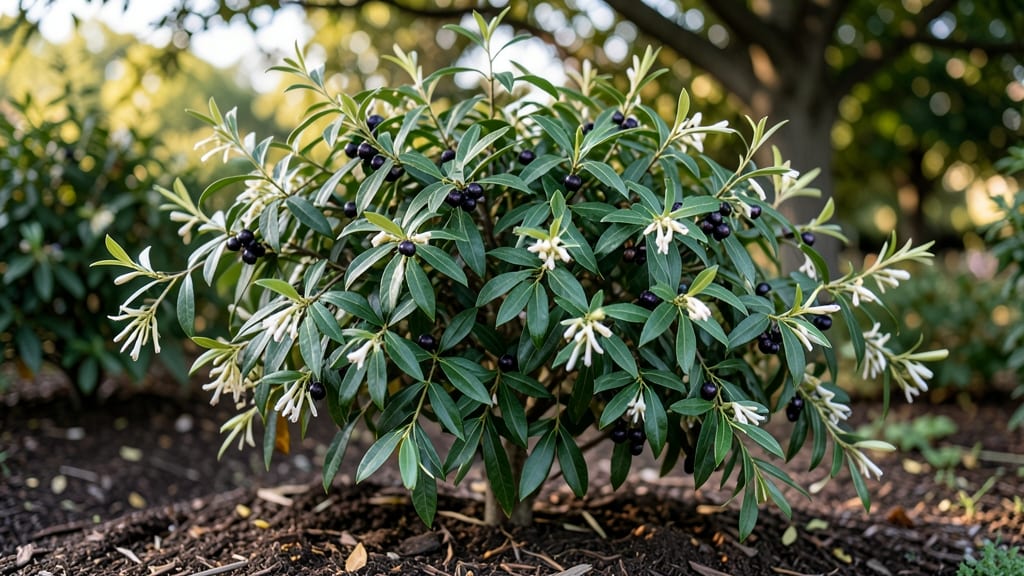
Osmanthus fragrans thrives where winter stays mild—USDA zones 7 through 11—because its glossy leaves and heady blooms simply won’t survive repeated freezes. I’ve grown this fragrant evergreen in zone 8 for years, and the key to success lies in understanding its climate limits and seasonal quirks that most gardeners overlook.
In colder zones (7-8), protect it from early frosts by planting in south-facing spots where afternoon sun lingers, and wrap young plants in burlap during sudden cold snaps. Mulch heavily with 3-4 inches of shredded bark to shield roots from temperature swings.
Marginal zones? Look for microclimates—against a brick wall or near a heat-retaining patio—where temperatures stay just warm enough.
Prune lightly in late winter (just before buds swell) to shape the shrub, but avoid heavy cuts—this evergreen blooms on old wood, and aggressive pruning means fewer fragrant flowers.
In zones 9-11, water deeply once a week during dry spells; the roots hate soggy soil but crave consistent moisture to fuel those intoxicating blossoms.
Here’s the secret: even in zone 7, a well-sited osmanthus can survive winters if you mimic its native Mediterranean climate—dry summers, mild winters, and well-draining soil. The payoff? A shrub that smells like a perfumer’s dream and stays evergreen year-round. Worth the extra care.
📚 In This Guide
- What you need
- Instructions
- Tips and common mistakes
- Wrapping up and next steps
What you need
- ● Osmanthus fragrans plants: 1-3 mature plants (3-5 ft tall) or 5-10 young nursery-grown saplings (1-2 ft tall). Choose var. aurantiacus (orange blossom) or var. latifolius (broadleaf) based on your scent preference.
- ● Well-draining potting mix: 2-3 bags (20 qt each) of a blend like 50% garden soil, 30% compost, 20% perlite/sand for optimal aeration.
- ● Organic mulch: 1-2 bags (1-2 cu. ft each) of pine bark or shredded leaves to retain moisture and regulate soil temp.
- ● Gardening tools: Trowel (for small plants)
- ● Shovel (for mature plants)
- ● Pruning shears (sterilized)
- ● Garden gloves (to protect from thorns)
- ○ Optional (but helpful): Soil pH tester (ideal range: 5.5-6.5)
- ● Drip irrigation kit or soaker hose (for consistent moisture)
- ● Frost cloth (for zones 6 and below)
- ● Sunlight: Full sun to partial shade (6+ hours/day). Avoid harsh afternoon sun in hotter zones (9-10).
- ● Soil conditions: Acidic, well-draining soil. Amend heavy clay with compost or sand.
- ● Climate considerations: Zones 7-10: Plant in fall or early spring.
- ● Zones 6 and below: Use microclimates (south-facing walls) or container gardening for flexibility.
Step-by-step guide to selecting and planting Osmanthus Fragrans in your climate zone
This fragrant evergreen thrives with the right preparation—let’s match your zone and planting conditions for success.
Verify Your Hardiness Zone and Osmanthus Variety Compatibility
Osmanthus Fragrans flourishes in USDA Zones 7-11, but specific cultivars vary in cold tolerance. Check your zone using the USDA Plant Hardiness Zone Map—most varieties handle 10-20°F dips, but Fortunei (Zone 7) is the hardiest. If you’re in Zone 6 or cooler, opt for a dwarf cultivar like Gulftide or grow it in a container for winter protection.
Here’s the thing—some nurseries mislabel plants. Ask for the exact cultivar name if unsure. A true Osmanthus Fragrans will have glossy, dark green leaves and emit a jasmine-like fragrance when blooming. Avoid hybrids labeled Osmanthus × burkwoodii unless you’re targeting a different scent profile.
Choose the Ideal Planting Location for Year-Round Fragrance
Sunlight is critical: 6 hours of direct sun daily ensures robust blooms, but partial shade (morning sun, afternoon shade) prevents leaf scorch in hotter zones. In Zone 9+, afternoon shade is ideal. Test your spot by observing how nearby plants fare—if their leaves crisp by midday, your Osmanthus needs afternoon shade.
Wind exposure matters too. Plant in a sheltered area where winter winds won’t desiccate leaves. A south- or east-facing wall provides natural protection. If planting near a patio or walkway, position it where the fragrance drifts toward seating areas—blooms release their sweetest scent in late fall to early winter.
Prepare the Soil for Optimal Growth and Fragrance
Osmanthus prefers well-draining, slightly acidic soil (pH 5.0-6.5). Amend heavy clay with 2-3 inches of compost and 1 part perlite to 3 parts native soil to improve aeration. Avoid soggy soil—root rot is the #1 killer of established plants. If your soil drains poorly, consider a raised bed or mound the planting area slightly.
Dig a hole twice as wide as the root ball but no deeper. Loosen the roots gently if pot-bound, then place the plant so the top of the root ball sits 1 inch above soil level. This prevents waterlogging during heavy rains. Backfill with native soil mixed with compost, tamping lightly to eliminate air pockets.
Plant and Water for Immediate Establishment
Water deeply immediately after planting—soak the root zone until water drains from the bottom of the hole. This encourages roots to spread outward. Mulch with 2-3 inches of pine bark or shredded leaves to retain moisture and regulate soil temperature. Keep mulch 6 inches away from the trunk to prevent rot.
For the first 2-3 weeks, water every 2-3 days until the top 2 inches of soil feel moist. Overwatering at this stage suffocates roots. After establishment, water once weekly unless rainfall provides 1 inch of moisture. Drought-stressed plants drop leaves and bloom poorly—monitor leaf color as your indicator.
Prune and Maintain for Long-Term Fragrance and Health
Prune immediately after flowering (late winter to early spring) to shape the plant and encourage dense growth. Remove 1/3 of the oldest wood to stimulate new, fragrant shoots. Use clean, sharp bypass pruners to make cuts at a 45-degree angle just above a leaf node. Avoid heavy pruning in fall—it reduces winter hardiness.
Fertilize once in early spring with a balanced 10-10-10 formula (1/2 cup per mature plant). Over-fertilizing leads to leafy growth at the expense of flowers. Watch for aphids or scale insects—spray with neem oil if you spot sticky residue on leaves. A healthy Osmanthus Fragrans should require minimal intervention once established.
Tips & tricks for thriving Osmanthus Fragrans in your zone
Here's what nobody tells you about making your Osmanthus Fragrans flourish—these details separate a struggling shrub from a fragrant showstopper.
Zone-Specific Selection: When choosing your Osmanthus Fragrans, verify the exact cultivar at purchase. Fortunei handles Zone 7's 10-20°F dips beautifully, while other varieties may need container protection. I've seen nurseries mislabel plants—always ask for the specific name. The jasmine-like fragrance is your quality indicator: true Osmanthus Fragrans should have that signature scent even before blooming.
Sunlight Strategy: That critical 6 hours of direct sun should be morning sun with afternoon shade in hotter zones. I test potential spots by observing nearby plants—if their leaves crisp by midday, your Osmanthus needs afternoon protection. For Zone 9+, position against an east-facing wall to capture morning light while avoiding afternoon intensity.
Soil Preparation: The 2-3 inches of compost and 1:3 perlite-to-soil ratio creates the perfect drainage while maintaining that essential pH 5.0-6.5 acidity. I've learned the hard way that soggy soil leads to root rot—if your native soil drains poorly, consider a raised bed. The 1-inch elevation above soil level prevents waterlogging during heavy rains, which is crucial for establishing strong root systems.
Watering Wisdom: Those first 2-3 weeks demand vigilance—water every 2-3 days until the top 2 inches feel moist. Overwatering at this stage suffocates roots. After establishment, monitor rainfall: if you get 1 inch of moisture weekly, you can reduce watering. Drought-stressed plants drop leaves and bloom poorly—leaf color is your best indicator of moisture needs.
Pro Tips for Osmanthus Fragrans Zone
- Here's what nobody tells you about making your Osmanthus Fragrans flourish—these details separate a struggling shrub from a fragrant showstopper.
- Zone-Specific Selection: When choosing your Osmanthus Fragrans, verify the exact cultivar at purchase.
- Sunlight Strategy: That critical 6 hours of direct sun should be morning sun with afternoon shade in hotter zones.
Frequently asked questions
What USDA hardiness zones does Osmanthus fragrans thrive in?
Osmanthus fragrans is most happy in USDA zones 7-10. In colder zones (6 or below), plant it in a sheltered spot or use winter protection like burlap wraps. For zones 11+, it may struggle in extreme heat—opt for afternoon shade to prevent leaf scorch.
When is the best time to plant Osmanthus fragrans?
Plant in early spring or fall (4-6 weeks before frost) for best root establishment. Avoid summer heat or winter freezes—both stress young plants. If buying potted osmanthus, plant immediately to minimize transplant shock!
Can I grow Osmanthus fragrans in containers?
Yes! Choose a large container (15+ gallons) with drainage holes and well-draining soil. Move pots to partial shade in summer and protect from frost. Dwarf varieties like ‘Gulftide’ are ideal for containers—just repot every 2-3 years.
Why aren’t my osmanthus leaves staying green?
Yellowing leaves often signal overwatering, poor drainage, or fungal issues. Check soil moisture (it should dry slightly between waterings) and ensure pots/containers have drainage. For fungal spots, prune affected leaves and apply neem oil if needed.
Are there fragrant osmanthus alternatives for colder climates?
If zone 7 is too chilly, try ‘Variegatus’ (variegated osmanthus) or ‘Fortunei’, which tolerate zones 6-9. For even colder areas (zone 5), consider mock orange (Philadelphus) or winter daphne (Daphne odora)—both offer sweet fragrance and hardiness!
Wrapping up and next steps
Growing Osmanthus fragrans in the right USDA hardiness zone (typically 7-10) can transform your garden into a fragrant paradise with minimal effort. Whether you’re a seasoned gardener or just starting, this evergreen beauty rewards patience with stunning blooms and year-round greenery. 🌿
Ready to take the next step? Start by checking your local climate zone, then pick a sunny spot with well-draining soil. Plant confidently—your future fragrant oasis awaits! 🌱