
Planting
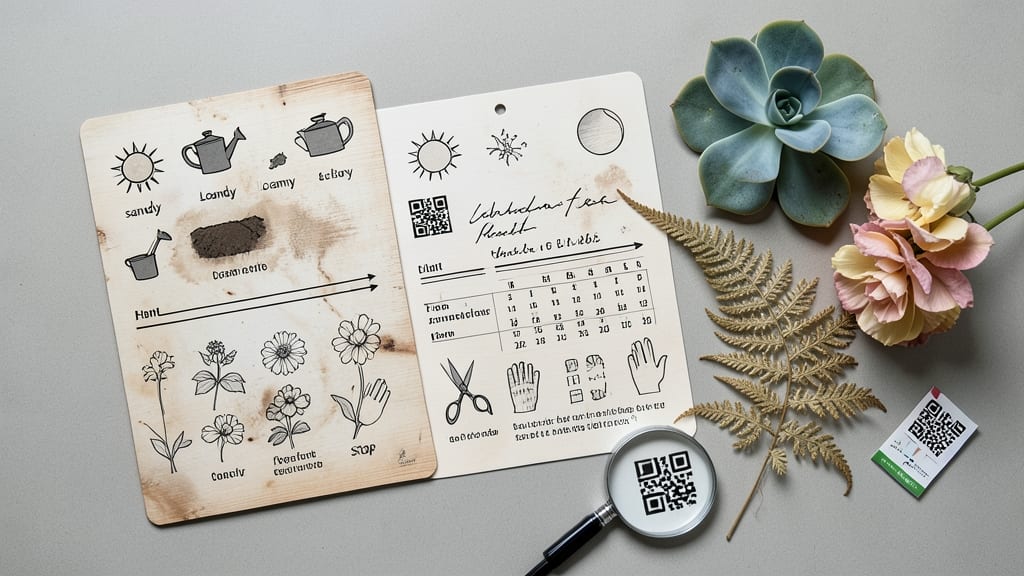
Those tiny plant label symbols hold the secret to thriving gardens—meaning the difference between a lush, healthy plant and a sad, wilted one. 🌱 I used to ignore them—until my ferns kept dying because I missed the "low light" warning.
Now I check every label before buying, and my plants stay happy year-round.
Most symbols show sun exposure with sun icons (🌞 for full sun, ☀️ for partial shade), water needs with drop icons (💧 for moderate water), and soil preferences with leaf or pot icons.
Hardiness zones appear as numbers in circles, while maintenance hints use scissors (✂️) or flowers (🌸) to signal pruning or blooming habits. These visual cues save time and frustration.
You’ll spot the difference immediately—plants grow stronger, bloom more, and resist pests better when you match their needs. A quick label check before planting means fewer dead zones in your garden and more confidence in your choices. The symbols act like a cheat sheet for plant care.
Works for everything from houseplants to backyard perennials. Once you learn the language, you’ll never buy a plant without checking its care code first. Let’s decode them together—your garden’s success starts with understanding these little marks.
📚 In This Guide
- What you need
- Instructions
- Tips and common mistakes
- Wrapping up and next steps
What you need
- ● Plant labels or tags: Look for symbols like ☀️ (sunlight), 💧 (watering), or ❄️ (cold hardiness). Grab a few examples from your garden center or nursery.
- ● Notebook or phone: 1 device to jot down or snap photos of symbols you encounter.
- ○ Printer or magnifying glass: (Optional but helpful!) Print a reference guide or zoom in on tiny symbols.
- ○ Garden journal (optional): 1 spiral-bound notebook or digital doc to track symbol meanings over time.
- ● Basic plant knowledge: Familiarity with terms like full sun, partial shade, or organic matter helps!
- ● Access to a symbol guide: Use free online resources (like this one) or ask a nursery expert for clarification.
- ● Patience: Some symbols are universal, but regional variations exist—don’t rush!
🌱 How to read plant label symbols like a pro
These tiny icons hold the key to your plants' perfect care—once you learn their language!
🔍 Step 1: Identify the Sunlight Symbols
Start with the sun symbols—these tell you exactly where your plant belongs. A single sun ☀️ means full sun (6+ hours daily), while half a sun ☀️☀️ means partial shade (3-6 hours). Look for the moon cloud ☁️ for shade (less than 3 hours)—this is your plant's light diet, and getting it wrong means weak growth or burned leaves.
Here's the thing—most labels use these three, but some add a sun behind clouds ☁️☀️ for dappled shade. Place your plant where the light matches these symbols, and you'll see stronger stems and healthier foliage. I always check my windowsill plants against these symbols before moving them—trust me, it saves a lot of leaf damage!
💧 Step 2: Decode the Watering Icons
Watering symbols are the next big clue—look for a water droplet 💧 with numbers or lines. A single droplet 💧 means water when soil feels dry, while two droplets 💧💧 indicate keep soil consistently moist. Three droplets 💧💧💧 is a red flag—this means water daily (usually tropical plants).
Don't ignore the subtle details! Some labels add a "no water" symbol ☀️💧 (a sun crossed out over water) for drought-tolerant plants. I once drowned a cactus because I missed this symbol—now I double-check before watering anything with spiky leaves!
❄️ Step 3: Understand Temperature Zones
Temperature symbols often look like thermometers with numbers. A single line ❄️ means hardy to 10°F, while two lines ❄️❄️ indicate hardy to 0°F. Look for tropical leaves 🌴 with a heat wave ☀️🔥 for plants that need warmth above 60°F. These tell you where your plant can survive winter outdoors.
Here's what I do: I match the zone symbols to my local climate zone (find yours with a quick online search). If my zone is 7 and the label shows ❄️❄️❄️ (zone 4), I know this plant needs winter protection or indoor care. This simple check prevents frozen plants!
✂️ Step 4: Spot Pruning and Maintenance Tips
Look for scissors ✂️ or hand symbols to find pruning instructions. A single pair of scissors means light pruning, while multiple scissors ✂️✂️ indicates regular trimming. Some labels add a flower 🌸 with scissors to show when to prune blooms. These symbols tell you exactly how to keep your plant looking its best.
Real talk: I used to ignore these symbols and prune at random. Now I wait until I see the 🌸✂️ combo before cutting back. This keeps my plants flowering longer and growing fuller—no more sad, leggy stems!
🌱 Step 5: Check for Special Care Notes
Some labels include extra symbols like a hand 👋 for hand-pollination needs, a fish 🐟 for aquatic plants, or a pot 🪴 for container-specific care. These are your plant's secret wishes! I always scan for these hidden clues—they explain why some plants need extra attention or special growing conditions.
Here's the moment that matters: When you see a 🌱 with a clock ⏰, it means seasonal planting (like spring or fall). This tells you exactly when to start seeds or transplant outdoors. I mark these dates on my calendar so I never miss the perfect planting window!
Tips & tricks for decoding plant label symbols like a pro
Mastering these symbols is your secret weapon for plant success—here’s how to decode them like a seasoned gardener!
Sunlight Symbols: When you see a single sun , place your plant in a spot with 6+ hours of direct sunlight daily. For half-sun , find a location with 3-6 hours of morning or late-afternoon sun. The moon cloud means shade (less than 3 hours)—this is especially important for tropical plants that wilt in direct sun. I always check my windowsill plants against these symbols before moving them—trust me, it saves a lot of leaf damage!
Watering Clues: The number of droplets is your watering guide! One droplet means water when the soil feels dry, while two droplets signal consistent moisture. Three droplets is a red flag—this means daily watering, usually for tropical plants. Watch for the "no water" symbol on cacti or succulents—this is your plant’s way of saying, "Don’t drown me!"
Temperature Zones: Match the thermometer symbols to your climate zone! A single line means hardy to 10°F, while two lines indicate hardy to 0°F. Tropical leaves with a heat wave mean warmth above 60°F—these plants need indoor care in cold climates. I always check my local zone before planting perennials to avoid winter surprises!
Special Symbols: Look for the hand for hand-pollination needs, the fish for aquatic plants, or the pot for container-specific care. These are your plant’s secret wishes! The clock with a seedling means seasonal planting—mark these dates on your calendar to avoid missing the perfect window. I keep a small notebook by my plants to track these special care notes!
Pro Tips for Plant Label Symbols Meaning
- Mastering these symbols is your secret weapon for plant success—here’s how to decode them like a seasoned gardener!
- Sunlight Symbols: When you see a single sun ☀️, place your plant in a spot with 6+ hours of direct sunlight daily. Fo...
- Watering Clues: The number of droplets 💧 is your watering guide! One droplet 💧 means water when the soil feels dry,...
Frequently asked questions
Got questions about those tiny symbols on plant tags?
You’re not alone! Here are answers to the most common ones—so you can decode care instructions like a pro.
What do the sun, water, and temperature symbols actually mean?
These icons are your plant’s cheat codes! = sunlight needs (full sun, partial shade, or low light), = water frequency (daily, weekly, or "soak and dry"), and / = hardiness zones or temperature ranges. For example, a cactus with and might need full sun and tolerate frost—just check the legend on the tag!
Why do some plants have conflicting symbols (e.g., both sun AND shade)?
This usually means flexibility. A plant labeled with + might thrive in morning sun and afternoon shade (common for tropicals). If in doubt, start with partial shade and adjust based on leaf color—yellowing = too much sun; dull leaves = not enough.
What’s the difference between "water" and "soak" symbols?
The symbol (often with a drop) means regular moisture (keep soil lightly damp), while (or a pitcher) = deep watering until it drains from the bottom. Overwatering is the #1 killer—always use pots with drainage holes!
Can I ignore the symbols if I’m using automated irrigation?
Not entirely! Automated systems can work, but you’ll need to calibrate settings by plant type. For example, succulents () need far less frequent watering** than ferns (). Use a moisture meter or group plants with similar needs together to avoid soggy roots.
What if my plant’s tag is missing symbols or faded?
No tag? No problem! Reverse-engineer care by:
- Leaves: Waxy/thick = low water; soft/fuzzy = high humidity.
- Growth: Leggy = needs more light; crispy edges = too dry.
- Research: Type the plant name + "care guide" into a search engine—most nurseries post digital tags online.
Wrapping up and next steps
Understanding plant label symbols is your secret weapon for effortless gardening! 🌱 These small icons save time, prevent overwatering or under-lighting, and keep your green friends thriving. Now that you’re fluent in their language, grab those labels, match them to your plants, and watch your garden flourish like never before.
Ready to put your new knowledge to work? Start by auditing your current plants—flip those labels, compare symbols, and adjust care routines today! Your future self (and your plants) will thank you. 🌿