
Planting
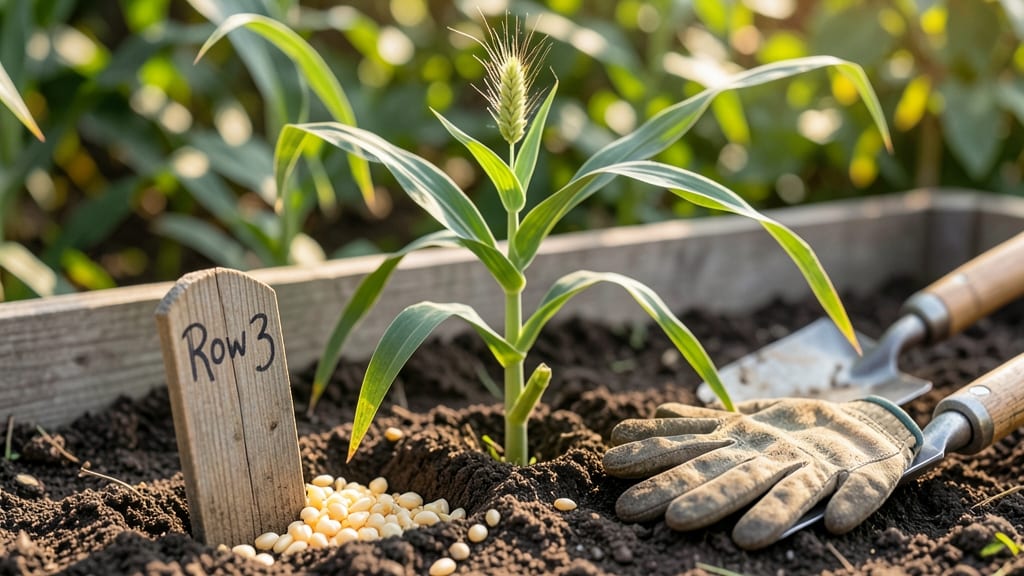
Planting corn kernels too deep or too shallow decides whether you get a lush 6-foot stand or a patchy disappointment. 🌽 I’ve learned the hard way—last year’s 2-inch-deep planting left me with leggy, weak stalks that toppled before tasseling.
The secret? 1.5 inches deep in warm, moist soil, with kernels spaced just right for airflow and sunlight. Corn thrives when planted after the last frost in well-drained soil with a pH of 6.0–7.0.
You’ll need a sunny spot (at least 6 hours of direct sun daily) and a way to keep the soil consistently moist—dry spells can stall germination for weeks. My go-to trick? Lay down black plastic mulch a week before planting to warm the soil faster and suppress weeds.
Once those first green shoots break through, you’ll know you’re on track. Within 7–10 days, seedlings emerge, and by 3 weeks, they’ll be tall enough to thin—leaving the strongest stalks 12–18 inches apart in rows 3 feet apart.
The payoff? Sturdy stalks, heavy ears, and fewer pests because proper spacing improves airflow. This method works for sweet corn, popcorn, or field corn—just adjust spacing based on your variety. And if your kernels take longer than 14 days to sprout?
Check moisture levels and soil temperature (ideal is 60–70°F). Patience pays off with ears full of kernels ready to harvest in 60–90 days.
📚 In This Guide
- What you need
- Instructions
- Tips and common mistakes
- Wrapping up and next steps
What you need
- ● Corn kernels: Choose heirloom or hybrid varieties suited to your climate (e.g., dent corn for sweet corn, flint corn for field corn). Buy 1–2 lbs per 100 sq ft for optimal spacing.
- ● Garden soil: Well-draining, fertile soil with a pH of 6.0–7.0. Amend with compost if needed.
- ● Planting container or garden bed: For direct sowing in the ground: A 4–6 ft wide row per variety (corn thrives in blocks, not rows!).
- ● For containers: A 5-gallon bucket or larger (minimum 12" deep) per plant.
- ● Fertilizer: Balanced fertilizer (10-10-10) or compost (apply 1–2 lbs per 100 sq ft before planting).
- ○ Phosphorus-rich fertilizer (e.g., bone meal) for root development (optional but helpful).
- ● Watering can or hose: With a gentle spray nozzle to avoid displacing seeds.
- ● Planting marker or stakes: To label varieties and mark planting depth.
- ● Seedling heat mat: For early indoor starts (if planting before last frost).
- ● Row cover or frost cloth: To protect young plants from late frosts (corn is frost-sensitive!).
- ● Corn planter or dibble: A handheld tool to create precise planting holes (depth: 1–2 inches).
- ● Mulch (straw or grass clippings): To retain moisture and suppress weeds.
- ● Soil thermometer: Corn germinates best in soil temps of 60–90°F.
- ● Trellis or stakes: For pole varieties (e.g., 'Country Gentleman') to support tall stalks.
Step-by-step guide to planting corn kernels directly in the garden
Here’s how to plant corn kernels for robust, disease-resistant stalks—no nursery starts needed.
🌱 Step 1: Prepare the Soil for Optimal Germination
Corn thrives in loose, nutrient-rich soil with a pH between 6.0 and 6.8. Work the soil to a depth of 12 inches using a broadfork or tiller, breaking up any compacted layers. If your soil drains poorly, mix in 2-3 inches of compost to improve aeration and water retention.
Test moisture by squeezing a handful—it should hold together but not feel soggy. If the soil is too dry, water it 2-3 days before planting to allow excess moisture to evaporate. Corn seeds need consistent moisture to germinate, but soggy soil invites rot. I always rake the surface smooth afterward to create a fine seedbed.
🌱 Step 2: Plant Kernels at the Correct Depth for Strong Starts
Corn kernels should be planted 1-1.5 inches deep, depending on soil moisture. In dry conditions, plant slightly deeper (1.5 inches) to retain moisture around the seed. Use your finger or a dibble to create small holes 12 inches apart in rows spaced 3 feet apart—this spacing prevents overcrowding and allows for proper air circulation.
Place 2-3 kernels per hole and cover lightly with soil, ensuring the kernels aren’t buried too deeply. Press the soil gently around the kernels to eliminate air pockets, which can delay germination. A light misting with water afterward helps settle the soil without displacing the seeds.
☀️ Step 3: Ensure Warmth and Consistent Moisture for Germination
Corn seeds germinate best in soil temperatures of 60-85°F. If planting early in the season, use a black plastic mulch to warm the soil and speed up germination. Keep the planting area consistently moist—not soggy—by watering 1 inch per week once the seeds sprout. A soaker hose works best to avoid disturbing the soil.
Germination typically takes 7-14 days, depending on soil temperature. You’ll know it’s working when the first cotyledons (seed leaves) emerge. Avoid walking on the bed or disturbing the soil until the seedlings are 3-4 inches tall—this prevents root damage and ensures strong starts.
🌿 Step 4: Thin Seedlings for Maximum Yield and Airflow
Once seedlings reach 6-8 inches tall, thin them to 1 plant per hill, leaving the strongest stalk. Use sharp scissors to cut unwanted seedlings at soil level—pulling can disturb nearby roots. This spacing (12 inches apart) gives each plant room to develop a sturdy stalk and full ear potential.
Thinning also improves airflow, reducing the risk of fungal diseases like corn smut or rust. If you notice any leggy or pale seedlings, they’re likely struggling for light or nutrients. At this stage, a light side-dressing of compost or balanced fertilizer (10-10-10) can give them a boost without overfeeding.
⏰ Step 5: Monitor for Pests and Maintain Soil Health
Corn is vulnerable to cutworms, corn earworms, and raccoons—especially as ears develop. Use row covers early in the season to deter pests, and handpick any visible larvae. For organic control, plant marigolds or nasturtiums nearby to repel insects naturally.
Throughout the growing season, maintain 2-3 inches of mulch around the base to retain moisture and suppress weeds. Corn is a heavy feeder, so side-dress with compost or fertilizer when tassels appear (around 6-8 weeks after planting). Watch for silking—the thread-like strands emerging from the ear—this is your cue to increase watering slightly to prevent ear drying.
Tips & tricks for perfect corn germination
These direct-sowing secrets will help you avoid common pitfalls and grow corn stalks that stand tall and strong from the very first planting.
Soil Temperature is Everything: The 60-85°F range is non-negotiable for germination. I've seen corn seeds sit for weeks in cooler soil—don't make that mistake. If your spring nights are still chilly, use black plastic mulch to create a microclimate that warms the soil faster. You can even test soil temperature with a simple thermometer inserted 2 inches deep before planting.
Depth Precision Matters: That 1-1.5 inch range in Step 2 isn't arbitrary—it balances moisture retention with oxygen access. In dry conditions, I actually measure with a ruler to ensure 1.5 inches depth. Too shallow and seeds dry out; too deep and they struggle to emerge. Pro tip: Use a dibble or even a pencil to create perfectly sized holes without compacting the soil around them.
Planting Strategy for Strong Starts: The 2-3 kernels per hole technique gives you insurance against poor germination rates. I always mark my planting rows with a stick and string to maintain that critical 3-foot spacing—corn needs room to grow. After planting, I gently firm the soil around each hole with my fingers to eliminate air pockets that could delay sprouting.
Germination Timeline Watch: Those 7-14 days can feel like an eternity, but don't disturb the soil until you see cotyledons emerge. I've learned the hard way that walking near newly planted seeds can uproot them before they've established. Mark your planting date on a calendar and be patient—consistent moisture is more important than daily checking.
Pro Tips for Planting Corn Kernels
- These direct-sowing secrets will help you avoid common pitfalls and grow corn stalks that stand tall and strong from the very first planting.
- Soil Temperature is Everything: The 60-85°F range is non-negotiable for germination.
- Depth Precision Matters: That 1-1.5 inch range in Step 2 isn't arbitrary—it balances moisture retention with oxygen access.
Frequently asked questions
Got questions about planting corn kernels? You’re not alone—this step can feel tricky, but we’ve got answers! Here are some of the most common queries to help you grow a thriving crop.
What’s the ideal depth for planting corn kernels?
Plant corn kernels about 1 to 2 inches deep in well-drained soil. Deeper planting (2–3 inches) works in cooler climates or dry conditions, while shallower depths (1 inch) suit warm, moist soils. Use a seedling marker or ruler to ensure consistency—uneven depth can lead to uneven germination.
How long does it take for corn kernels to sprout?
Corn typically sprouts in 7 to 14 days, depending on soil temperature, moisture, and kernel viability. Warmer soils (60–85°F) speed up germination, while cooler conditions may delay it. If no sprouts appear after 2 weeks, check for rot, poor soil contact, or stale seeds—replant if needed.
Can I plant corn kernels too early in the season?
Yes, but timing matters! Corn thrives in warm soil (at least 60°F). Planting too early (when soil is cold) risks slow germination, rot, or seedling disease. Use a soil thermometer to monitor temps—wait until the ground consistently stays above 55°F for best results.
What can I do if my corn kernels won’t sprout?
Try these fixes:
- Check moisture: Keep soil consistently damp (not soggy) until sprouts appear.
- Test viability: Soak a few kernels in water—if they float, they’re likely bad.
- Adjust depth: Plant shallower (½ inch) if soil is dry or deeper (2–3 inches) if it’s compacted.
- Warm the soil: Use black plastic mulch or a cold frame to raise temps.
Are there alternatives to planting whole corn kernels?
For faster, more reliable growth:
- Pre-sprouted kernels: Soak kernels in water for 12–24 hours, then plant ½ inch deep for quicker sprouting.
- Seedlings: Buy young corn plants from nurseries (transplant after last frost).
- Hybrid seeds: Some varieties (like sweet corn) are bred for easier germination—check seed packets for tips.
Wrapping up and next steps
Planting corn kernels the right way sets the stage for a thriving crop, and now you’ve got the secrets to success—from soil prep to perfect depth! Remember, consistency is key: aim for 1.5 to 2 inches deep in warm, well-drained soil, and always adjust for your climate.
With patience and the right techniques, you’ll soon be harvesting golden ears of corn straight from your garden.
Ready to take the next step? Start small—try a test row this season to fine-tune your method. Then, expand your plot and share your progress with fellow gardeners! 🌽✨