
Planting
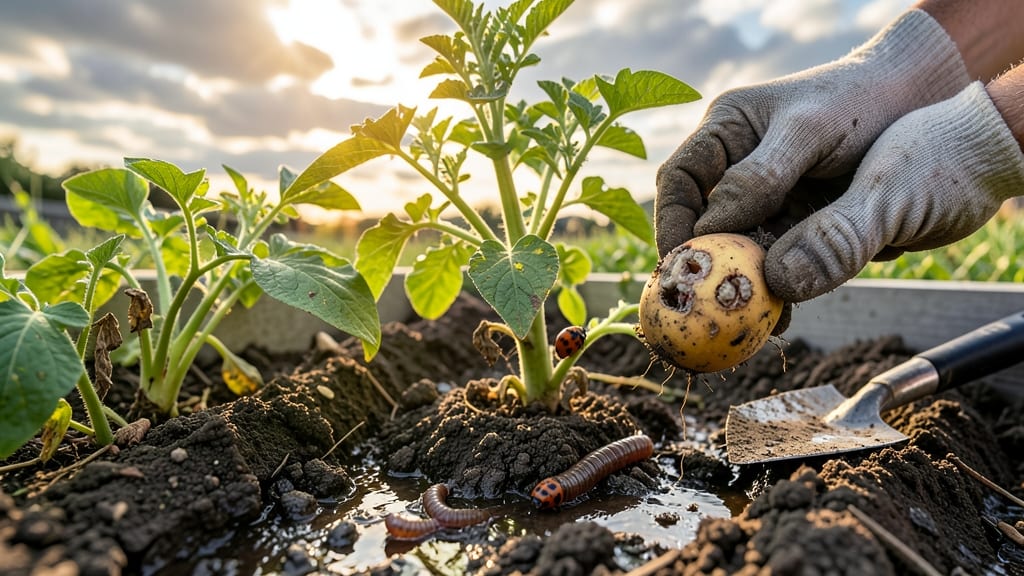
Yellowing leaves on a potato plant can turn a thriving harvest into a disappointing pile of green tops. 🌱 I’ve seen blight, pests, and nutrient issues ruin gardens—here’s how to spot the problem and fix it before it’s too late.
The key is acting fast, because once the leaves go, the tubers suffer too.
Most yellowing starts with too much water or not enough, but pests like Colorado potato beetles and wireworms chew through roots and stems, starving the plant. Nutrient deficiencies—especially potassium or nitrogen—show up as yellow edges or pale patches.
Blight, the worst offender, appears as dark, greasy spots that spread like wildfire if ignored.
You’ll diagnose the issue by checking the undersides of leaves for pests, testing soil moisture, and looking for those telltale spots. Fixes range from pruning diseased foliage to adjusting watering or adding compost.
For blight, copper sprays work fast, while beetles need handpicking or neem oil—no chemicals required if you act early.
Prevention is easier than cleanup: rotate crops, space plants for airflow, and monitor regularly. If your garden’s a battleground, organic sprays and companion planting (like marigolds) can save your harvest before it even starts. Let’s get those tubers growing strong again.
Root Causes Behind Leaf Trouble
Understanding why your potato plant’s leaves turn yellow—or worse, wilt, spot, or drop—starts with digging into the science behind the symptoms. Most issues stem from environmental stress, nutrient imbalances, or microbial attacks, each with distinct triggers.
Below, we break down the real culprits and the biological or physical mechanisms that set them off.
💧 The Silent Killer of Potato Roots
Potatoes thrive in well-drained soil with moisture but hate soggy conditions. When roots sit in waterlogged soil, they suffocate due to lack of oxygen, a process called anoxia.
This triggers: - Root rot (from Phytophthora or Pythium fungi), which blocks nutrient uptake. - Toxicity buildup—excess water leaches away essential minerals like potassium and magnesium, leaving leaves yellow (especially between veins). - Stunted growth as the plant diverts energy to survival instead of foliage production.
Why it happens:
- Clay-heavy or compacted soil repels water, creating pockets of saturation.
- Overzealous watering (e.g., daily irrigation) without checking soil moisture (stick your finger 2 inches down—if damp, wait).
- Lack of raised beds or mulch, which accelerates evaporation and prevents crusting.
📊 When the Soil Runs Out of Fuel
Yellowing leaves often signal a hunger for macronutrients critical for chlorophyll production. Here’s the breakdown:
| Symptom | Likely Deficiency | Why It Happens |
|---|---|---|
| Yellowing lower leaves (oldest first) | Nitrogen (N) | Nitrogen fuels leaf growth; depletion causes older leaves to "recycle" nutrients. |
| Yellow veins, green edges | Magnesium (Mg) | Mg is central to chlorophyll; poor soil pH (acidic) or sandy soil washes it away. |
| Purple stems/leaves | Phosphorus (P) | P aids energy transfer; cold soil slows microbial P release. |
| Yellow edges (scorched look) | Potassium (K) | K regulates water balance; overwatering or high sodium leaches it out. |
Pro Tip: 🌡️ Test your soil (pH 5.0–6.5 is ideal for potatoes). If deficient, amend with:
- Compost (for organic N and Mg).
- Bone meal (slow-release P).
- Wood ash (K and raises pH—use sparingly).
🐛 Hidden Invaders Stealing Your Harvest
Fungal, bacterial, or insect attacks disrupt the plant’s photosynthetic machinery, leading to yellowing as a stress response. Common triggers:
- Early Blight (Alternaria solani)
- Tell-tale sign: Concentric yellow/brown spots with target-like rings.
Prevention: 🎯 Rotate crops annually, use row covers to block beetles, and sterilize tools with 70% alcohol.
🌡️ When Conditions Go Rogue
Potatoes are cool-season crops, but extreme or sudden changes throw them off balance:
- Heat Stress (Above 85°F)
- Why it happens: High temps denature enzymes needed for chlorophyll production, causing bleached or yellowed leaves (especially on upper foliage).
- Fix: Provide shade cloth or plant in late spring/early fall.
- Cold Damage (Below 40°F)
- Why it happens: Frost or chilly nights disrupt cell membranes, leading to waterlogged, yellow leaves (a sign of chilling injury).
- Wind or Hail
- Why it happens: Physical trauma ruptures leaf cells, triggering necrosis (dead tissue) that turns yellow/brown.
🔬 The Invisible pH Problem
Potatoes prefer slightly acidic soil (pH 5.0–6.5). Outside this range:
- Too acidic (pH <5.0): Aluminum toxicity blocks root nutrient uptake, causing yellowing.
- Too alkaline (pH >7.0): Iron and manganese deficiencies occur, leading to interveinal chlorosis (yellowing between veins).
Test & Fix:
- Lower pH: Add sulfur or peat moss.
- Raise pH: Mix in lime (calcium carbonate).
Fixing fading potato foliage
Yellowing leaves on your potato plants can be frustrating, but the good news is that most issues have simple, effective fixes. Below, we’ve mapped out practical solutions for the most common causes—plus prevention tips to keep your spuds thriving.
Let’s get your greens back to vibrant and your harvest on track!
Fix It:
- 👨🍳 Adjust Your Watering Routine Potatoes hate soggy roots. Let the top 2 inches of soil dry out between waterings. Stick your finger in the soil—if it’s damp, wait a day or two. Use a moisture meter if you’re unsure.
- 🔪 Improve Soil Drainage Amend heavy clay soil with compost, perlite, or coarse sand (50/50 mix) to create air pockets. For container growers, ensure pots have drainage holes and elevate them slightly to prevent water pooling.
- ⏰ Water Smartly Water deeply but infrequently—aim for 1–1.5 inches per week, including rainfall. Early morning is best to reduce fungal risks.
💡 Prevention Tip: Mulch with straw or grass clippings to retain moisture without suffocating roots. Avoid wet mulch, which traps dampness.
Fix It:
- 💦 Hydrate Immediately If leaves are crispy or wilting, water thoroughly at the base (not overhead). Use a soaker hose or drip irrigation to deliver water directly to roots.
- 🌡️ Beat the Heat
- Shade cloth (30–50%) can protect plants during scorching afternoons.
- Reflective mulch (like aluminum foil sheets) bounces sunlight away from soil.
- Harvest early if temperatures exceed 90°F (32°C)—potatoes finish faster in cooler weather.
- 🥗 Boost Humidity (For Containers) Place pots on a tray of pebbles with water underneath to increase humidity around roots.
💡 Prevention Tip: Water before soil dries completely—potatoes are drought-tolerant but perform best with consistent moisture. Drip irrigation on a timer is a game-changer!
Fix It:
| Problem | Symptoms | Solution |
|---|---|---|
| Nitrogen Deficiency | Pale yellow lower leaves, stunted growth | Apply blood meal (1 tbsp per plant) or balanced fertilizer (10-10-10). |
| Potassium Deficiency | Yellow edges on older leaves, weak stems | Use potassium sulfate (1 tsp per gallon of water) or banana peel tea. |
| Magnesium Deficiency | Yellow patches between leaf veins | Sprinkle Epsom salt (1 tbsp per gallon) or add dolomitic lime to soil. |
💡 Prevention Tip:
- Side-dress plants with compost or fertilizer when flowers appear (mid-season).
- Avoid over-fertilizing—too much salt can burn roots. Test soil every 2–3 years.
Fix It:
- 🔥 Remove Infected Plants Pull out any plants with brown spots or mold and dispose of them in the trash (not compost). Fungi spread fast!
- 🍳 Apply Fungicides
- Prevention: Spray copper fungicide or neem oil every 7–10 days during rainy seasons.
- Treatment: For blight, mix 1 tsp baking soda + 1 tbsp oil + 1 tsp soap per gallon of water and spray undersides of leaves.
- ✨ Improve Airflow Space plants 12–18 inches apart and avoid overhead watering. Use tomato cages to prop up foliage.
💡 Prevention Tip:
- Rotate crops—don’t plant potatoes in the same spot for 3+ years.
- Plant resistant varieties like ‘Red LaSoda’ (blight-resistant) or ‘Yukon Gold’ (scab-resistant).
Fix It:
- 🍳 Handpick Beetles Check leaves daily for yellow-orange beetles or black larvae. Drop them into soapy water.
- 🌡️ Use Natural Repellents
- Diatomaceous earth (food-grade) around the base deters beetles.
- Spray with soapy water (1 tsp mild soap per quart) to kill aphids.
- 🎯 Row Covers Install floating row covers at planting to block beetles. Remove when flowers appear to allow pollination.
💡 Prevention Tip:
- Interplant with basil or marigolds—these deter pests naturally.
- Harvest early if beetles are rampant; tubers underground are safer.
Fix It: If leaves yellow after flowering (when tubers are forming), it’s often normal senescence. However, you can still optimize harvest: 1. 🥗 Stop Watering 1–2 Weeks Before Harvest to toughen skins.
- 🔪 Cure Potatoes by storing them in a cool (50–60°F), dark, humid (80–90%) place for 1–2 weeks.
- 💡 Prevention Tip: Harvest new potatoes (small, tender ones) early to avoid over-maturity. Use a fork to dig carefully—don’t cut tubers!
Final Pro Tip: 🌱 Keep a garden journal! Note when you water, fertilize, and spot issues. Patterns emerge over time, helping you prevent problems before they start. Happy growing—your crisp, golden potatoes are waiting!
Frequently asked questions
Why do my potato plant leaves turn yellow first at the bottom?
This is usually a sign of nitrogen deficiency—older leaves "recycle" nutrients when the plant lacks this key element. Check if your soil is sandy or if you haven't fertilized recently. A quick fix is adding blood meal (1 tbsp per plant) or compost to replenish nitrogen levels.
What do those dark, greasy spots on my potato leaves mean?
Those are classic signs of early blight, a fungal disease that thrives in warm, humid conditions. Remove infected leaves immediately and spray with a copper fungicide or baking soda mix (1 tsp baking soda + 1 tbsp oil + 1 tsp soap per gallon of water) to prevent spread.
Can I still harvest potatoes if the leaves turn yellow?
Yes! If the yellowing happens after flowering, it's often normal plant senescence. Stop watering 1-2 weeks before harvest to toughen skins. For yellowing before flowering, check for pests or diseases first—healthy tubers can still form if roots are intact.
How do I tell if my potato plants need more water or less?
Stick your finger 2 inches into the soil—if it's damp, they need less water. If dry, water deeply until moisture reaches 6 inches down. Wilting leaves with crispy edges mean underwatering, while yellowing between veins suggests overwatering or poor drainage.
Are those tiny black larvae eating my potato plants?
Those are likely Colorado potato beetle larvae, which can devastate plants quickly. Handpick them daily (drop in soapy water) and apply diatomaceous earth around the base. For prevention, use row covers early in the season or plant pest-repelling companions like marigolds.