
Planting
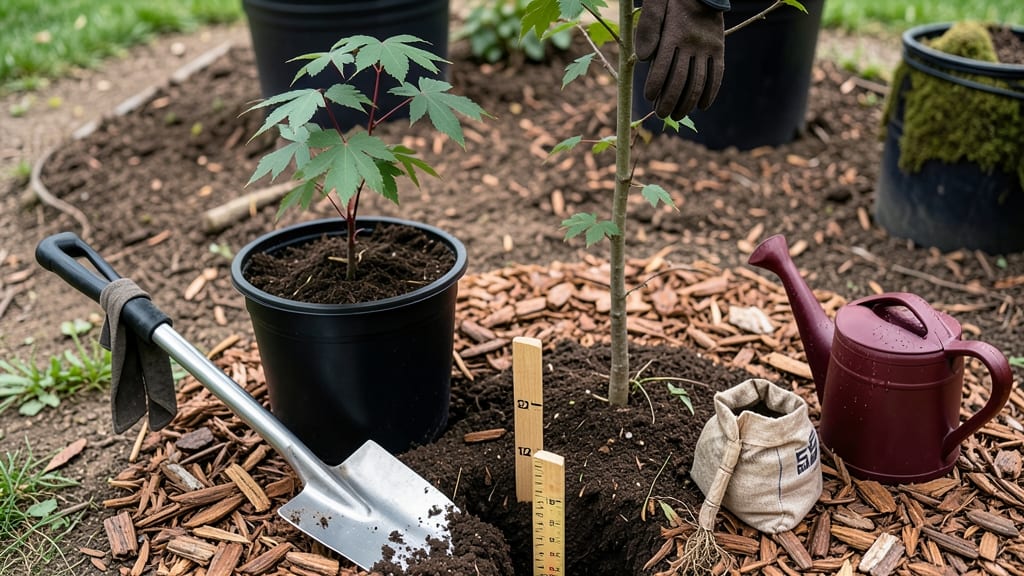
A red maple planting guide starts with the right spot and soil—because these vibrant trees won’t thrive if you rush the prep. 🌳 I’ve learned the hard way that skipping soil amendments or ignoring sunlight leads to stunted growth, even with young saplings.
The secret lies in matching the tree’s needs to your yard’s conditions before the first shovel hits the ground.
You’ll need a sunny location with well-draining soil, at least 6 feet of space between trees, and a hole twice as wide as the root ball. Red maples hate soggy roots, so amend heavy clay with compost or sand if needed.
Planting in early spring or fall gives roots time to establish before extreme heat or cold. Mulch heavily around the base (but keep it 3 inches away from the trunk) to retain moisture and block weeds.
After planting, water deeply until the soil is 6-8 inches down, then check weekly—drought stress shows up fast with wilting leaves. The first year is critical: consistent moisture and protection from lawn equipment will set up a tree that grows 3-4 feet per year with minimal fuss.
By year three, you’ll have a sturdy shade provider with those signature red fall leaves.
Common mistakes? Planting too deep (buried roots rot), ignoring mulch rings, or crowding trees too close. Red maples are tough but not invincible—give them room to spread their branches and they’ll reward you for decades. Here’s how to nail every step from soil to sapling.
📚 In This Guide
- What you need
- Instructions
- Tips and common mistakes
- Wrapping up and next steps
What you need
- ● Red maple seedlings or saplings: Choose 1-3 trees depending on your space (standard spacing: 30–50 feet apart for mature trees). Opt for 1–2 inch caliper (diameter) for faster establishment.
- ● Shovel or spade: A round-point shovel (18–24 inches wide) for digging holes efficiently.
- ● Garden hose or watering can: With a spray nozzle for gentle watering.
- ● Mulch: 3–4 inches of organic mulch (e.g., wood chips or shredded bark) to retain moisture and suppress weeds.
- ○ Soil amendment (optional but helpful): Compost or well-rotted manure (1–2 gallons per hole) to improve drainage and fertility.
- ● Garden lime (if soil pH is soil pH kit)
- ● Stakes and twine (for young trees): 2–3 stakes per tree (4–6 feet tall) and soft twine or tree ties to secure saplings.
- ● Tree guard or wire basket: Protects young trees from rodents and deer.
- ● Soil moisture meter: Ensures you’re watering at the right depth (aim for 12–18 inches deep).
- ● Slow-release fertilizer: A balanced 10-10-10 or tree-specific formula (apply lightly at planting).
- ● Knee pads or gardening stool: For comfort during long planting sessions!
Step-by-step red maple planting guide
Planting red maples right means they'll thrive for decades—here's how to get it done perfectly.
🪴 Step 1: Choose the Perfect Planting Site
Red maples love sun but tolerate partial shade, so pick a spot with at least 6 hours of sunlight daily. Avoid low spots where water pools—they hate soggy roots. I always check the site first thing in the morning when the soil is dampest to see how water drains. If it takes longer than 4 hours to drain, amend the soil with compost to improve drainage.
Dig a hole twice as wide as the root ball but no deeper—this prevents soil from settling and burying the trunk too deeply. The top of the root ball should sit 2-3 inches above the surrounding soil level when finished. I mark the hole's center with a stake before digging to keep everything aligned.
🌱 Step 2: Prepare the Soil for Optimal Growth
Red maples thrive in slightly acidic soil with a pH between 4.5 and 6.5. Test your soil first—most garden centers sell simple test kits. If your soil is too alkaline, mix in 2-3 inches of peat moss or sulfur into the bottom of the hole. For clay-heavy soil, blend in 1 part compost to 3 parts native soil to loosen it.
Loosen the soil at the bottom and sides of the hole with a shovel—this encourages roots to spread outward instead of circling. Avoid compacting the soil when you backfill later; red maples grow best when roots can expand freely. I always rake the bottom gently to create a rough texture for better root contact.
💧 Step 3: Plant with Precision and Water Deeply
Place the red maple in the hole, ensuring the root flare (where roots meet the trunk) sits just above soil level. Fill the hole halfway with native soil, then water deeply to settle it. This prevents air pockets that can strangle roots. I tap the soil lightly with my foot to compact it gently around the roots.
Finish filling the hole, mounding soil slightly higher than ground level to create a watering basin. Water again until the soil 6 inches deep feels thoroughly moist. Mulch with 2-3 inches of wood chips, keeping the mulch 6 inches away from the trunk to prevent rot. A 3-foot-wide mulch ring helps retain moisture and regulate soil temperature.
☀️ Step 4: Stake and Protect for the First Season
Stake only if necessary—red maples establish deep roots quickly. If your site gets strong winds, use 2 stakes placed 12 inches from the trunk at opposite sides. Attach them loosely with flexible ties so the tree can sway slightly; this builds strength. I always check the ties monthly to ensure they're not cutting into the bark.
Water once a week during the first growing season unless rain provides 1 inch of moisture. Deep watering encourages roots to grow downward. After the first year, red maples become drought-tolerant, but young trees need consistent moisture to establish. I water in the morning so foliage dries quickly, reducing disease risk.
⏰ Step 5: Monitor and Maintain for Long-Term Health
Fertilize only if the tree shows signs of stress—red maples grow well in average soil. If leaves yellow in spring, apply a slow-release fertilizer in early summer. Prune in late winter or early spring to remove dead wood and shape the tree. I never prune more than 25% of the canopy in one season to avoid shocking the tree.
Watch for signs of stress: wilting leaves, yellowing in fall, or slow growth. These often mean compacted soil or poor drainage. If you planted in clay soil, aerate the root zone annually with a digging fork. Red maples reward patience—with proper care, they'll thrive for 50+ years with stunning fall color.
Tips & tricks for perfect red maple planting
Here's what nobody tells you about planting red maples—these tricks make all the difference for long-term success.
Site Selection Secret: Scout your potential planting spot in late winter or early spring when the ground is still damp. This gives you the most accurate reading of drainage—red maples absolutely despise soggy roots. If water pools after 4 hours, you'll need to create a raised bed or amend the soil with compost to improve drainage. I've seen trees planted in low spots struggle for years, so don't skip this step!
Root Ball Precision: When placing your red maple in the hole, the root flare (where roots meet the trunk) should be visible above the surrounding soil. This prevents girdling as the soil settles. I use a pencil to mark the exact height of the root flare on the tree before planting—this visual guide makes positioning effortless. The 2-3 inches above ground level you see in instructions is critical for proper growth.
Soil Texture Tip: For clay-heavy soil, blend that 1 part compost to 3 parts native soil thoroughly—don't just dump it in layers. I use a garden fork to mix them together at the bottom of the hole, creating a loose, crumbly texture that encourages root expansion. This prevents that "pot-bound" look where roots circle instead of spreading outward.
Watering Wisdom: That 6-inch deep moisture check is more important than you might think. Stick your finger into the soil—if it feels dry past 6 inches, water again. Morning watering is best because it gives foliage time to dry, reducing fungal diseases. I set a timer for my weekly watering reminder during the first growing season to ensure consistency.
Pro Tips for Red Maple Planting Guide
- Here's what nobody tells you about planting red maples—these tricks make all the difference for long-term success.
- Site Selection Secret: Scout your potential planting spot in late winter or early spring when the ground is still damp.
- Root Ball Precision: When placing your red maple in the hole, the root flare (where roots meet the trunk) should be visible above the surrounding soil.
Frequently asked questions
Got questions about planting red maples? You’re not alone! Here are answers to the most common queries to help you grow a stunning tree with confidence.
When is the best time to plant a red maple?
The ideal window is early spring (as soon as the ground thaws) or early fall (4–6 weeks before the first frost). These seasons give roots time to establish before extreme heat or cold. Avoid planting in summer or winter—roots struggle in either case!
How far apart should I space red maples?
Space mature red maples 30–50 feet apart for full growth potential. If planting near structures, keep them at least 20 feet away to avoid root conflicts. Smaller varieties (like ‘Autumn Flame’) can tolerate 15–20 feet of spacing.
Why are my red maple leaves turning yellow or brown?
Yellowing leaves often signal nutrient deficiency (especially iron or nitrogen) or overwatering. Brown edges? It could be drought stress or fungal issues (like anthracnose). Test soil pH (ideal: 4.5–6.0) and adjust with compost or mulch. Prune dead branches to improve airflow.
Can I plant a red maple in a container or small yard?
Red maples thrive best in ground planting, but dwarf varieties (like ‘Armstrong’) work in large containers (20+ gallons) for 3–5 years. Ensure the pot has drainage holes and use well-draining soil. Expect slower growth—repot every 2–3 years and transplant to ground eventually.
Do red maples attract pests or wildlife?
Red maples are generally pest-resistant, but aphids, scale insects, or borers may appear in stressed trees. Birds and squirrels love the seeds! To deter pests, keep the tree healthy with proper watering, mulching, and occasional inspections. Avoid over-fertilizing, which attracts insects.
Wrapping up and next steps
Planting a red maple is a rewarding journey that blends patience with precision—from choosing the right soil to spacing saplings just right. With the proper prep, these stunning trees will thrive, gracing your landscape with vibrant foliage and year-round beauty. 🌿
Now that you’re armed with expert tips, roll up your sleeves and get planting! Start by marking your planting zones, gather your tools, and watch your red maple grow into a breathtaking centerpiece. Happy gardening! 🌱